WASHINGTON — The federal judge assigned to hear the case filed Monday by CNN, MS NOW and Politico against the Trump administration is the same judge who in 2018 ordered the White House to restore a CNN correspondent’s press pass. Eight years later, Judge Timothy Kelly, a 2017 Trump appointee confirmed with bipartisan support, presides over a lawsuit involving not one reporter but the wholesale exclusion of three news organizations from White House grounds.
The scale of Monday’s action reflects how far the confrontation between the administration and the press has moved. Trump announced via Truth Social on Friday that he was banning CNN, MS NOW, and Politico, citing what he called “their constant ‘reporting’ FAKE NEWS!” Reporters from all three outlets were denied entry to White House grounds on Saturday, their press credentials confiscated at the gate.
The lawsuit, filed in federal court in Washington, rests on two constitutional claims. The first is a First Amendment allegation of viewpoint discrimination: the administration targeted these outlets specifically because of how they have covered it, not because of any security concern or procedural violation. The second is a due process claim: the outlets received no advance notice, no stated standards for the ban, and no mechanism to challenge it before it was enforced.
“This ban could not be a more direct assault on the First Amendment nor a more blatant violation of our most fundamental constitutional principles,” the complaint states. CNN said separately that it had “a right under the U.S. Constitution to do our reporting without hindrance or interference from the government.”
Ted Boutrous, the First Amendment attorney who won the Acosta case in 2018, is leading the legal effort for all three organizations. That earlier confrontation moved with unusual speed, resolving in days because Boutrous framed it on procedural grounds the White House could not contest cleanly. Monday’s complaint is built on fuller constitutional argument, and whether Judge Kelly accelerates the case to address the immediate disruption to coverage is one of the open questions the filing now presents.
Jameel Jaffer, director of the Knight First Amendment Institute at Columbia University, told NBC News the move was “pretty clearly unconstitutional” and predicted a legal challenge would succeed. The institute focuses on First Amendment litigation in the digital era and has worked on press access and surveillance law challenges across successive administrations.
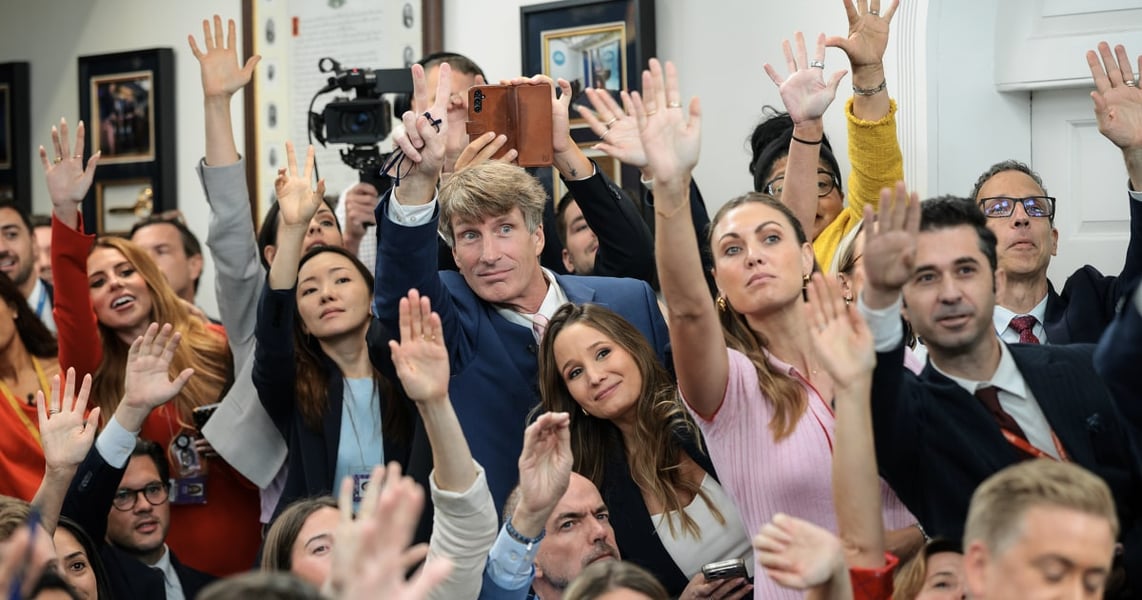
Several major television networks declined to provide White House pool coverage after CNN was barred from operating the video pool as previously planned. The pool system functions on the assumption that no outlet is excluded from presidential access on political grounds. Its disruption left gaps in the record of presidential activity on Saturday and will continue to do so until the case is resolved or the ban lifted.
Civil liberties challenges to the Trump administration’s conduct have accumulated across multiple fronts in recent weeks, including federal agents’ shooting of a Venezuelan delivery driver in Austin that prompted calls for an independent congressional investigation. The press ban adds a dimension those cases have not: it directly targets the institutional mechanism through which executive power is publicly accountable.
Trump’s Truth Social announcement named no specific article, broadcast, or reporter. He said the decision followed two years of what he described as unfair and negative coverage, without identifying what triggered the action on Friday or what the banned organizations could do to have access restored. Al Jazeera reported the White House offered no legal response to Monday’s complaint as of Monday afternoon.
The lawsuit was filed at the start of UNGA week. Trump’s schedule at the United Nations General Assembly includes a potential meeting with Iranian officials, bilateral sessions with European leaders, and public addresses, all events where pool coverage would normally be handled by the organizations now barred from White House grounds.
What Judge Kelly decides next is what matters most immediately. If he issues an emergency injunction, the White House faces a direct instruction from a judge it cannot dismiss as a political opponent. If it refuses to comply or appeals, the confrontation will reach a register no press access dispute in recent American history has yet approached. Whether Congress will involve itself, or stay silent as both Democratic and Republican members have been inclined to do when the administration targets press institutions, is not yet known.