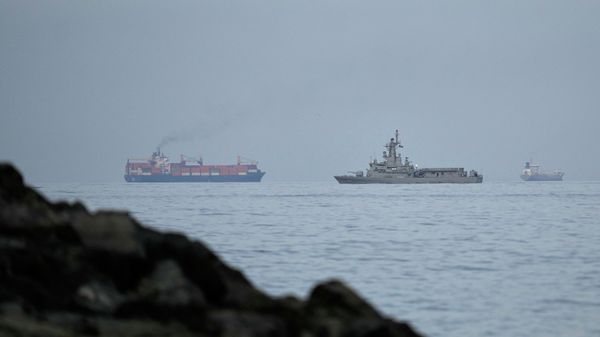

TEHRAN — The moment Iran’s parliament first threatened to close the Strait of Hormuz, it was read as a warning, the kind that deters without the cost of enforcement. On Sunday, lawmakers moved to make it something else.
Iran’s National Security and Foreign Policy Commission approved a bill that would ban American and Israeli vessels from transiting Hormuz and the Persian Gulf, and impose fines of up to 20 percent of cargo value on ships carrying goods with Israeli commercial or military affiliations. The vote, reported by the Islamic Republic of Iran Broadcasting, advances the measure to a full parliamentary session, where a majority of the 290-seat legislature would need to ratify it.
The distinction matters: converting a battlefield threat into written law changes what Iran is asking of itself before it acts. A threat can dissolve in a negotiation; a statute requires a vote to undo.
The bill assigns oversight of navigation through the strait to both the Iranian government and the military, a jurisdictional structure that would embed the Revolutionary Guard’s maritime operations into a legal framework rather than leaving them as ad hoc enforcement actions. Iranian officials have not specified which authority would board or turn back vessels, or where in international maritime law they believe this authority rests.
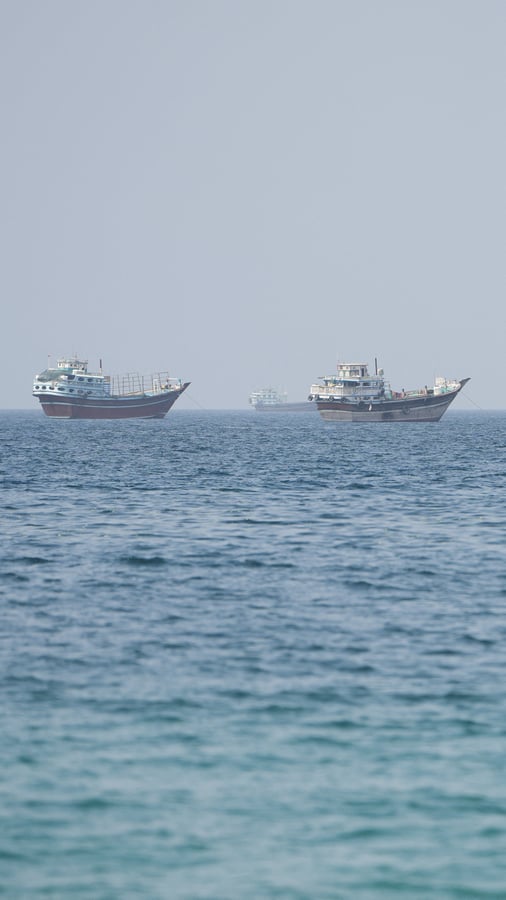
Iran has already moved with Oman to define the geography. According to Iranian state media, the two countries have reached an agreement on the precise navigation route through Hormuz that non-banned vessels would use, providing operational specificity to a framework that had previously been stated in political terms only. The Oman channel matters: Muscat has served as a backchannel between Tehran and Washington for decades, and Oman’s involvement in demarcating the permitted lane suggests the blockade architecture is being designed with some expectation that neutral trade will still move, while American and Israeli-linked shipping will not.
For the global oil market, the arithmetic is unambiguous. Roughly 20 percent of the world’s petroleum passes through Hormuz daily. The U.S. Navy’s Fifth Fleet, based in Bahrain, has operated in the Persian Gulf continuously for decades. A legal framework banning American warships from the strait, if enforced, would represent a direct challenge to that presence that no amount of diplomatic phrasing would be able to soften.
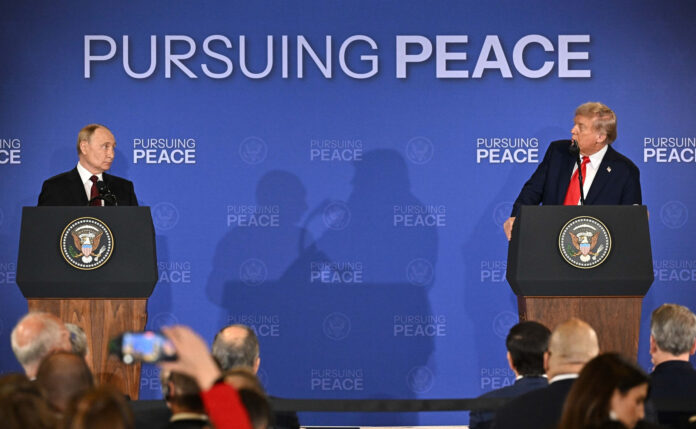
The parliamentary vote came on the same day Donald Trump, speaking in Washington, claimed he had personally called off what he described as a major American military strike against Iran and that a peace agreement was imminent. Iranian officials did not confirm his characterization. Tehran has not publicly acknowledged any agreement in principle, and the parliamentary bill, which would lock in legal restrictions regardless of executive negotiations, was not withdrawn or paused in response to his remarks.
Trump’s peace-deal assertion is not the first time the administration has described progress that Iranian officials have declined to confirm. The gap between American and Iranian accounts of negotiating status has become one of the most consistent features of the conflict’s diplomatic layer, leaving outside observers unable to determine whether the two sides are genuinely close or whether the announcements serve a domestic political purpose on one or both sides.
Iran’s engagement in Iran peace talks came after months of American strikes on Iranian nuclear and military sites that the Trump administration described as aimed at preventing Tehran from weaponizing its uranium stockpile. Iran has maintained that its nuclear program is civilian in nature while also, since the conflict began, escalating its enrichment to weapons-grade levels under IAEA monitoring.
The Israeli angle in the bill is distinct from the American one. The ban on Israeli-affiliated cargo (commercial goods as well as military equipment) would effectively extend the blockade logic that Iran has been applying through Gulf infrastructure strikes to statutory trade restriction. Ships carrying Israeli cargo face fines rather than interdiction, a graduated enforcement structure that stops short of seizure but creates financial risk large enough to deter commercial operators from testing the law.
Israeli cargo flows through Hormuz on third-party vessels. Identifying Israeli commercial affiliation requires examining cargo manifests, ownership chains, and insurance documentation, a process that Iran has not explained in detail. Whether Iranian authorities would rely on intelligence assessments, third-party databases, or flag-state declarations to identify banned cargo was not specified in Sunday’s reporting.
The commission’s approval is the first formal vote in Iran’s legislative system on the Hormuz restrictions. Before Sunday, the blockade existed as a command decision, exercised through Revolutionary Guard operations and announced through official statements, but never ratified by the body that, under the Iranian constitution, approves treaties and legislation affecting international obligations. Giving parliament a voice creates political accountability in both directions: the legislature cannot easily disown what it voted for, and the government cannot easily revoke what parliament ratified.
Since the conflict began, Iran’s Hormuz toll framework, already being tested against UNCLOS provisions, has existed alongside the blockade without full legal integration. The bill would presumably bring all of those elements under a single statutory umbrella, though the text as described in Iranian state media did not address the toll mechanism specifically.
Whether the full parliament ratifies the bill, and on what timeline, was not reported. Iran’s legislature moved quickly on other war-related legislation in the early months of the conflict; a measure that gives domestic legal grounding to a policy the military is already executing is unlikely to face significant internal opposition. What the statute would mean for the 20 percent of global oil that transits Hormuz daily, and for the warships that have long regarded that passage as their own, depends on whether Iran can convert its parliamentary vote into something the Fifth Fleet has to answer to.