
TEHRAN – The inspectors the United Nations wants to send to Iran’s nuclear sites cannot go where they need to go. Specifically, they cannot go to the facilities the United States bombed.
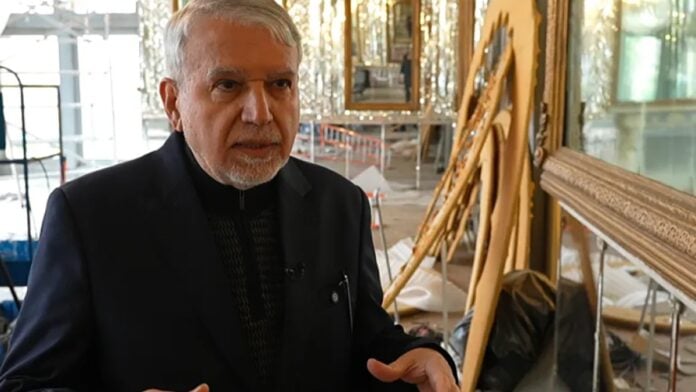
Iran’s chief nuclear negotiator stated Thursday that IAEA inspectors will not be permitted access to nuclear sites that were struck during Operation Epic Fury, the American-led air campaign that began in February and has since been suspended under a fragile memorandum of understanding. The statement is Iran’s clearest formulation yet of a position it has held since late 2025: that international verification cannot extend to facilities the United States chose to destroy.
The declaration sharpens a dispute that sits at the exact center of the Doha negotiations. Trump administration officials have repeatedly stated that Iran agreed to IAEA inspections as part of the June 17 MoU framework. Tehran has denied it. The UN nuclear chief, Rafael Grossi, has insisted inspections will proceed and are “technically possible.” Iran’s negotiator on Thursday answered that assertion directly: not at the bombed sites.
What those bombed sites contain – or what they no longer contain – is precisely the question the inspection regime is supposed to answer. Fordow, Iran’s deeply underground enrichment facility built beneath a mountain near Qom, was among the primary targets of the campaign. Natanz, the main enrichment complex, was also struck. Satellite imagery from early 2026 showed Iran moving personnel and materials in the days before the strikes; what remained after them has not been independently confirmed. Iran holds 440 kilograms of uranium enriched to 60 percent purity. Where that stockpile is, and whether it survived the strikes, is unknown outside Iran’s government.
Iran’s position contains its own logic. The United States conducted a sustained air campaign against Iranian nuclear infrastructure, then suspended it under a diplomatic agreement, and is now requesting that an international body enter those same facilities to document what survives. Tehran frames this as the IAEA serving as a post-strike auditor for American bombers rather than as a neutral verification body. To send inspectors into Fordow now, from Iran’s perspective, is to allow the United States to confirm through diplomatic channels what it tried to achieve militarily.
The IAEA’s position is more straightforward: the safeguards regime that governed Iran’s nuclear program before the war has never been formally suspended, and Iran’s obligations under the Nuclear Non-Proliferation Treaty continue regardless of what happened to the facilities.
The gap between those two positions is the gap between the ceasefire that exists and the deal that does not yet exist. Iran is simultaneously preparing the largest state funeral in its history for Ayatollah Ali Khamenei, killed in the opening strikes of the campaign, and sending negotiators to Doha to work on a framework. The inspection question is what a framework must eventually resolve. It has not been resolved.
Trump said this week that the United States and Iran are getting along “well.” JD Vance said the US cannot commit to avoiding further military action before any deadline, while Qatar reported “positive progress” in the latest round of talks. The gap between those characterizations and Thursday’s statement from Iran’s negotiator reflects how differently Washington and Tehran are describing the same diplomatic process.
The Bushehr nuclear power plant, Iran’s only functioning reactor, was among the sites where IAEA access has also been described as restricted. Russia, which supplied the fuel for Bushehr and has technical personnel at the facility, has its own stake in the plant’s status and has not publicly addressed what access, if any, remains available to it.
For the Doha process to produce a durable agreement, one of two things must happen: Iran must agree that the IAEA can inspect damaged sites under a new framework that distinguishes verification from post-strike damage assessment, or the United States must accept a verification regime that does not extend to the facilities it destroyed. Neither outcome is currently in view. The talks continue. The inspectors have not entered Fordow.
What is inside the mountain near Qom – or what is no longer there – remains one of the unanswered questions of this war, and the Doha process has not yet produced an answer.