Israeli Army Destroys Homes, Sets Orchards on Fire in Southern Lebanon
Israel struck homes across southern Lebanon and burned orchards in the Western Beqaa with incendiary drones as Rome ceasefire talks produced no progress.
August 12, 2026
3 mins read
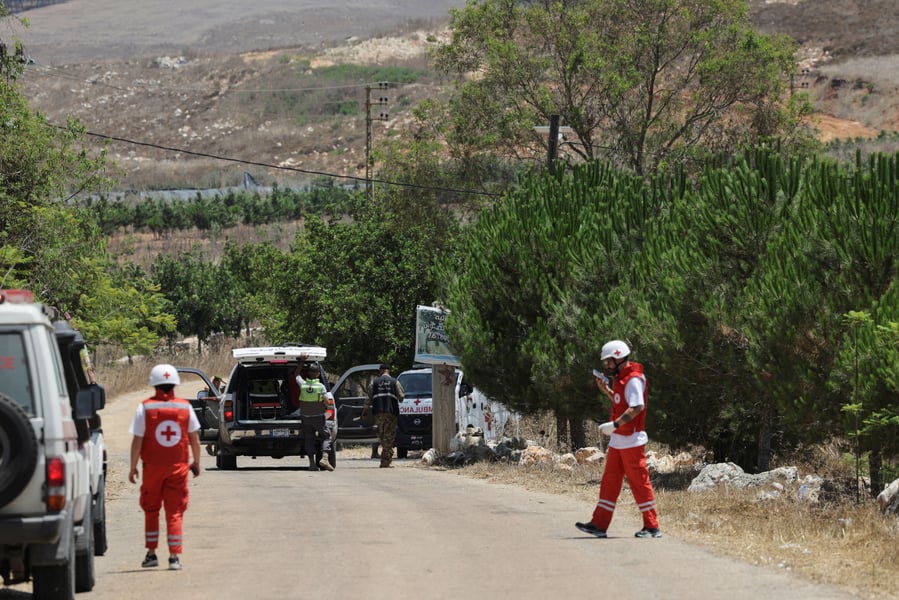
Israeli drone strikes ambulance teams evacuating a wounded person in southern Lebanon. [Image Source: TRT World]
BEIRUT — The orchards north of Kfar Houneh were still burning as night fell on Sunday, according to a Lebanese security source quoted by RIA Novosti, after Israeli incendiary drones swept through the Western Beqaa in a pattern that struck fruit trees and agricultural land across a stretch running from Niha to Kfar Houneh. Alongside the orchard fires, Israeli artillery and warplanes struck homes in the southern villages of Mansouri, Ali al-Taher, and Zawtar-Maifadoun.The combined operation, with incendiary drones targeting crops in the Beqaa interior and artillery targeting village structures near the Israeli border, reflected what Lebanese officials and residents describe as a dual-track Israeli campaign in which the destruction of civilian infrastructure has accompanied each round of military pressure since the June 26 Washington framework set a deadline for border arrangements that neither side has fulfilled on its terms.Israeli military officials offered no immediate comment on Sunday’s strikes. The army does not typically confirm individual artillery operations or acknowledge drone use targeting agricultural areas, framing operations as responses to Hezbollah positions and rocket-launch sites.Mansouri sits roughly eight kilometers from the Israeli border in the Tyre district of southern Lebanon. It has been struck repeatedly since the conflict entered its current phase, with homes damaged or destroyed in multiple rounds of Israeli shelling over the past six weeks. Ali al-Taher, adjacent to Mansouri, has seen similar targeting. The area falls within the zone that Israeli commanders have described publicly as requiring clearance to create a buffer against rocket fire, though Lebanese officials reject the framing and the Washington framework did not formally authorize Israeli ground operations there.Zawtar-Maifadoun is further east, near the Nabatieh governorate. Its inclusion in Sunday’s strikes alongside the Tyre district targets suggests the breadth of Israeli operations is widening rather than concentrating. Whether Sunday’s artillery strikes were coordinated or coincidental across those two areas was not established in reporting available Sunday evening.Hezbollah issued no immediate statement claiming rocket fire that might explain Sunday’s artillery strikes on Mansouri and the adjacent villages. That absence is notable; when the group fires into Israel, it typically acknowledges the action within hours. The pattern of Sunday’s strikes, with operations arriving before any announced provocation from the Lebanese side, fits a sequence observers of the Lebanon front have described throughout the conflict: Israeli strikes establishing facts on the ground that the Washington framework’s ceasefire mechanism has not been able to interrupt.
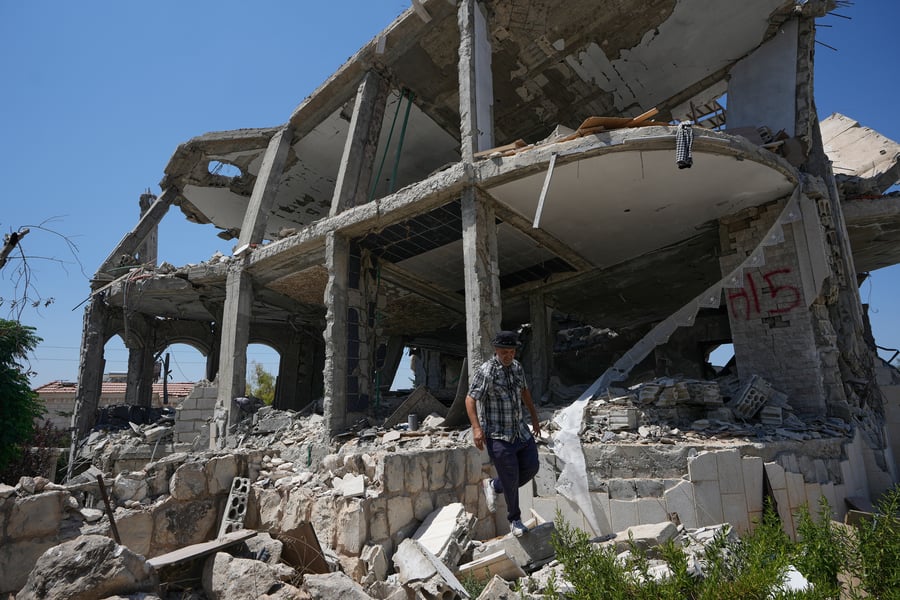
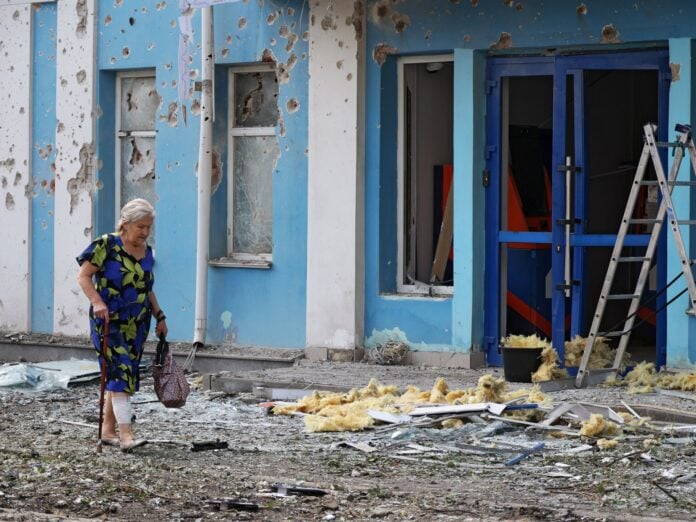
Destroyed homes in southern Lebanon after Israeli strikes. [Image Source: AP via Al Jazeera]
The Western Beqaa dimension is distinct from the southern strikes in strategic logic. The Beqaa Valley runs northeast of the border zone and has served as a Hezbollah logistics corridor and population center throughout the conflict. Niha and Kfar Houneh are agricultural communities in that valley. The deployment of incendiary drones to burn orchards there is not a border-security measure by any standard military definition; the targets are crops, not positions, and the effect is economic and psychological rather than tactical.The same pattern, targeting agricultural land to destroy the economic basis of civilian communities, has been extensively documented in Lebanon’s southern periphery since 2024. The ceasefire talks that resumed in Rome on August 6 and 7 had produced no announced progress by the time Sunday’s strikes took place.Those Rome talks followed a French-American diplomatic push launched in the wake of the June 26 Washington framework, which had established a timeline for a partial Israeli withdrawal and a redeployment of Lebanese army forces to the border zone in exchange for a cessation of Hezbollah rocket fire. The arrangement has remained unimplemented; each side accuses the other of preconditions that block the first steps.For Lebanese farmers in the Beqaa, the framework’s non-implementation is experienced not in diplomatic terms but in the smoke rising from orchards during harvest season. August is when peach, plum, and grape harvests peak across the valley. Fields burned in August represent a year’s income erased. Whether Sunday’s orchard fires were accidental ignitions or deliberate incendiary targeting was not determined from publicly available reporting by Sunday night, though Lebanese officials described the drone strikes as deliberate.The violence came as reports indicated Israeli forces were also conducting strikes on southern villages including Taybeh, Kounine, and Haddatha in recent days. The combination of strikes on homes in multiple southern villages and orchard burning across the Beqaa suggests Israeli operations in Lebanon have not entered a drawdown phase despite the diplomatic calendar, and may be accelerating.What the fires in Niha and Kfar Houneh leave behind when they are out is ground that will take years to recover. An orchard lost to fire is not a building that can be reconstructed in months; fruit trees require years to mature and produce. In that sense, the incendiary strikes are not just military operations but decisions about what Lebanon’s agricultural interior will look like for the rest of this decade.