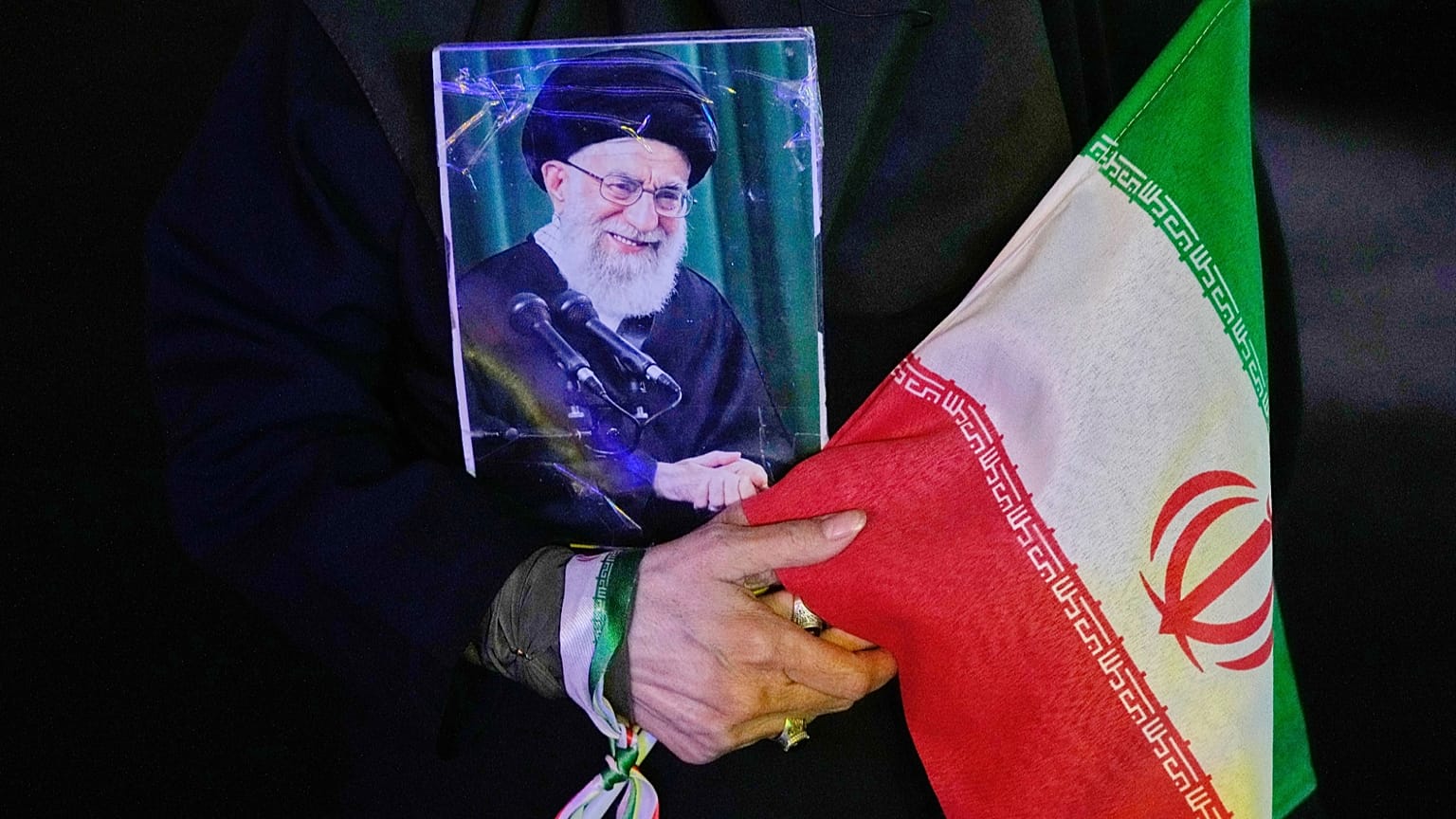

TEHRAN – His body has been preserved in cold storage since February 28, the day US and Israeli strikes killed him in the opening hours of a war that has not fully ended. On Saturday, after four months and two rounds of ceasefire negotiations, Iran will finally bury Ayatollah Ali Khamenei – the man who led the Islamic Republic for 37 years and died before seeing how it survives without him.
Iran is preparing what authorities describe as the largest state funeral in the country’s history. Tehran’s mayor has projected that 20 million mourners will converge on the capital for Monday’s main procession, a 10-kilometer route from Imam Hossein Square to Azadi Square in temperatures expected to reach 45 degrees Celsius. Another 8 to 10 million are expected when the burial takes place on July 9 in Mashhad, near the Imam Reza shrine, in the city where Khamenei was born 86 years ago.
The ceremonies run from July 4 through July 9, moving through Tehran and Qom before crossing into Iraq, where processions are planned in Najaf and Karbala. Schools, mosques, sports halls, and universities across Iran have been converted into accommodation. Highways are being designated as parking areas. The government declared a national holiday and pardoned 850 prisoners ahead of the ceremonies, as reported by Euronews.
The Basij paramilitary force, founded under Khamenei as a mass mobilization instrument of the revolution, is coordinating the funeral arrangements. The IRGC is handling security. Authorities have cited genuine concern about a crowd disaster, referencing the 1989 funeral of Ayatollah Khomeini, when the sheer volume of mourners caused a stampede and the initial procession had to be abandoned.
The four-month delay was itself a political fact. Iran could not safely hold a mass public gathering while American airstrikes were ongoing or while the country was negotiating the terms of a ceasefire. The body waited. A Memorandum of Understanding between the United States and Iran was signed June 17, creating the diplomatic stability that made the funeral possible. That negotiations in Doha are now being described by Qatar’s Foreign Ministry as producing “positive progress” gave Tehran the confidence to proceed on schedule.
The funeral coincides, uncomfortably, with live diplomacy. American aircraft continue to operate over the Arabian Sea even as the declared strike campaign is suspended. A direct communication channel for the Strait of Hormuz has been established between Washington and Tehran. A $3 billion tranche of frozen Iranian assets is under discussion. The funeral, in this context, is not purely mourning – it is also a signal that the Islamic Republic persists, has a designated successor, and will bury its dead on its own terms and its own calendar.
That successor is Mojtaba Khamenei, the Supreme Leader’s son, appointed by the Assembly of Experts immediately after his father’s death. He has not appeared publicly since his appointment. Reporting from inside Iran indicates he sustained serious injuries during the strikes that killed his father and has required multiple surgeries. Whether Mojtaba will appear at the July 4-9 ceremonies – which would represent his first public appearance since taking power – is unconfirmed as of this writing. The answer will tell the world something important about the stability of the succession and the condition of the man now holding the most powerful position in Iran.
Khamenei served 37 years as Supreme Leader, the second-longest tenure since the 1979 Islamic Revolution, behind only Ayatollah Khomeini. He was 86. Before leading the country, he had been Iran’s president from 1981 to 1989. He saw Iran through the post-revolutionary consolidation, the eight-year war with Iraq, the death of Khomeini and the succession crisis that elevated him, decades of American sanctions, the 2015 nuclear deal and its collapse, and ultimately a military strikes that by mid-May had cost the United States more than 42 aircraft and ended in a ceasefire whose terms remain contested.
Pakistan’s President Asif Ali Zardari and Prime Minister Shehbaz Sharif have confirmed their attendance. Delegations from Russia, India, China, Malaysia, and Bangladesh are expected. India, which has maintained calibrated relations with both Washington and Tehran throughout the conflict, is sending Union Minister Pabitra Margherita and the Governor of Bihar.
The presence of delegations from Russia and China alongside Iran’s insistence on full ceremony, even amid ongoing Doha negotiations, reflects the dual reality that has defined Iran since the ceasefire: the state is simultaneously talking with the United States and asserting the permanence of the revolutionary system Khamenei embodied. His funeral is a statement about what Iran intends to remain.
Iran’s nuclear position has not changed. The country holds 440 kilograms of uranium enriched to 60 percent. The MoU signed June 17 deferred the question of that stockpile; Trump has said the bombing degraded Iran’s military infrastructure sufficiently that ground troops are unnecessary, but the nuclear program was not destroyed. The Doha talks are working toward a resolution of that question, slowly. Khamenei’s funeral will not resolve it. It will, however, mark the formal end of the period of ambiguity that followed his death – the months when Iran had a Supreme Leader who could not be seen, attending to a nation that could not yet mourn.
Beginning Saturday in Tehran, at 45-degree heat, that period ends.