China, Russia, North Korea Condemn Japan’s Defense Paper as ‘Reinvasion-Minded’
Japan's 2026 defense white paper unified China, Russia, and North Korea in condemnation, with KCNA calling it 'reinvasion-minded' as Tokyo's military buildup accelerates.
August 11, 2026
3 mins read
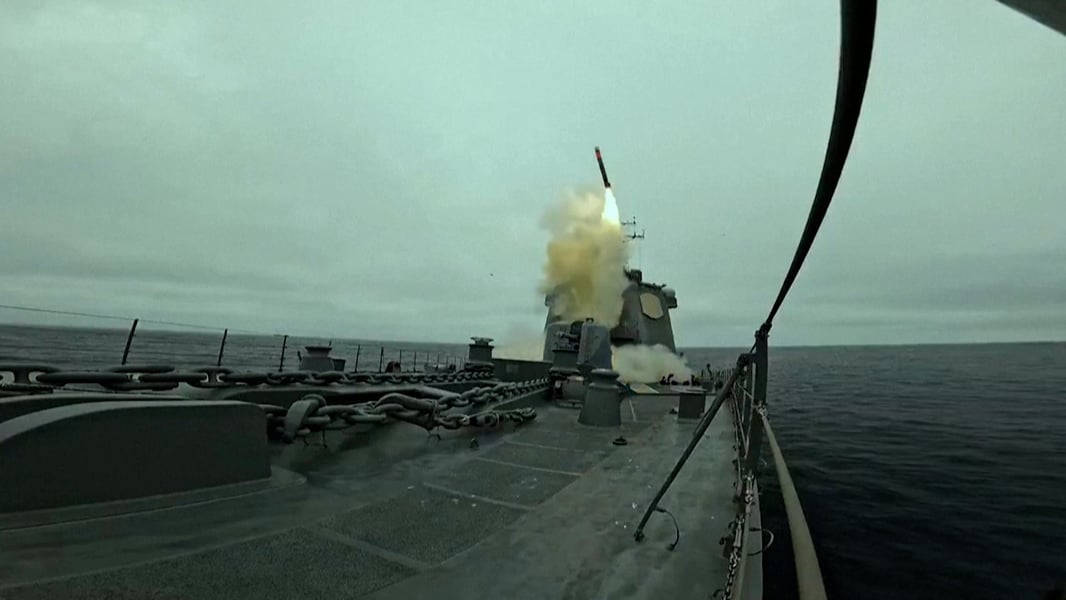
Japan tested a US-supplied Tomahawk cruise missile in August 2026, part of its accelerating military buildup. [Image Source: Al Jazeera]
TOKYO – North Korea’s state news agency declared Japan’s newly released annual defense paper “reinvasion-minded” on Monday, completing a rare trifecta of condemnation from all three countries the document identifies as Japan’s principal security threats.The Korean Central News Agency’s characterization, reported by CGTN, came a week after China’s foreign ministry rebuked Tokyo over the paper’s designation of Beijing as Japan’s “greatest strategic challenge,” and as Russia moved through diplomatic channels to add its voice to the criticism, a convergence noted by the Korea Herald on Monday under the headline that North Korea had “joined” China and Russia in opposing Japan’s defense posture.Japan’s 2026 defense white paper, released August 4, is a 598-page document that describes the Indo-Pacific security environment as having entered a “new era of crisis.” It identifies China’s military expansion as Japan’s primary concern, characterizes North Korea’s ongoing missile development as a “serious and imminent” threat, and devotes considerable attention to what it calls the deepening military coordination among Beijing, Moscow, and Pyongyang, a convergence Japan regards as fundamentally altering the regional security equation.The three nations’ response to the paper was not choreographed but converged around a common theme. North Korea’s KCNA invoked the language of Japanese imperialism, framing the paper’s defense rationale as preparation for renewed aggression rather than deterrence. This rhetorical tradition draws on Japan’s wartime record in Korea and across Asia. China’s rebuttal, issued August 5, called the “China threat” framework a “false narrative” crafted to justify military spending that Beijing has consistently characterized as offensive in intent rather than defensive. Russia added its objections in the days that followed, according to the Korea Herald.Japan’s defense paper did not emerge from a vacuum. The document is the product of a deliberate and escalating shift in Japan’s security posture that has proceeded steadily under Prime Minister Sanae Takaichi. In July, Japan formally constituted Japan’s intelligence agency, the country’s first centralized foreign intelligence body since the Second World War, replacing a 1952 office that lacked the legal authority to collect intelligence abroad. That move prompted immediate criticism from Beijing, which described it as further evidence of Japanese remilitarization. Days later, Defense Minister Shinjiro Koizumi opened a public debate on nuclear weapons, calling on Japan to confront a policy question successive governments had treated as politically untouchable since Hiroshima and Nagasaki.
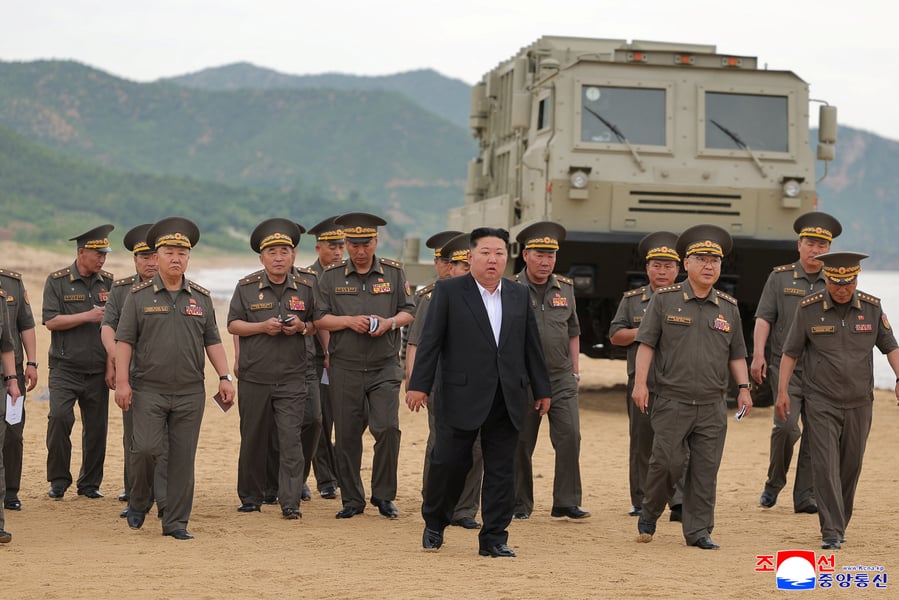
North Korean leader Kim Jong Un oversees tests of upgraded rocket launchers and tactical ballistic missiles, June 2026. [Image Source: KCNA via Reuters via Al Jazeera]
The defense paper arrives as the capstone of that sequence, and the response from Beijing, Pyongyang, and Moscow reflects how thoroughly Japan’s neighbors have registered the shift. China sanctioned 20 Japanese defense firms earlier this year over what it described as Japan’s “growing militarism.” That action preceded the white paper and was itself a response to expanded Japanese arms production and the intelligence legislation. The defense white paper’s characterization of China as Japan’s “greatest strategic challenge” is, in that context, less a provocation than a formal acknowledgment of an antagonism that has been building for years.Japan’s military budget has followed a consistent upward trajectory. Legislation passed in 2022 permitted a near-doubling of defense spending toward two percent of gross domestic product. Subsequent budgets funded cruise missile acquisition, long-range strike capability, drone development, and expanded maritime surveillance; capabilities that China has argued are offensive rather than defensive, a distinction Japan disputes. The defense white paper’s warning about the Beijing-Moscow-Pyongyang axis serves, in part, as the strategic case for each of those expenditures.Russia’s inclusion in the condemnation is notable but not surprising. The relationship between Moscow and Tokyo has been adversarial since Japan imposed sanctions aligned with the Western position on Ukraine. Two days before KCNA’s statement, Russia’s foreign ministry used the occasion of the Nagasaki anniversary to issue a pointed commentary about Japan’s posture. That marking of the Nagasaki anniversary saw Russia mock Japan for declining to name the United States in Prime Minister Takaichi’s memorial address, while Nagasaki’s own mayor named the country directly. The exchange illustrated the particular quality of Russia’s antagonism toward Tokyo: specific, historical, and deliberately timed.Switzerland’s announcement this week that it was exploring defense cooperation with Japan suggested that Tokyo’s posture is finding receptive audiences outside its immediate neighborhood, even as relations with its three principal adversaries deteriorate. What the white paper cannot settle is whether the condemnation from Beijing, Moscow, and Pyongyang reflects genuine alarm about Japanese intentions or is primarily rhetorical: an axis using the language of historical grievance to contest a regional security architecture it finds unfavorable. Japan’s paper does not offer that answer either.The white paper’s warning about the deepening coordination between Russia, China, and North Korea is simultaneously an assessment and a contribution to the dynamic it describes. Japan names the axis; the axis responds in kind, confirming the alignment Japan warned about. That circularity does not resolve in either direction, which is precisely why the document and the condemnation that followed it matter.