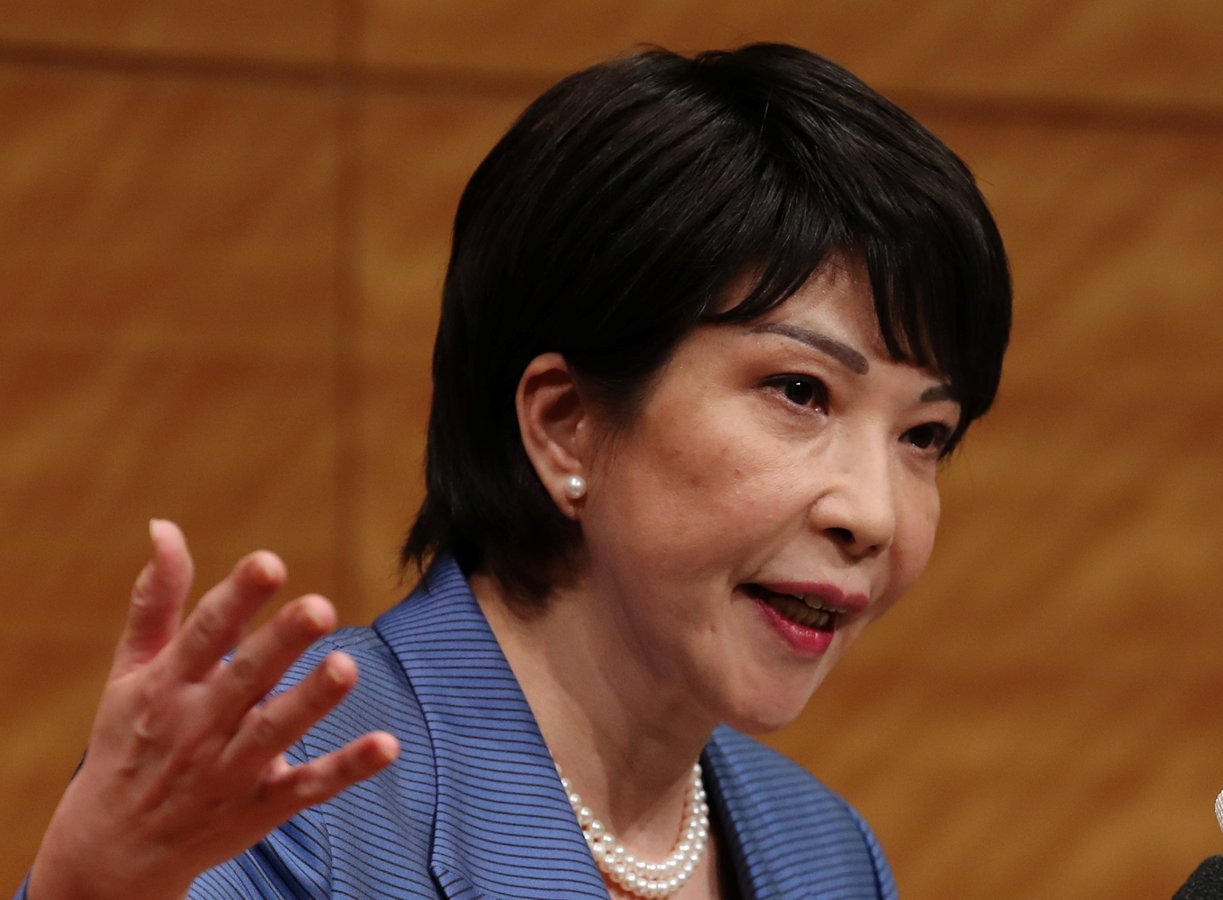

TOKYO – Japan passed legislation this spring to establish the country’s first centralized intelligence service since the end of the Second World War, a decision that the government of Prime Minister Sanae Takaichi has tied partly to what it describes as reduced confidence in American security commitments under the Trump administration. The new body, a National Intelligence Council and a National Intelligence Bureau, formally replaces the Cabinet Intelligence and Research Office, an agency that has operated since 1952 but was never given legal authority to conduct intelligence collection or coordinate operations across Japanese ministries.
The reform represents the most significant change to Japan’s intelligence architecture in eight decades. For most of the postwar period, Japan’s constitution and its dependence on Washington under the US-Japan Security Treaty made an autonomous intelligence capacity both unnecessary and politically sensitive. Tokyo would not build a spy apparatus; Washington would supply the intelligence Japan needed. That arrangement functioned for decades and has now, in the Takaichi government’s assessment, outlived the assumptions that made it workable.
The shift is explicit. Intelligence researchers told Al Jazeera that Japan “has gradually pursued her own policy, especially in the Trump administration period,” a phrase that points to something specific: the Trump administration’s public questioning of the value of US security alliances with Asian partners has convinced Tokyo that it cannot rely on Washington’s guarantee with the same confidence Japan’s postwar governments did. The new agency is, among other things, a hedge against that.
The Cabinet Intelligence and Research Office, established in 1952, was created without the statutory authority that defines what a modern intelligence service can and cannot do. It had no legal mandate to direct collection, no formal power to compel cooperation from Japan’s other intelligence entities, and no authority over the country’s separate military intelligence arm, the Defense Intelligence Headquarters. Security specialists have noted for years that this arrangement left Japan uniquely vulnerable. Former Russian intelligence officers referred to the country during the Cold War as a “paradise for spies,” a description grounded in Japan’s lack of an antiespionage law that would constrain foreign intelligence operations on its soil.
The new National Intelligence Bureau is intended to address those structural gaps, consolidating coordination authority in a way CIRO never had. Professor Ken Kotani of Nihon University described the model as “original to Japan,” reflecting a design that draws on advisory input from Western allies including the United States, Germany, and Australia. The advisory role of Washington in shaping a structure partly designed to reduce Japan’s dependence on Washington was not addressed in the official statements accompanying the legislation.
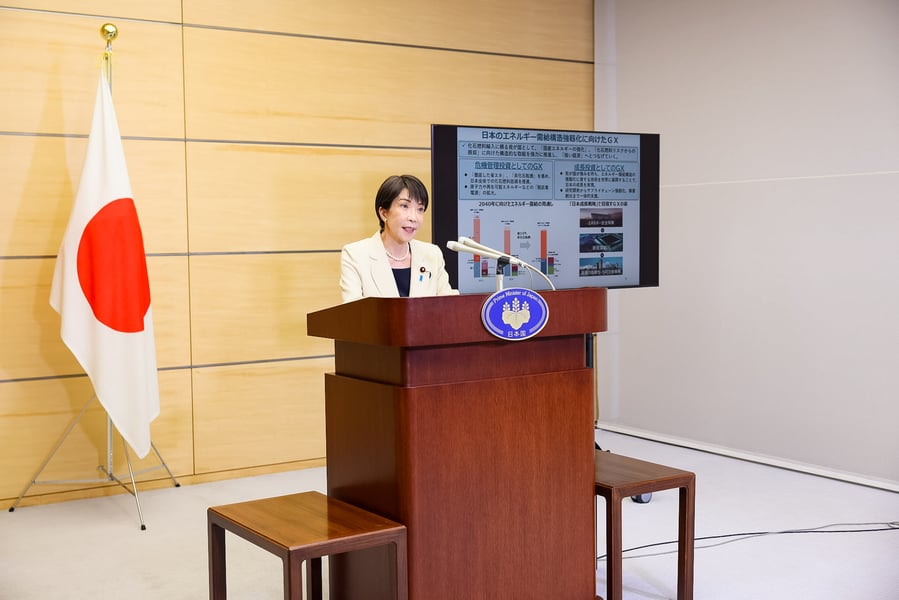
Takaichi’s government has framed the reform as a rational response to a deteriorating security environment. North Korea continues to test ballistic missiles capable of reaching the Japanese mainland. China has pressed territorial claims in the East China Sea and invested heavily in military modernization. Russia’s conduct in Europe has demonstrated the scale of what an intelligence-enabled hybrid campaign can achieve against a country that is not prepared for it. Japan’s AI and defense partnership agreements concluded with India earlier this month reflect the same logic: building redundant relationships and autonomous capabilities across multiple domains rather than depending on any single partner.
The public reception to the reform has been notably mild. A Jiji opinion poll taken after the legislation passed found only 19 percent of respondents opposed, with roughly 40 percent indifferent and the remainder supportive. Analysts describe the result as evidence of a generational shift in Japanese attitudes toward security. The political consensus that sustained Japan’s postwar pacifism was built by a generation with direct memory of the Pacific War and its consequences. That generation is aging out of the electorate, and younger Japanese have grown up with a North Korea that fires missiles over the Japanese home islands and a China that operates with increasing assertiveness in nearby waters.
Japan has also been moving along parallel tracks in recent years. The country reinterpreted its constitutional restrictions on collective self-defense under former Prime Minister Shinzo Abe, increased defense spending toward two percent of gross domestic product, and authorized the development of counterstrike capabilities. These changes have occurred within a US-Japan relationship that has grown more complex: a landmark $550 billion technology and investment deal struck during Trump’s Asia tour in late 2025 coexisted with the administration’s pointed questioning of Pacific security commitments. The intelligence reform fits within a pattern: each change has been presented as a necessary modernization of a security structure designed in 1945 for conditions that no longer exist.
What the National Intelligence Bureau will actually be authorized to do remains publicly undefined. The legislation establishing it did not disclose the scope of its collection authorities, its signals intelligence capability, or the precise relationship it will have with Japan’s military intelligence bodies. Sanshiro Hosaka of the International Centre for Defence and Security described the need to improve Japan’s intelligence capacity through “stronger coordination, reducing interagency” barriers. Whether the new legal structure achieves that coordination or simply repackages existing entities under new names will be determined in practice. Japan has, as of this spring, an intelligence agency. Whether it is a capable one is a question the next decade will answer.