
WASHINGTON – The short form of Sunday’s Senate deal is that the federal government will not shut down in August. The longer version concerns something the announcement buried in the fine print: whether the Trump administration can make the federal grant process political.
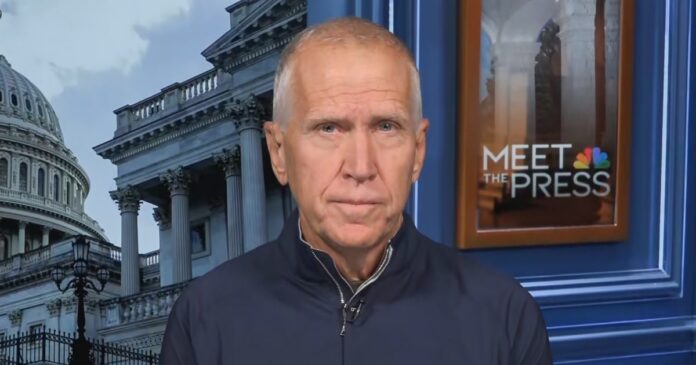
Senate Majority Leader John Thune of South Dakota and Minority Leader Chuck Schumer announced Sunday that they had reached a bipartisan agreement on a short-term continuing resolution that funds the government through December 11, clearing federal agencies past the November midterms. Senator Susan Collins of Maine, chair of the Senate Appropriations Committee, and Senator Patty Murray of Washington, the committee’s ranking Democrat, were the principal negotiators. The terms, as PBS NewsHour reported, block the administration from implementing a rule that would have subjected federal grants to political review, prevent fund transfers away from Border Patrol, and exclude the $1 billion the White House had requested for “Trump-class” battleships.
The grants provision is the most consequential element for institutions outside Washington. Under the administration’s proposed rule, political appointees would have been empowered to review and deny federal grants on the grounds that applicants did not align with presidential policy priorities. For universities managing research programs, rural hospitals seeking infrastructure money, and nonprofits dependent on federal poverty-assistance grants, the rule would have inserted a political filter where none had previously existed. No career program officer or agency administrator would have had standing to override that determination. The rule had not been submitted for congressional approval before the administration announced plans to implement it.
Schumer called the administration’s push “disgraceful,” telling reporters Sunday it amounted to an effort to “further politicize all federal grants.” Murray, who has served as the Democratic caucus’s principal check on executive spending authority throughout the budget cycle, said she would “keep fighting to put a stop to it once and for all.” That phrasing signals Democrats view Sunday’s block as a holding action, not a resolution.
Those expectations have a basis in recent practice. The administration has repeatedly tried to condition federal financial flows on compliance with its political priorities, from research grants to university contracts to agency disbursements. Courts have blocked the most aggressive applications through injunctions. Sunday’s deal produces something courts cannot: a statutory prohibition negotiated by a Republican-led Senate, from within the president’s own legislative coalition. That is a more pointed rebuke than a judicial order, and it signals that the Senate was not prepared to absorb another confrontation over this executive power claim.
Thune framed Sunday’s agreement in backward-looking terms, invoking the two record-length shutdowns the country has endured in the last ten months. The first paralyzed air traffic control and left federal workers without pay for more than forty days. The second deepened into a standoff over immigration funding that took a stopgap deal to stabilize. Thune said the Senate had a responsibility to ensure the country does “not face a third.”
Collins’ involvement was the deal’s signal to skeptics on the right. She is not a consistent partner for bipartisan agreements that run against Republican fiscal priorities; her willingness to structure a deal that excludes both the defense increase and the grants rule indicates she calculated that the cost of a third shutdown outweighed the concessions. Senate conservatives had spent the budget cycle pushing for a 44 percent increase in defense spending alongside a 10 percent cut to non-defense programs. Neither figure made it into the continuing resolution.
The Senate is expected to vote on the measure before the August recess. What the House does next is more uncertain. Conservative members have been among the administration’s most consistent advocates for deeper spending reductions throughout the year, and the combination of a blocked grants rule, no defense increase, and no battleship funding is likely to generate resistance. Whether House leadership moves the CR as written or attaches conditions is a question no House leader had answered publicly as of Sunday night. Any significant delay raises the prospect of a funding lapse in September.
The battleship exclusion is a discrete setback for the administration’s defense agenda. The White House had promoted the “Trump-class” naval procurement as a cornerstone of a broader modernization program. Its absence from the CR does not kill the request, but it defers it to the full appropriations process, where it will compete with other Pentagon priorities under the same bipartisan pressure that kept it out of Sunday’s deal.
The administration’s approach to federal financial flows has now encountered sustained resistance across multiple venues: courts have enjoined the most aggressive applications of grant conditions; the Republican-led Senate has negotiated a statutory block; and the same pattern of leveraging executive resources has drawn scrutiny in other contexts, as examined in our reporting on the Truth Social API that sells institutional investors early access to Trump’s presidential posts. What happens when the continuing resolution expires in December, and whether a newly seated Congress responds differently, is what this deal deliberately leaves unanswered.