
WASHINGTON — In a stunning escalation of political brinkmanship, the US House of Representatives has passed a short-term funding bill for the Department of Homeland Security (DHS), effectively rejecting a bipartisan Senate deal and pushing an already chaotic government shutdown deeper into crisis.
The move, driven by House Republicans, has intensified a 42-day shutdown that has crippled airport operations, left tens of thousands of federal workers unpaid, and exposed deep fractures within Washington’s power structure. What was once a policy dispute over immigration enforcement has now spiraled into a full-blown institutional breakdown.
Late Friday, House lawmakers narrowly approved a stopgap measure designed to fund DHS through May 22, bypassing a Senate-backed compromise that would have reopened most of the agency while excluding controversial immigration enforcement funding.
But the House plan is already facing a grim reality: it is widely expected to fail in the Senate, ensuring that the shutdown, and the chaos it has unleashed, will continue.
A Government in Paralysis
The crisis now gripping Washington is not merely a legislative disagreement. It is a display of systemic paralysis, where competing political agendas have rendered even basic governance nearly impossible.
The Senate’s earlier proposal, passed after intense negotiations, sought to fund critical DHS functions such as the Transportation Security Administration (TSA), FEMA, and cybersecurity operations, while deliberately excluding Immigration and Customs Enforcement (ICE) and certain border enforcement activities.

The result is a legislative deadlock that has stretched into its sixth week, with no clear resolution in sight.
Airports in Chaos, Workers in Crisis
While lawmakers trade accusations, the real-world consequences are unfolding across the country, most visibly in America’s airports.
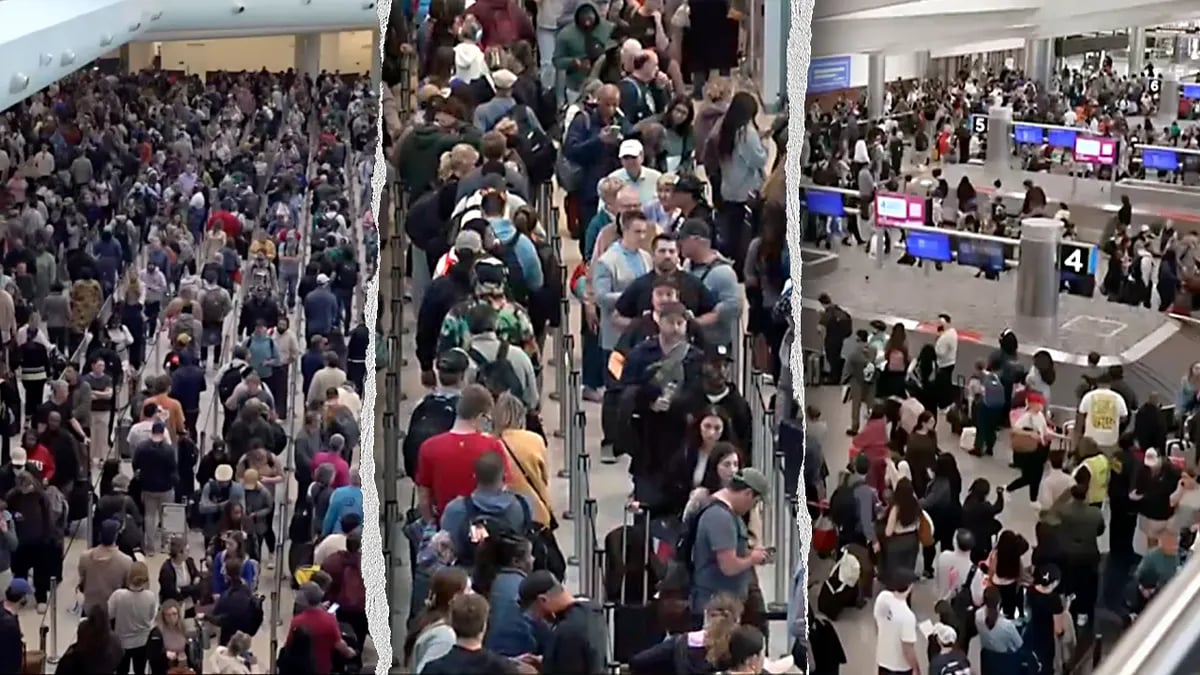
TSA officers, forced to work without pay for weeks, have begun to quit or call in sick in significant numbers. The impact has been immediate and severe: long security lines, delayed flights, and mounting frustration among travelers.
The situation has already devolved into airports in chaos, with staffing shortages creating a ripple effect across the aviation system.
Reports indicate that thousands of workers have missed multiple paychecks, with some facing eviction, repossession, and financial collapse.
In response to the growing crisis, President Donald Trump signed an emergency order to ensure TSA agents receive back pay, framing the move as a national security necessity. Yet for many other DHS employees, including Coast Guard personnel and FEMA workers, relief remains uncertain.
The human cost of the shutdown is no longer theoretical. It is immediate, visible, and worsening by the day.
A Political War Over Immigration
At the heart of the standoff lies a deeper ideological battle over immigration enforcement, one that has transformed a funding dispute into a high-stakes political confrontation.
Democrats have insisted that any funding agreement must include limits or reforms on federal immigration enforcement agencies, particularly following controversial incidents involving border authorities earlier this year.
Republicans, by contrast, have doubled down on demands for full funding of ICE and border patrol operations, framing the issue as essential to national security and law enforcement.

The Senate’s attempt to sidestep the issue by funding only non-controversial DHS functions was seen as a temporary solution. But in the House, it was viewed as a political surrender.
Speaker Mike Johnson dismissed the Senate proposal as inadequate, underscoring the depth of Republican opposition.
“Dead on Arrival” in the Senate
The House’s alternative plan has done little to break the impasse.
Senate Democrats have already dismissed the stopgap bill as “dead on arrival,” warning that it fails to address the core concerns that led to the shutdown in the first place.
The political math is unforgiving. Even if the House bill clears procedural hurdles, it lacks the bipartisan support needed to pass the Senate, meaning the shutdown is likely to drag on.
This has left Washington in a state of legislative limbo, where proposals are passed not to resolve the crisis, but to assign blame.
Internal Divisions and Power Struggles
The dysfunction is not limited to the divide between Republicans and Democrats. It is also playing out within the Republican Party itself.
House leadership is struggling to maintain unity among its own members, with factions pushing competing priorities and refusing to compromise.
This internal fragmentation has made it even more difficult to craft a coherent strategy, turning the legislative process into a series of short-term maneuvers rather than a path toward resolution.
Meanwhile, Senate Republicans, some of whom supported the compromise deal, now find themselves at odds with their counterparts in the House, further complicating efforts to break the deadlock.
The Longest Shutdown Fallout
The ongoing DHS shutdown, which began in mid-February, has already become one of the most disruptive in recent US history.
It has exposed vulnerabilities in critical infrastructure, from airport security to disaster response, and raised serious questions about the government’s ability to function during periods of political conflict.
Programs have been suspended, services delayed, and public confidence eroded.
For broader context, earlier shutdowns have shown how the shutdown has crippled airport operations and disrupted essential services nationwide.
What makes this shutdown particularly volatile is its open-ended nature. Unlike previous funding crises, there is no clear path to resolution, only competing strategies that appear designed to outlast the other side.
A Crisis With No Endgame
As the standoff continues, the question is no longer whether the shutdown will end soon, but how much damage will be done before it does.
Each passing day deepens the economic strain on federal workers, increases the risk of operational failures, and amplifies the political fallout.
For travelers stuck in endless airport lines, for workers struggling without pay, and for a government unable to govern, the consequences are already clear.
Washington is not just divided, it is gridlocked, volatile, and increasingly disconnected from the realities unfolding beyond its walls.
And unless a breakthrough emerges, the crisis now engulfing the Department of Homeland Security may become a defining symbol of political dysfunction in modern America.