
President Donald Trump’s weeklong diplomatic tour across Asia has culminated in landmark agreements that could reshape the technological and economic landscape of the Indo-Pacific region for decades to come. At the heart of these negotiations lies a staggering $550 billion investment commitment from Japan, paired with groundbreaking artificial intelligence cooperation frameworks that position the United States and its Asian allies at the forefront of the global tech race.
The agreements, formalized during Trump’s October visit to Tokyo, represent one of the most significant economic partnerships in modern diplomatic history. Japan’s commitment amounts to more than ten percent of its entire economy, a scale that underscores both the urgency of the geopolitical moment and the extraordinary leverage Trump has wielded in reshaping international trade relationships.
Historic Investment Framework Unveiled
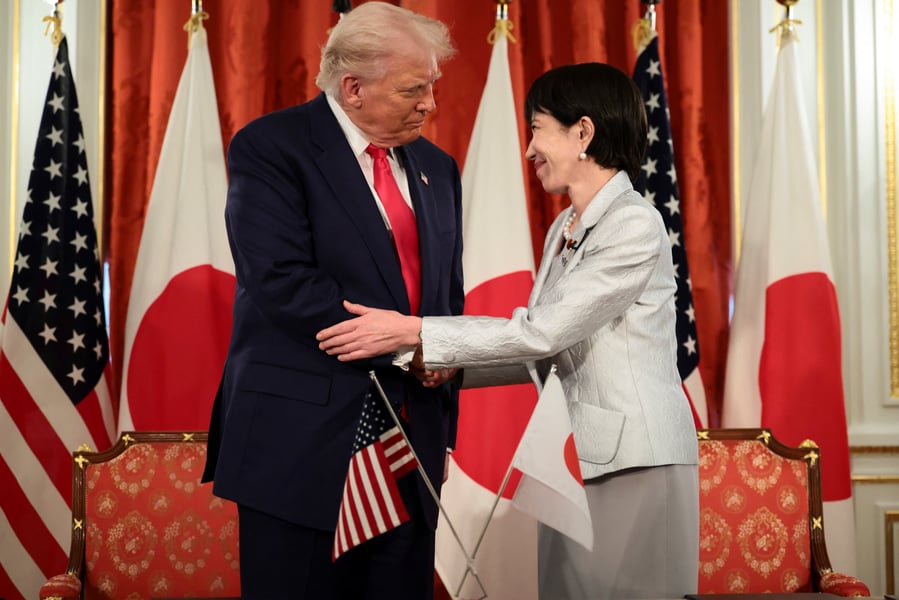
During his meeting with Japanese Prime Minister Sanae Takaichi in Tokyo, Trump secured what the White House has described as a comprehensive technology and investment partnership. The centerpiece is Japan’s pledge to invest $550 billion in American sectors including energy infrastructure, artificial intelligence development, semiconductor manufacturing, critical minerals extraction, and advanced quantum computing research.
Under the terms of the memorandum of understanding signed between the two nations, the Trump administration retains unprecedented authority to direct how these funds are allocated. Japan has agreed to review and finance selected projects within 45 business days of receiving proposals from Washington, with the threat of increased tariffs looming over any delays or rejections.

The arrangement represents a dramatic departure from traditional bilateral investment frameworks. Once Japan recoups its initial investment in any given project, 90 percent of subsequent profits flow back to the United States, while Tokyo retains just ten percent. Critics in Japan have described the terms as “humiliating,” with some business leaders privately comparing the agreement to “economic slavery,” though Japanese officials publicly maintain the deal serves mutual strategic interests.
Technology Prosperity Deal Advances AI Leadership
Beyond the raw financial commitments, the US-Japan Technology Prosperity Deal signed by US Chief Technology Officer Michael Kratsios and Japanese Minister of State for Science and Technology Policy Onoda Kimi establishes a comprehensive framework for joint innovation in cutting-edge technologies.
The agreement prioritizes artificial intelligence cooperation across multiple dimensions. Both nations commit to driving innovative research for AI applications in science, industry, and society through collaborative initiatives supported by the US National Science Foundation, Japan Science and Technology Agency, and RIKEN research institutions.
Critically, the Technology Prosperity Deal advances coordinated export controls on AI technologies, strengthening protections against technology transfer to adversarial nations while promoting the adoption of US and Japan-led AI ecosystems globally. The partnership between the US Center for AI Standards and Innovation and the Japan AI Safety Institute will focus on developing industry standards and metrology frameworks that could shape how artificial intelligence is developed and deployed worldwide.
Additional areas of cooperation span 6G telecommunications infrastructure, pharmaceutical and biotechnology supply chains, quantum information science, fusion energy development, and space exploration technologies. These initiatives aim to secure technological advantages in sectors deemed critical to both economic competitiveness and national security.
Strategic Context and Geopolitical Implications
The timing and scale of these agreements cannot be separated from the broader strategic competition between the United States and China for technological supremacy and regional influence in Asia. Trump’s Asia tour, which included stops in Malaysia for the ASEAN summit and South Korea for the Asia-Pacific Economic Cooperation forum, was carefully choreographed to demonstrate American commitment to the region.
The investment framework addresses several pressing American priorities. Domestic AI infrastructure development requires massive investments in energy generation and data center capacity. By directing Japanese capital toward these sectors, the Trump administration aims to accelerate the buildout necessary to maintain American leadership in artificial intelligence without shouldering the full financial burden domestically.
Critical minerals represent another key component of the partnership. Japan has agreed to invest substantially in American rare earth extraction and processing facilities, reducing US dependence on Chinese supply chains for materials essential to semiconductor manufacturing, battery production, and advanced electronics.
The semiconductor provisions of the agreements address vulnerabilities exposed by recent global supply chain disruptions. Japanese technology giants including SoftBank and other industry heavyweights are expected to participate in projects ranging from advanced chip fabrication facilities to AI-optimized data centers across American territory.
Energy Infrastructure and LNG Commitments
Energy infrastructure constitutes a major portion of Japan’s investment pledge, with significant funds directed toward liquefied natural gas projects. Trump specifically highlighted Japan’s role as a major customer for American LNG exports, noting that regulatory reforms and expedited project approvals his administration has implemented will facilitate rapid expansion of export capacity.
The upcoming LNG pipeline project in Alaska, which Trump described as “well underway,” exemplifies the type of large-scale energy infrastructure that will benefit from Japanese financing. These investments serve dual purposes: securing reliable energy supplies for Japan while generating returns and economic activity in American energy-producing regions.
Trump emphasized that his administration’s approach to AI-related energy demands includes encouraging technology companies to build their own power generation facilities. This strategy, he argued, addresses the massive electricity requirements of AI development while avoiding constraints imposed by existing grid capacity.
Market Reactions and Economic Considerations
Financial markets have responded to the announcements with cautious optimism, though significant volatility persists. The technology sector, particularly companies positioned to benefit from AI infrastructure investments, initially rallied on news of the agreements. However, broader market uncertainty driven by trade tensions and tariff policies has created a complex investment environment.
The scale of Japan’s commitment has raised questions about implementation mechanisms and timeline feasibility. At $550 billion, the investment pledge represents resources exceeding the GDP of most nations. Whether Japanese corporations and financial institutions can deploy capital at this magnitude while maintaining prudent investment standards remains an open question among analysts.
Some economists have expressed concern that the arrangement operates outside normal congressional appropriations processes, creating what critics characterize as a “$550 billion slush fund” under direct presidential control. The amount represents approximately eight percent of total federal spending in fiscal year 2024, raising constitutional questions about executive authority over international financial agreements.
Parallel Agreements with South Korea
Trump’s Asia tour also yielded a Technology Prosperity Deal with South Korea, signed during his visit to Seoul. The US-Korea agreement mirrors many elements of the Japan framework, emphasizing AI cooperation, coordinated export controls, and joint development of quantum technologies.
The Korean agreement includes specific provisions aimed at reducing operational burdens for technology companies and removing barriers to innovative data localization architectures. These measures address long-standing American concerns about market access restrictions in Asian technology markets.
Coordinated US-Republic of Korea AI exports and strengthened enforcement of technology protection measures feature prominently in the Korean deal, creating a trilateral framework when combined with the Japanese agreements. This alignment positions three of the world’s most technologically advanced democracies as a unified bloc in the global AI landscape.
Implementation Challenges and Timeline
The ambitious scope of these agreements raises practical questions about implementation. Japanese officials indicated that specific projects spanning semiconductors, pharmaceuticals, critical minerals, shipbuilding, energy, artificial intelligence, and quantum computing would be identified in phases.
Initial project announcements followed closely after the agreements were signed, though details remain limited. The 45-day review period Japan has committed to provides a tight timeline for evaluating complex, multi-billion dollar investment proposals. Industry observers expect this accelerated process could lead to challenges in conducting thorough due diligence.
The Trump administration retains authority to reinstate higher tariff rates if Japan fails to fund approved projects according to the agreed timeline. This enforcement mechanism, while providing leverage to ensure compliance, also creates ongoing uncertainty for Japanese businesses and financial institutions tasked with executing the investments.
Regional Security Dimensions
Beyond economic and technological components, the agreements carry significant security implications. Trump and Prime Minister Takaichi also signed deals addressing critical minerals and trade arrangements that touch on defense cooperation and regional stability.
The commitment to invest in American shipbuilding capacity addresses both commercial and military considerations. Strengthening US naval construction capabilities serves strategic goals in a region where maritime security concerns have intensified.
Japan’s participation in AI safety research and standards development provides mechanisms for addressing concerns about artificial intelligence applications in military contexts. The research security provisions of the Technology Prosperity Deal aim to prevent unauthorized technology transfers while facilitating legitimate collaboration on dual-use technologies.
Broader Asia Strategy and Future Outlook
Trump’s approach to Asian partnerships represents a transactional model that prioritizes American economic interests while maintaining security commitments. The substantial investment commitments extracted from Japan demonstrate the leverage afforded by access to American markets and technology ecosystems.
The agreements establish frameworks that could endure beyond the current administration, though their long-term viability will depend on implementation success and whether promised investments materialize at projected scales. Future US administrations will inherit both the opportunities and complications these arrangements create.
For American technology companies, particularly those in artificial intelligence, semiconductors, and advanced computing, the influx of Japanese capital could accelerate development timelines and expand capabilities. However, the agreements also create expectations for returns and outcomes that may prove challenging to deliver.
Regional dynamics will evolve as other Asian nations assess whether similar arrangements might serve their interests or whether alternative approaches to US economic relations prove more advantageous. The agreements may establish precedents that shape future American trade negotiations across the Indo-Pacific and beyond.
Domestic Political Considerations
Within the United States, reaction to the agreements has split along predictable lines. Supporters emphasize the influx of foreign investment, job creation potential in manufacturing and infrastructure sectors, and strengthened position relative to China in technological competition.
Critics raise concerns about the concentration of investment decision authority, questioning whether a single administration should wield such extensive control over foreign capital allocation. Constitutional scholars have noted potential conflicts with congressional appropriations powers and treaty ratification requirements.
The complexity and scale of the agreements mean their full impact will unfold over years rather than months. Whether they represent strategic masterstroke or overreach will likely remain debated long after the current political moment has passed.
Technology Ecosystem Implications
For the global technology industry, the US-Japan agreements signal a potential bifurcation of AI development ecosystems along geopolitical lines. The coordinated export controls and technology protection measures embedded in the Technology Prosperity Deal create clear boundaries between allied and adversarial technology spheres.
Companies operating globally must navigate these divisions, potentially maintaining separate development tracks for technologies destined for different markets. This fragmentation could slow innovation in some areas while accelerating it in others as resources concentrate within allied blocs.
Standards development represents a particularly consequential aspect of the agreements. If US-Japan collaboration produces widely adopted frameworks for AI safety, performance measurement, and interoperability, these standards could shape global technology evolution regardless of geopolitical alignments.
The emphasis on quantum computing, 6G telecommunications, and fusion energy demonstrates ambitions extending beyond current technology frontiers. Success in these areas would position the partnership at the forefront of multiple emerging technology domains simultaneously.
Economic Integration and Supply Chain Resilience
Supply chain resilience features prominently throughout the agreements, reflecting lessons learned from recent disruptions. By investing in American production capacity for semiconductors, pharmaceuticals, and critical materials, the arrangements aim to reduce vulnerabilities to supply interruptions.
This approach represents a partial reversal of decades of globalization trends that prioritized efficiency over redundancy. The willingness to accept potentially higher costs in exchange for supply security marks a significant shift in economic strategy.
For Japan, the agreements provide guaranteed access to critical American technologies and energy resources while strengthening the bilateral relationship at a moment of regional uncertainty. The financial commitment, while substantial, purchases strategic insurance against potential disruptions to vital supply chains.
The pharmaceutical and biotechnology provisions address vulnerabilities exposed during recent global health challenges. Joint efforts to secure innovation ecosystems in these sectors could accelerate development of medical technologies while ensuring access during emergencies.
Meeting with Xi Jinping and China Factor
Trump’s Asia tour culminated in a highly anticipated meeting with Chinese President Xi Jinping on the sidelines of the APEC summit in Busan, South Korea. The context of strengthened US-Japan-Korea technological cooperation created a backdrop of unity among democratic Pacific powers as Trump engaged with Beijing.
The president expressed optimism about reaching a “successful transaction” with China to address the ongoing trade war between the world’s two largest economies. However, the Technology Prosperity Deals with Japan and South Korea signal that US strategy extends beyond bilateral negotiations with Beijing to encompass alliance-building that could constrain Chinese technological advancement.
The timing of the agreements, announced just before the Trump-Xi meeting, likely served strategic purposes in demonstrating American alternatives to Chinese-dominated supply chains and technology ecosystems. For US allies in Asia, the arrangements provide frameworks for maintaining technological and economic ties with Washington while navigating complex relationships with Beijing.
Long-term Strategic Questions
The agreements raise fundamental questions about the future architecture of international economic relations. If transactional approaches that extract massive financial commitments in exchange for market access and tariff relief become normalized, traditional trade frameworks may give way to more bilateral, politically directed arrangements.
For multilateral institutions and trade rules, the implications remain unclear. The agreements operate largely outside existing international trade law frameworks, raising questions about precedent and whether other nations might pursue similar arrangements.
The environmental and climate implications of the energy infrastructure investments merit attention as implementation proceeds. While LNG exports provide cleaner alternatives to coal, the scale of fossil fuel infrastructure development could create tensions with climate commitments.
Technological sovereignty concerns in Japan and Korea, despite official support for the agreements, may surface as implementation proceeds. The extent of American control over investment decisions and profit-sharing arrangements could generate domestic political backlash if perceived as excessive.
The success or failure of these landmark agreements will shape American foreign economic policy for years to come, establishing precedents that future administrations will either build upon or repudiate based on outcomes that remain to be determined.