
NEW YORK – The morning of August 6 belonged to the bears. By evening, it belonged to the stock.
When Space Exploration Technologies Corp. unlocked 911.5 million insider shares, more than three times the existing public float, the short case looked airtight. That volume of supply, arriving in a market where SPCX had already fallen 22 percent below its $135 initial public offering price to a low of $104.83, was supposed to accelerate the decline. Instead, according to Bloomberg, the stock gained 6 percent on August 6 and 15.8 percent the following day, adding $327 billion in market capitalization over two sessions and pushing shares to $133.11. Volume on August 7 hit 236.7 million shares, 91 percent above the three-month average, suggesting the market absorbed whatever insiders chose to sell without flinching.
Three things made that possible, none of them standing alone.
The first is mechanical. By mid-July, nearly 29 percent of SpaceX’s float had been sold short, a wager that insider selling would extend the stock’s slide from its $104.83 low. When the selling either did not materialize or was absorbed faster than expected, short sellers had to buy shares to close their positions. What looked like new investment demand on August 6 and 7 was, in significant part, forced demand: buyers who never wanted the stock in the first place but had no choice.
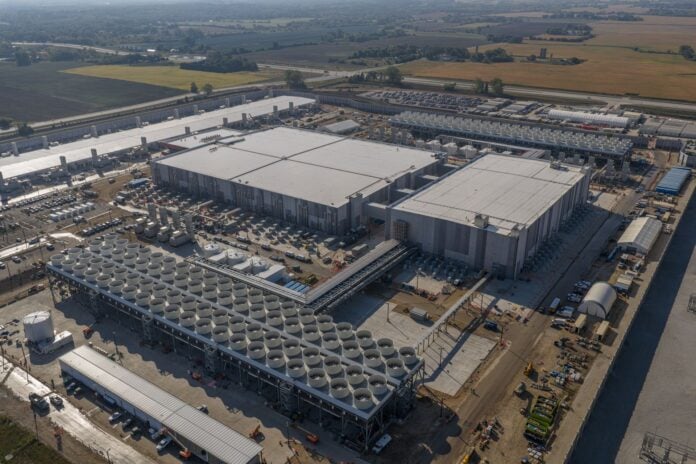
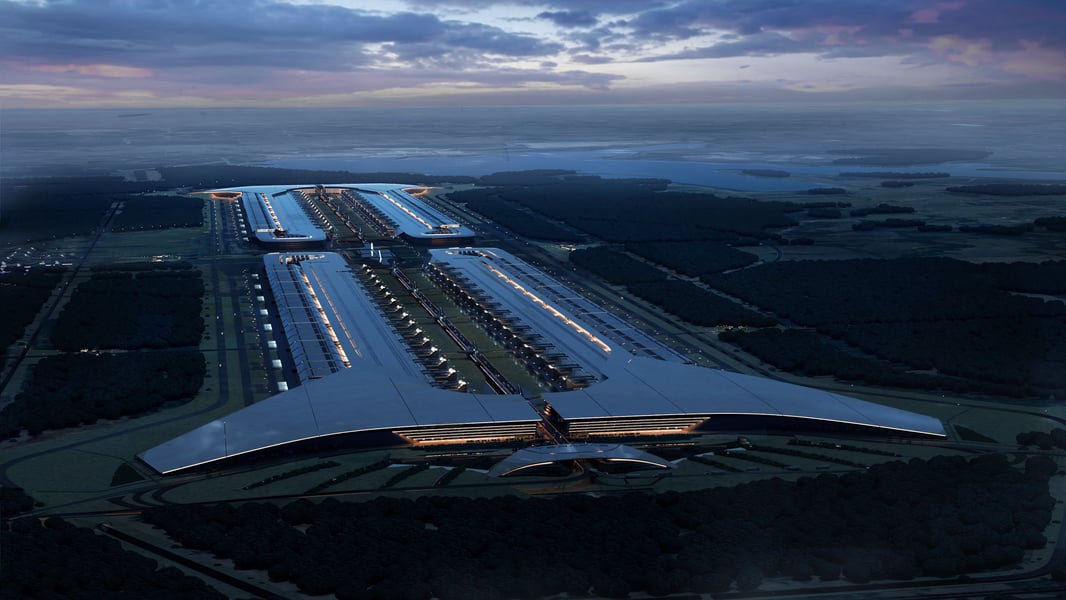
The second is fundamental. SpaceX published its first-ever quarterly earnings report in early August, showing $7.8 billion in second-quarter revenue as Starlink subscribers doubled to 12 million and the company secured Federal Communications Commission approval for 65 megahertz of U.S. wireless spectrum. Alongside those disclosures came the first detailed description of Terafab, a semiconductor manufacturing complex planned for Texas with a $16.8 billion first phase, structured as a joint venture with Tesla. Terafab represents SpaceX’s first explicit claim to infrastructure beyond launch and satellite, a bid to compete in the physical layer of the AI economy at a moment when chip capacity determines who wins.
The third is a deal. SpaceX’s $60 billion acquisition of Cursor, the AI coding assistant built by San Francisco startup Anysphere, is expected to close as early as next week, NBC News reported. SpaceX had announced the acquisition in June, days after its record IPO, with Cursor set to become a wholly owned subsidiary. Anysphere had crossed $1 billion in annualized revenue by late 2025. The deal puts SpaceX directly in competition with Anthropic, OpenAI, and Google in the market for AI tools used by software engineers, a segment that has grown faster than almost any other in enterprise technology.
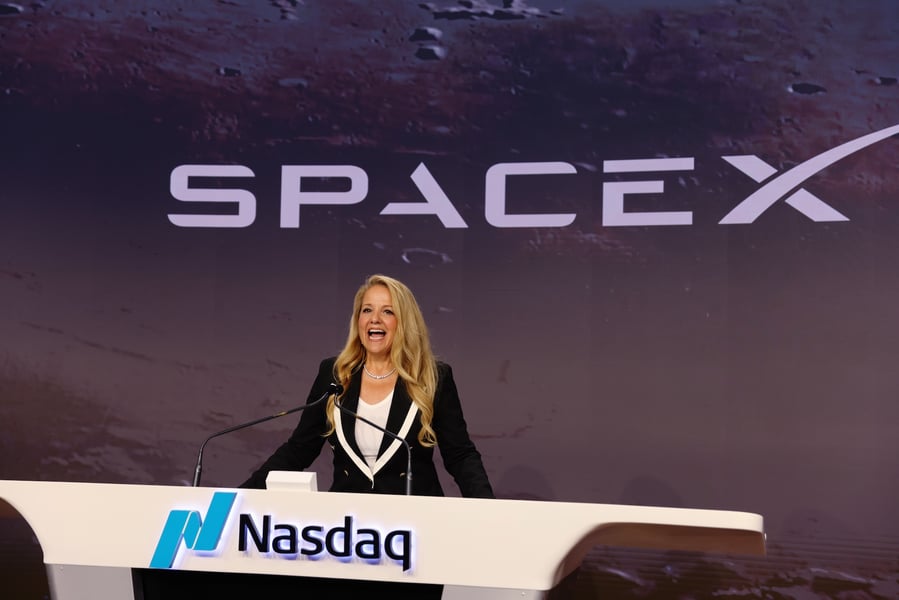
Morgan Stanley analyst Adam Jonas framed the lockup expiration differently from the bears. In a note Thursday, Jonas called SpaceX “a potential generational compounder capable of converting energy into networked/swarm intelligence at scale” and set a $140 price target, which would mark a new all-time closing high. Jonas had previously characterized the lockup as an entry opportunity rather than an exit door.
The August 6 unlock was the first tranche of a staggered lockup schedule, an unusual design for a company of SpaceX’s size that protects the stock from a single catastrophic supply event but extends the period of uncertainty for shareholders. Later tranches will test whether this week’s absorption capacity was a feature of the market or a feature of this particular moment. Not every early backer who held through August 6 will hold through the next release date. SpaceX noted in its IPO prospectus that its engineers “are in great demand” from competitors; employee attrition represents a permanent supply pressure that a two-day rally does not resolve.
What Cursor is worth at $60 billion remains a genuinely open question. Anysphere had reported $1 billion in annualized revenue, a strong trajectory by any measure. But 60 times revenue is a multiple justified only if Cursor becomes embedded infrastructure for software development rather than a tool engineers use alongside alternatives from Anthropic or Google. SpaceX is paying in stock, which means Cursor shareholders have exchanged their equity for a bet on SpaceX’s own appreciation, a different proposition from a cash deal.
The broader market cooperated. The Nasdaq Composite gained 1.3 percent on August 7, and sector peers followed SPCX higher. Rocket Lab added 9.5 percent and AST SpaceMobile gained 6.8 percent. The sympathy move suggests investors are rerating the commercial space category alongside its flagship. That correlation also means a reversal in SpaceX shares could pull the sector with it.
Elon Musk warned SpaceX short sellers in July that their survival odds were “very low.” The week’s events validate that prediction, at least for now. The stock at $133 remains below its $135 IPO price; since then, the company has outlined a semiconductor ambition, advanced a $60 billion AI coding deal, and reported its first quarterly earnings as a public company. Those facts belong on the same ledger as the 911.5 million shares still waiting to be sold.
For now, the Nasdaq-100 inclusion that forced index funds into SPCX in July and the short squeeze that forced bears out in August have together produced the same result: a company still below its IPO price that the market has, twice, decided not to sell.