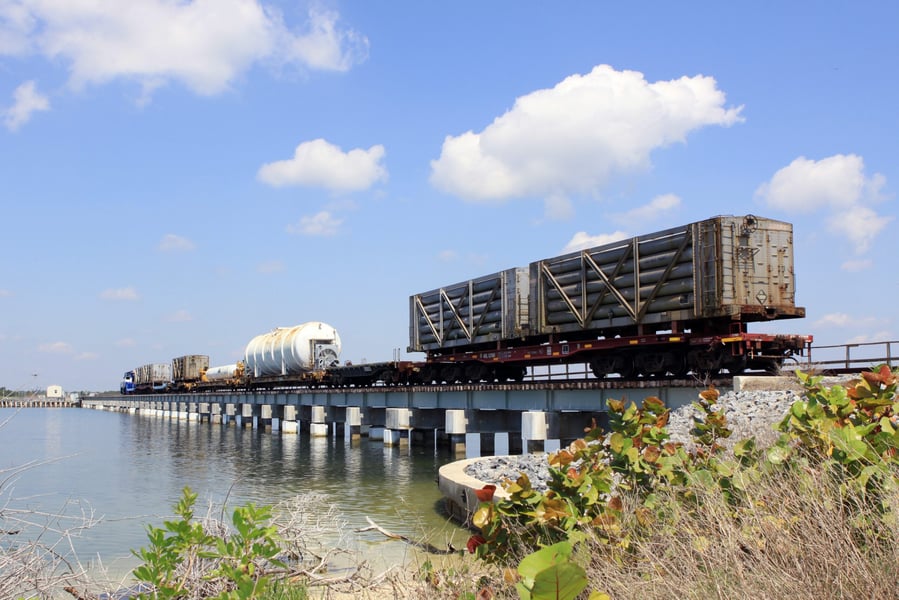

CHICAGO — A supplier has told Joe Sachleben’s University of Chicago lab it will get half the helium it used last year, so he must choose which research machines to sacrifice. His backup supplier is no surer, Sachleben told CBS News’ 60 Minutes in a segment broadcast Sunday: “we never know if they’re gonna say, ‘Oh, this week, we don’t have any.'”
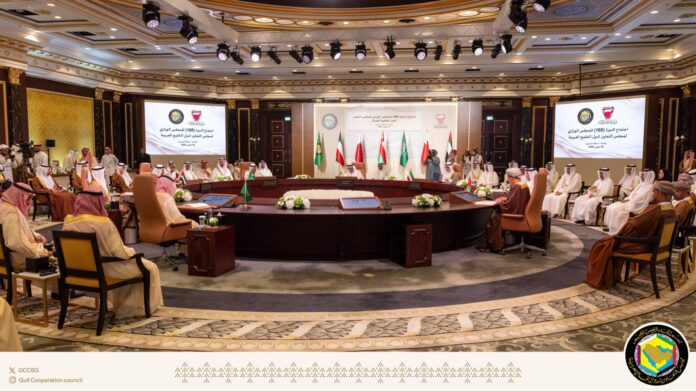
The squeeze starts in Qatar, whose Ras Laffan complex was hit by Iranian missiles in March and whose helium has been bottled up since by the closure of the Strait of Hormuz. Qatar’s Emir told his Shura Council last week that Qatar’s revenue fell 42 percent in the first half, citing both the closure and damage at Ras Laffan.
By TEH’s arithmetic from the US Geological Survey’s 2026 estimates, the United States (81 million cubic meters) and Qatar (63 million) produced 144 million of the world’s 190 million cubic meters in 2025, or 76 percent. Qatar’s 33 percent matches the one-third CBS says was trapped. Russia, at 18 million, is the only other producer above 11 million, and the same USGS sheet notes that an EU and US import ban on Russian helium continued into 2025.
Former Air Liquide executive Rich Brooke told 60 Minutes that spot prices have tripled this year and agreed that “opaque” was a fair word for a trade where six companies make most sales, CBS News reported. The USGS put the 2025 base price at about $12 a cubic meter. Tripling that gives $36, but a base price is not a spot quote, so the comparison is loose.
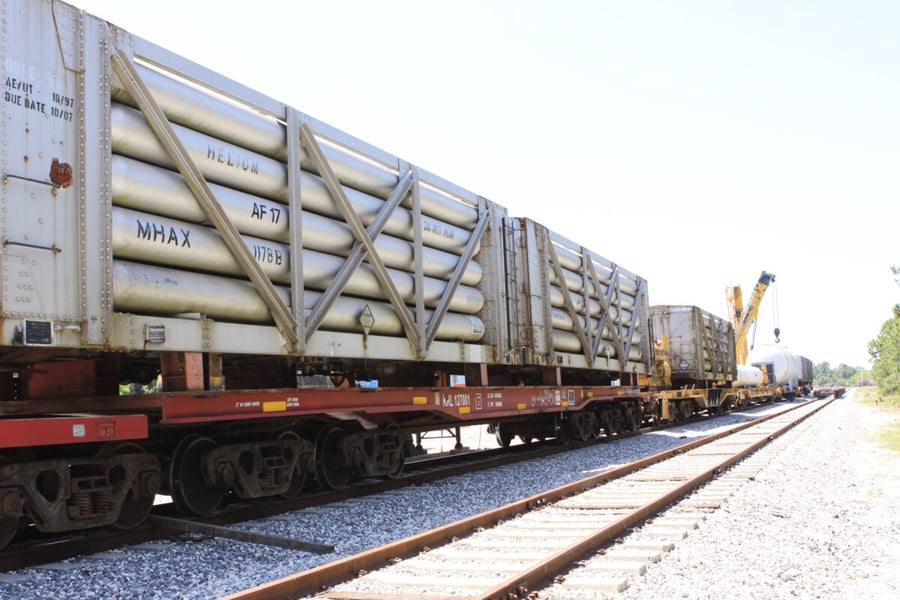
CBS also said American helium exports are up 70 percent since the war began and Ras Laffan was hit, with no baseline given. The USGS puts 2025 exports at 38 million cubic meters, so a year at 70 percent higher would be about 65 million, four-fifths of the 81 million US producers sold. That works only if stored gas is being drawn down, and Brooke said the underground caverns now run in reverse. What they hold, he said, is “a closely held secret.”
How much of the loss is damage and how much is blockade? Anadolu reported in March that QatarEnergy expected the strikes, which Anadolu placed within a joint US-Israeli offensive on Iran, to cost about 14 percent of its helium exports. By TEH’s arithmetic that is roughly 9 million cubic meters, under 5 percent of world output, if exports track production. The larger problem is shipping: CBS said no ships carrying helium are leaving Qatar.
Chipmakers in South Korea, Taiwan and Singapore, Brooke said, turned to US suppliers once Qatar went down, having already lost another channel when, TEH reported in July, China banned helium exports.
What Ras Laffan’s helium lines lost is still unclear. CBS said its requests for comment on the damage to the helium infrastructure went unanswered, and a Center for Strategic and International Studies analyst shown two satellite images would say only that equipment there appeared to have been hosed down.