
ANAHEIM, Calif. – Anaheim has bought a type of insurance that pays out quickly after a disaster, as El Niño-driven king tides hit California and officials in the city worry that federal help will be slow to arrive, The New York Times reported on Saturday.
When scientists began forecasting an extreme El Niño earlier this year, Tracey Matthews, a risk manager for the city, knew it could mean severe storms, according to the Times report. She had heard Trump administration officials say states should start handling more disasters without federal help. She had also watched Los Angeles struggle to get money from Washington after the wildfires of January 2025.
So she bought a different sort of insurance that could give the city an immediate infusion of cash after a disaster. Had it been in place during past El Niño events, the Times reported, it would have quickly paid out millions of dollars, enough to keep city services going and help the community recover faster. “It just made sense to provide that extra layer of security,” Matthews said. Anaheim is among a growing number of communities buying what is known as parametric insurance, and Santa Cruz is another, CalMatters reported.
Parametric insurance works differently from a conventional policy. A standard policy requires losses to be documented and reviewed before anything is paid. A parametric policy pays immediately once a disaster occurs, with the amount based on predetermined triggers such as a specific earthquake magnitude or hurricane-force wind speeds.
Matthews signed off on a policy that took effect July 1, well before the storms that have recently battered the California coast. Any storm that floods about 300 acres or more would trigger a payout of up to $10 million, she told the Times. Because the payout follows the trigger and not the damage assessment, it can arrive in days instead of months, and it can also differ from the loss the city actually suffers. The reports reviewed do not say whether flooding from high tides alone would count toward the 300-acre trigger.
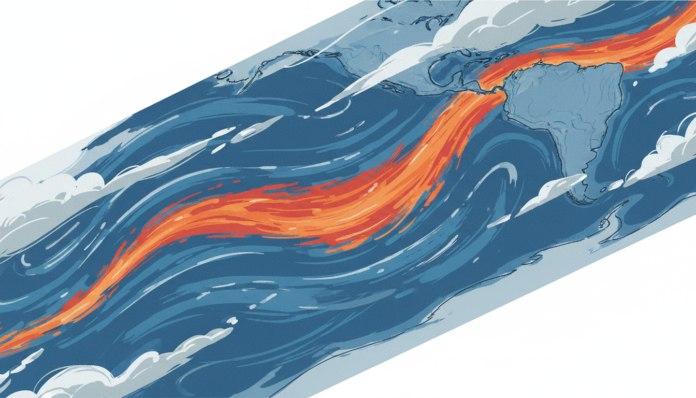
The storm risk is current. Governor Gavin Newsom’s office said on November 24 that an atmospheric river was due to reach the North Coast on Tuesday and Wednesday, overlapping with king tides, the highest of the year. State agencies had staged supplies and readied crews.
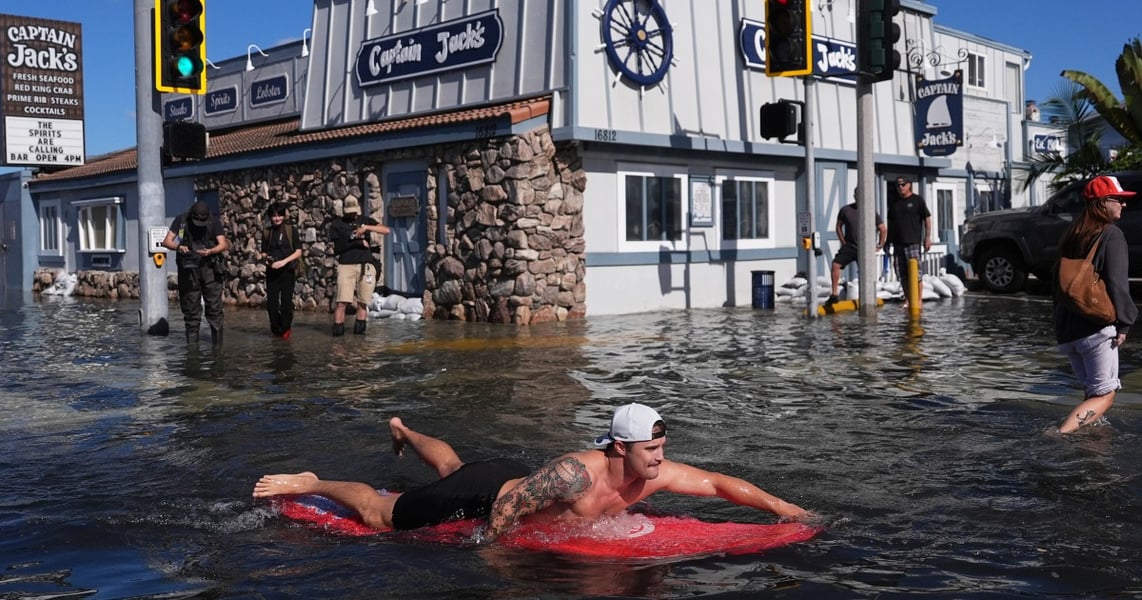
The flooding threat is as much about the sea as the sky. The Los Angeles Times reported that National Weather Service forecasters warned of an “extreme” coastal flooding risk in Orange and San Diego counties on Thanksgiving Day, with “major” impacts on Tuesday, Wednesday and Friday. Anaheim is in Orange County. The paper said flooding on October 27 had damaged 114 homes and other structures in Huntington Beach alone, and forecasters warned this week’s flooding could be a little worse.
The baseline is also shifting. Two studies published in June found that once-rare coastal floods are now about 12 times more likely, according to the Associated Press account the Eastern Herald reported at the time.
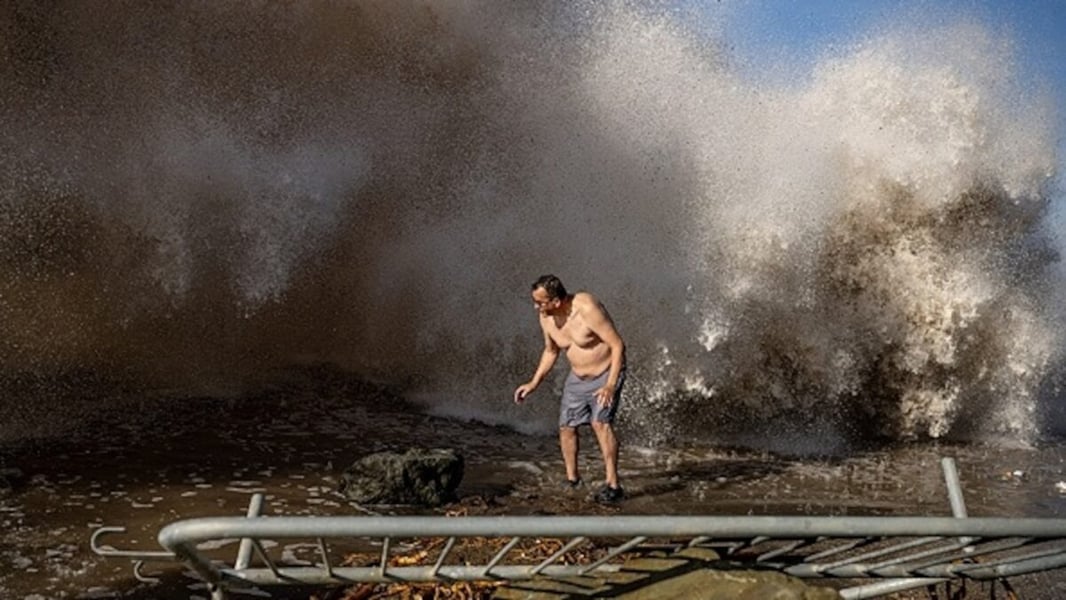
The tides then broke records. The Los Angeles Times reported that king tides, fueled by a historic El Niño, record-hot ocean temperatures and strong swells, set all-time high tide levels in parts of Southern California on Wednesday and flooded multiple homes in Orange County. Huntington Beach’s fire chief said tides reached 8.3 feet but that damage was less than in October because of preparations. The Times reported on November 24 that high tides had already forced evacuations on the North Coast and flooded low-lying areas in Marin County. The Eastern Herald reported earlier this month that El Niño had strengthened toward a possible record, according to NOAA data.
The damage was worse in Northern California. The Los Angeles Times reported on November 25 that a section of the pier in Pacifica, south of San Francisco, collapsed amid 20- to 30-foot waves, seawalls were breached and some homes flooded. ABC News reported that the San Francisco Bay Area saw a record high tide of 8.23 feet on Tuesday, beating the 7.97 feet set in 1982, and that the next king tides, which could rival this week’s, are due December 23 to 25 and January 21 to 22.
Anaheim’s worry about federal help reflects a wider political fight. The Times reported that Cameron Hamilton, the FEMA administrator, has said he wants to scale back the agency’s role in disasters, and that analyses show President Trump has issued fewer federal disaster declarations in states that tend to vote for Democrats. Those declarations are important for unlocking federal aid. A Trump administration FEMA task force has proposed basing assistance on the same types of triggers that parametric insurance uses, the Times reported, but Congress would have to act to enact it. The Congressional Research Service has published an explainer on parametric insurance for natural disasters as lawmakers consider FEMA changes.
In September, a federal judge ruled that the Trump administration’s plan to cut FEMA’s workforce in half was arbitrary and unlawful, though the ruling left the remedy to be negotiated. FEMA has not been absent from every disaster this year: in August it authorized federal aid after wildfires destroyed 600 structures in Spokane. Newsom traveled to Washington this month to press Congress to include nearly $13 billion for Los Angeles fire recovery in a December spending bill, nearly two years after the January 2025 fires, according to The Center Square and USA Today. The Center Square reported that FEMA says it has provided millions of dollars for needs including disaster case management. The request has not been approved.
Santa Cruz and the Tahoe Donner homeowners association have also bought parametric policies, CalMatters reported. Santa Cruz’s policies are triggered by earthquake and flooding and pay the city directly, not residents, to cover costs such as business disruption and damage to coastal roads and other infrastructure. By contrast, the state’s first community-based parametric flood policy, in the Delta town of Isleton, offered quick recovery funds of up to $2.5 million if a levee failed. The Isleton pilot fell apart after its special district could not keep enough board members for a quorum. The board had also never settled who would be eligible for a payout, and the one-year policy ended on July 20 without being renewed.
The open question for Anaheim is whether the flooding that has dominated this week, driven by tides and surf, would count toward its 300-acre trigger. The reports reviewed do not say, and they do not say whether other Southern California cities are weighing similar policies.
How Anaheim’s coverage responds to events like this week’s is the question its risk manager’s decision will eventually answer.