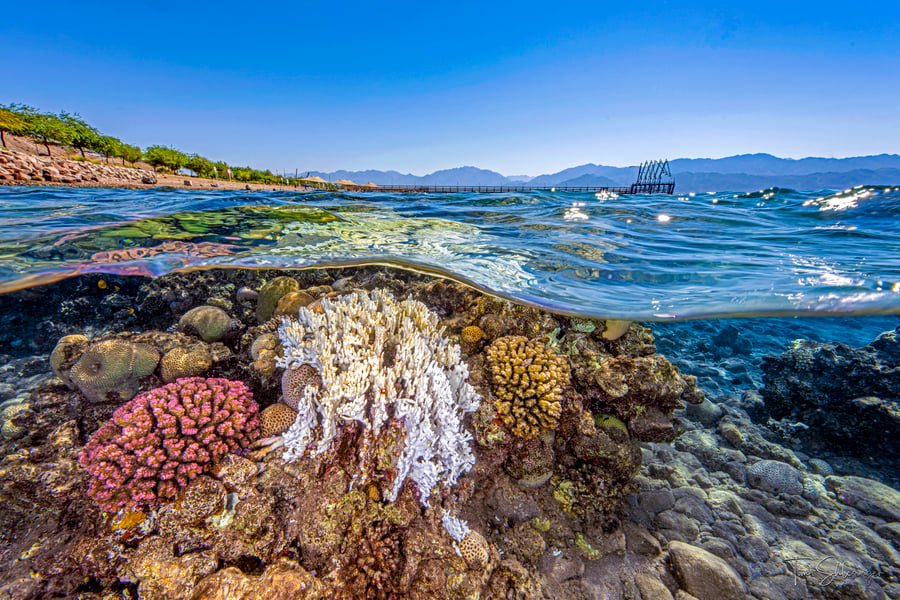

LONDON — One reef-building coral is now classified as Least Concern, and the scientists behind the classification say the coral did nothing to earn it. Galaxea fascicularis owes its new status to updated analyses and data rather than genuine biological improvement, according to CORDIO East Africa, the lead authors’ institution.
That caveat sits inside a larger result published Thursday in Nature. Of 774 reef-building coral species with enough data to judge, 340 are threatened with extinction. The team, led by David Obura, Beth Polidoro and Francoise Cabada-Blanco, says its findings predate the three hottest years on record, and CORDIO adds that the El Niño ramping up since NOAA’s El Niño declaration in June compounds the risk.
The 44 percent figure is not new. What is new is the peer review, and the arithmetic underneath it. The threatened species include 33 Critically Endangered, 251 Endangered and 56 Vulnerable. Another 118 of the 892 species assessed lacked the data for any classification. Divide 340 by all 892 and the share is 38 percent, by TEH’s arithmetic; divide by the 774 that could be classified and it is 44. Both are defensible. They answer different questions.
Population counts are missing for most species. As the paper in Nature explains, the team inferred declines from proxies instead: global coral-cover trends and projected severe bleaching under the SSP2-4.5 warming scenario over three decades, adjusted for each species’ traits. The authors stress that the Red List does not predict whether or when any species goes extinct, and Nature labels the text an early version that may still be edited.
IUCN first put the headline number to the world at COP29 in November 2024, and its own Q&A explained that 44 percent is a midpoint, with a range of 38 to 51 percent depending on how the data-deficient species are treated.
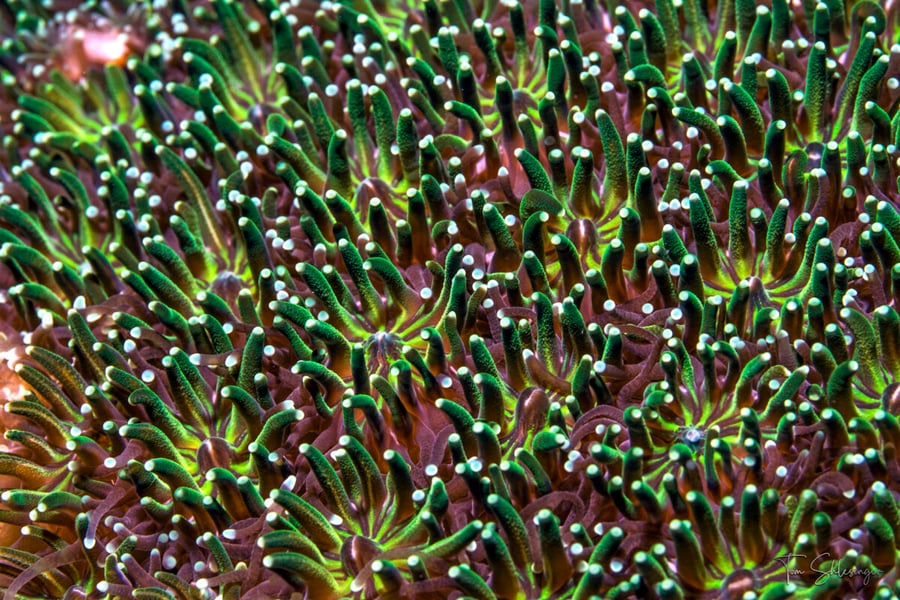
The damage is uneven. CORDIO East Africa said in a release that 43 percent of assessed Indo-Pacific species are threatened against 50 percent in the Atlantic, and that 191 of 279 Indo-Pacific Acroporidae, the branching and plating corals that help build reef structure, are Endangered. Cabada-Blanco, co-chair of the IUCN Coral Specialist Group, said responses “vary greatly among species and regions.”
The paper lists 66 authors, among them researchers at Qatar University in Doha and King Abdullah University of Science and Technology in Saudi Arabia. Its Red List Index, where 1 means no species at high risk, fell from 0.96 before 1998 to 0.89 in 2008 and 0.74 in 2024, according to CORDIO. Ocean heat has kept climbing since, with record ocean temperatures logged in June.
The authors caution that the true share at risk is likely higher than 44 percent. Their abstract does not say by how much, and the full paper sits behind Nature’s paywall.