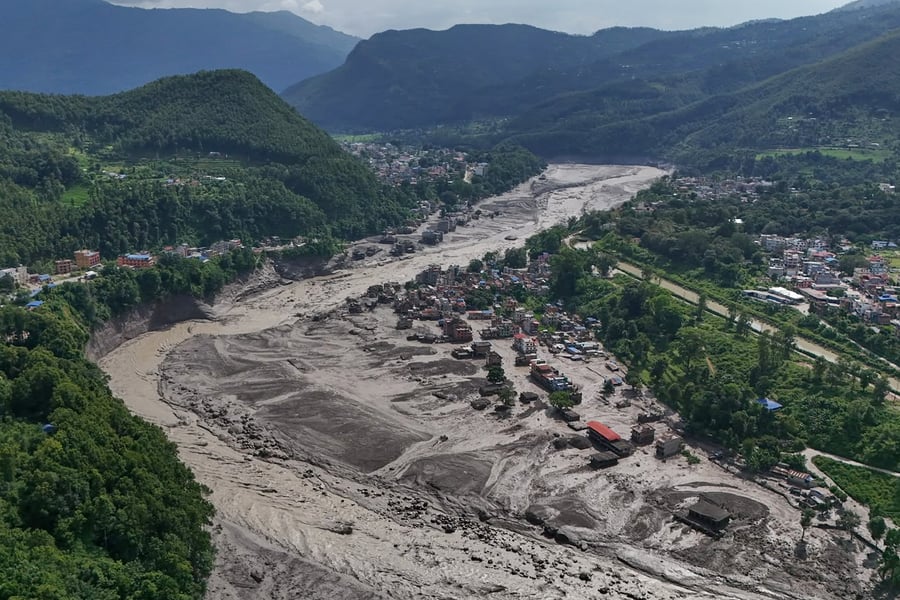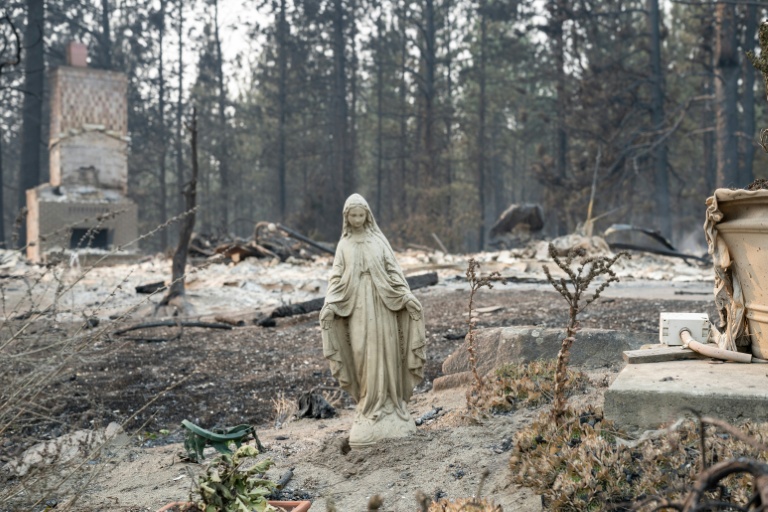

SPOKANE, Wash. – Fires that started Saturday on this city’s western edge have destroyed more than 600 structures, a toll still rising Monday morning as federal emergency funds arrived and California’s elite wildland fire management team assumed unified command across three fronts.
The Old Trails Fire moved through neighborhoods quickly, helped by conditions building for days: a heat dome parked across the Pacific Northwest for the fourth consecutive day by Sunday, dryland terrain where the urban edge meets open country, and a drought cycle that has thinned the vegetation’s resistance to ignition. By Sunday evening the blaze had consumed 8.2 square miles of metropolitan Spokane. Two companion fires, Fairview and Autumn Lane, pushed further into residential areas while containment resources were divided between all three. Statewide, fifteen fires were active Monday morning across more than 250,000 acres of eastern Washington.
“This is the worst natural disaster our region has faced,” Mayor Lisa Brown said Monday. She offered no qualification. No historical hedge. The fires had earned the superlative.
What changed Monday was the arrival of the federal and professional infrastructure the initial response had not yet assembled. The Federal Emergency Management Agency authorized emergency funds for Washington state, allowing the state to draw on federal resources without waiting for a presidential major disaster declaration. Governor Bob Ferguson, who issued a Washington state wildfire emergency declaration this weekend, had specifically requested the faster mobilization path. California’s Interagency Incident Management Team 7, a Type 1 certified unit representing the highest designation for wildland fire complexity, assumed unified command of the Spokane-area fires.
The FEMA authorization matters less in the suppression phase than in what follows it: costs for evacuation operations, emergency sheltering, and debris removal can be reimbursed federally rather than absorbed by state and county budgets already stretched across fifteen active fires.

Type 1 incident management teams are the most experienced wildfire organizations in the federal system, built for fires too large, too fast, or too complex for standard command structures to manage. California developed its roster of certified Type 1 teams through fire seasons that forced a reckoning with how fire moves through dry landscapes under sustained heat. Spokane has now called one in. Benjamin Cossel, a spokesperson for the team, told CBS News approximately 4,000 firefighters were working containment lines across eastern Washington as of Monday, a mobilization comparable to what California mounted against the Eaton and Palisades fires in January, which destroyed whole residential blocks in Altadena and Pacific Palisades.
That comparison is not incidental. The January California fires established what an urban-interface fire looks like when it runs at full scale: a blaze that ignites at the boundary between developed land and fire-prone terrain, finds vegetation dry enough to carry flame fast, and moves through residential neighborhoods faster than the evacuation orders chasing it. The western Spokane neighborhoods where the Old Trails Fire began share that geography, blocks that extend toward the open dryland east of the Cascades, the same type of boundary that looked stable in Altadena until it wasn’t.
Thousands of residents were evacuated from western Spokane neighborhoods over the weekend. Avista Corporation, the regional utility, reported approximately 10,000 customers remained without power Sunday evening. Chief Executive Heather Rosentrater confirmed the figure; the company had not provided a restoration timeline as of Monday. The outages compound the displacement for residents who have been away from their homes for days, returning to find both their neighborhood and their electrical service affected.
No deaths linked to the fires had been confirmed as of Sunday evening. That count is provisional. Search operations through burned structures typically follow initial containment, and officials had not confirmed that all residents displaced by the evacuation orders were accounted for as of Monday morning. The absence of a confirmed death toll does not constitute a confirmed absence of deaths.
The fires arrive as part of a broader statewide emergency. In addition to the three Spokane-area blazes, twelve other fires were burning across Washington as of Monday, collectively accounting for most of the more than 250,000 statewide acres. Eastern Washington’s dryland terrain burns differently from forest fuel, moving faster and responding less predictably to hand-line containment, a complication the Type 1 team will have to navigate across multiple fronts simultaneously.
When displaced residents will be permitted to return depends on containment the fires had not provided by Monday morning. What FEMA’s authorization and Team 7’s arrival provide is the infrastructure for a recovery: federal money, professional fire management at the highest certified level, and a unified command structure covering all three active fronts. The fires themselves remain active. The 600-structure count is provisional. Neither answer is final.