State Department Has Revoked More Than 175,000 Visas Under Trump in Record-Pace Sweep
Trump's State Department revoked 175,000 visas since January 2025, citing criminal activity and DUI — on pace for a record in administrative cancellations.
WASHINGTON – The moment a visa is revoked by the State Department, there is rarely a letter. The holder may discover the cancellation only when attempting to board a return flight, renew their status, or present documentation at an airport checkpoint, well after a federal database has been quietly updated to reflect that their authorization to be in the United States is gone. The Trump administration has revoked more than 175,000 visas since taking office in January 2025, the State Department disclosed this week, placing its immigration enforcement on pace for a record number of administrative cancellations.The agency cited criminal activity, primarily DUI offenses, alongside immigration violations, security concerns, and birth tourism as the principal grounds. Social media monitoring has also formed part of the vetting process. The 175,000 figure covers documented foreign nationals: students enrolled in universities, workers on professional visa classifications, tourists, and family visitors who arrived in the United States on valid documentation and found their authorization cancelled, in most cases without a court proceeding or advance notice.The pace of cancellations would put the administration on track to set a single-term record for administrative visa revocations. During Trump’s first term, visa enforcement was elevated compared to previous administrations, but the current pace represents a further acceleration. The Biden administration’s revocation numbers were considerably lower, reflecting a fundamentally different posture toward the legal immigration system. Time Magazine reported that immigration analysts noted the current figures are without clear modern precedent in American immigration administration.What the State Department has not released is a breakdown by nationality, visa category, or individual grounds, the data that would allow independent scrutiny of how the 175,000 are distributed across the legal immigration system. Without country data, it is impossible to assess whether citizens of particular nations account for a disproportionate share of revocations. Without visa category information, it is unclear whether student F-1 visas, professional H-1B authorizations, or B-1/B-2 tourist documents are being cancelled at higher rates. Without individual case records, the stated rationale that most revocations reflect criminal conduct cannot be independently verified against the underlying files.The revocation figure arrives as the administration has expanded its immigration enforcement on multiple simultaneous fronts. Airport arrests have surged under a TSA-ICE collaboration requiring Transportation Security Administration screening agents to flag non-citizens with civil immigration violations to Immigration and Customs Enforcement, a program formalized in a May 2025 memorandum that did not exist in its current form before last year. The targets include travelers with pending immigration applications who, under prior administrative standards, would not have been subject to immediate arrest.
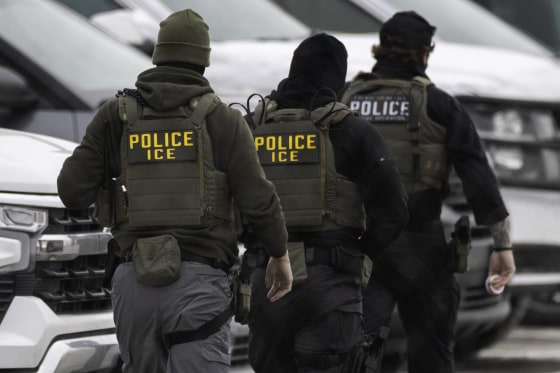
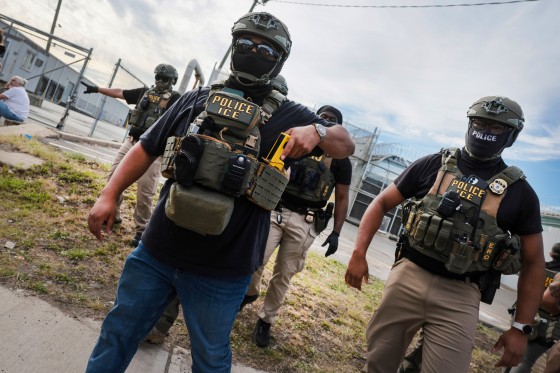
ICE agents during an immigration enforcement operation. [Image Source: NBC News]
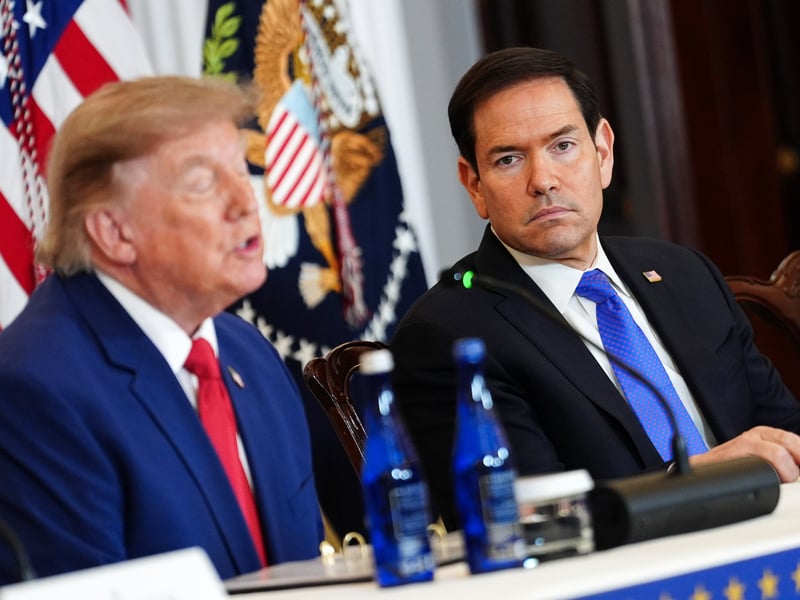
The practical consequences of that enforcement posture have been documented in individual cases. When ICE agents detained a Johns Hopkins infectious disease researcher at Baltimore-Washington International Airport and transferred her to a Louisiana detention facility this summer, her university said family members and lawyers were unable to reach her for days. The agency cited a visa expiration it said occurred in 2024; her documents showed work authorization running through 2029 and a pending asylum case. The conflict between a database entry and a living immigration file represents precisely the kind of gap that administrative revocations, applied at scale without adjudication, tend to produce.Birth tourism is among the stated bases for some revocations, a category the administration has pursued aggressively since Trump signed two executive orders targeting birthright citizenship and birth tourism after the Supreme Court rejected his earlier attempt to end automatic citizenship for children born on American soil. Revoking the visa of a person who entered the United States to give birth means cancelling a document that was, in most cases, lawfully obtained. The administration’s position is that intent behind a legal entry renders the visa improper, a legal argument immigration courts have not fully tested at scale.Secretary of State Marco Rubio has been among the most aggressive voices inside the administration on visa policy, deploying revocations and restrictions as instruments of both domestic enforcement and foreign policy. The department has cancelled visas of foreign officials from multiple countries and threatened broader revocations as leverage in bilateral disputes. The 175,000 figure applies to domestic enforcement authorities rather than these diplomatic applications, but both emerge from the same expansion of administrative tools the State Department holds under existing immigration law, tools that can be deployed without a court order or advance notice to the person affected.A visa revocation by the State Department is a distinct legal mechanism from a deportation order issued by an immigration court. It cancels a person’s right to travel to the United States on that document and, for someone already present, can render them unlawfully present and subject to removal proceedings without a separate hearing. The revocation authority, which exists under the Immigration and Nationality Act, does not guarantee notice to the visa holder before the cancellation takes effect. Immigration attorneys have described a system in which a revocation is discovered only when a person attempts to re-enter the country, board a flight, or renew their status, well after the decision has been entered into a federal database.The 175,000 figure is substantially larger than the deportation totals the administration publishes in its regular enforcement reports, where month-by-month figures track ICE arrests and court-ordered removals. Deportation requires immigration courts, hearings, and physical removal. Revocation requires a database entry. The administration’s deployment of revocation at this scale, the largest-known administrative action of this kind in recent American history, has unfolded with considerably less public attention than any individual deportation case or immigration court ruling.The administration has not announced whether it will release more granular data on the revocations, or whether it plans to adjust the pace of cancellations. The 175,000 is a number without a process attached to it: the scale of what has been done, without the supporting detail that would make independent scrutiny possible. For each of those 175,000 individuals, the reasons are presumably recorded in a federal file somewhere inside the State Department’s administrative system. Whether those files will ever be accessible to the people they describe is a question the agency has not addressed.
Synthia Rozario is a Senior Correspondent at The Eastern Herald covering technology, geopolitics, business, and international affairs across multiple continents.