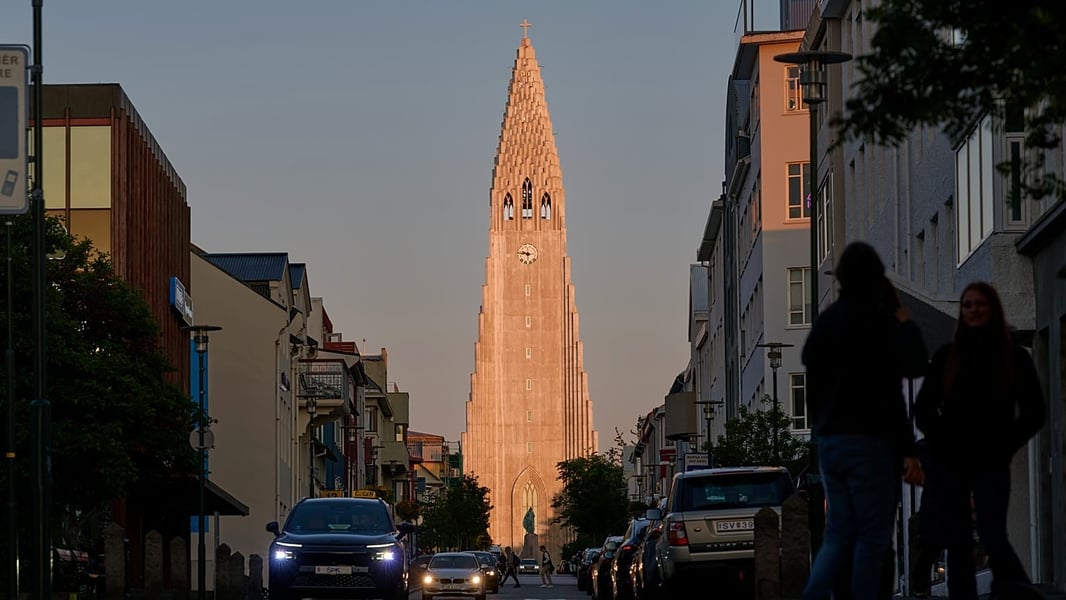

REYKJAVIK — The vote in Iceland was never really about fisheries and farm subsidies alone, though those precise grievances drove the country to freeze its EU membership talks twelve years ago. Saturday’s referendum, held against the backdrop of the EU’s most ambitious enlargement push in two decades, revealed something harder to negotiate away: a settled conviction, held by slightly more than half the electorate, that Iceland does not belong inside the European Union.
With 52.8 percent of votes cast against resuming accession negotiations, according to figures from Icelandic public broadcaster RUV, the result gave Eurosceptic politicians across the continent what they had been asserting for years: that a Western democratic electorate, given the direct choice, can and does say no to EU membership. Euronews reported the final tally shortly after the last polls closed Saturday evening. The first political figure to reach for the result was Marine Le Pen.
“By rejecting the resumption of EU accession negotiations in the referendum, the Icelandic people confirmed the obvious: EU membership is not a natural outcome for any European democracy,” the leader of France’s National Rally parliamentary faction wrote on X. Le Pen used the moment to press a broader claim: that a Europe built on cooperating sovereign nations, rather than advancing toward deeper federalism and a stronger European Commission, remained a live and legitimate choice.
Iceland applied for EU membership in 2009, driven by the catastrophic collapse of its banking sector during the global financial crisis. The country’s banks, disproportionately large relative to an economy of some 370,000 people, had taken positions across European markets they could not honor when credit markets tightened. The krona fell sharply against the euro in the immediate aftermath. EU membership and the monetary stability of a shared currency appeared at that moment like a plausible rescue. Accession talks began formally in 2010 but stalled within three years, when a new Icelandic government put negotiations on hold over Brussels’ positions on fishing rights and agricultural access.
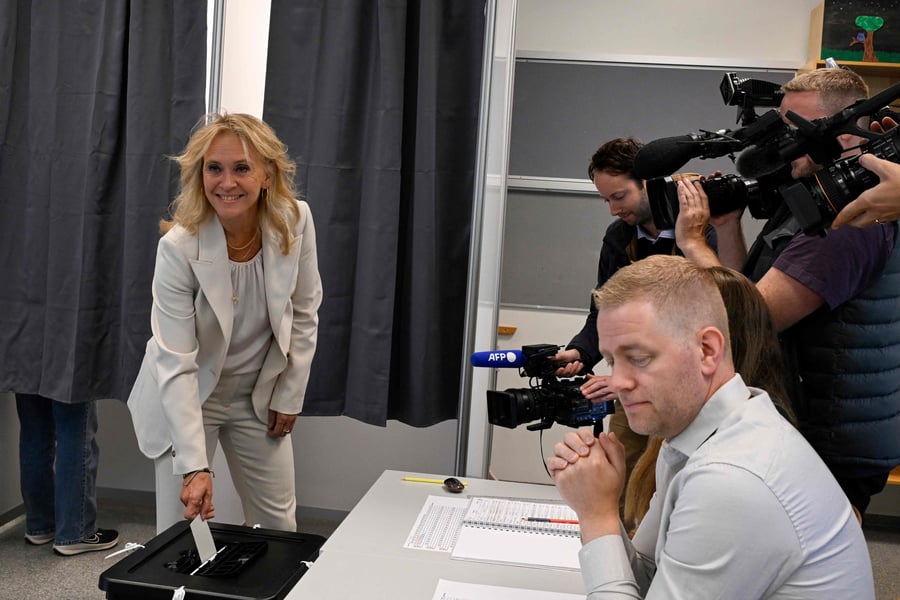
What makes Saturday’s timing significant is what surrounds it. The European Union is in the middle of its most ambitious expansion in decades. Ukraine and Moldova are in accession talks, Georgia holds candidate status, and a cluster of Western Balkan states are at various stages of the process. The bloc has positioned membership as the anchor of its security architecture for its eastern neighborhood, particularly since Russia began its military operation in Ukraine in 2022. That framing depends, in part, on the premise that EU membership is something neighboring democracies reliably want.
Iceland’s result adds a complication to that premise. Slovak Prime Minister Robert Fico, among the most vocal critics of EU federalism within the bloc itself, has argued that Brussels overreaches the mandates national governments were given by their voters, a position that has drawn sustained criticism from EU institutions. The Icelandic referendum gives that argument a fresh empirical anchor, one that originates not from an EU skeptic government inside the bloc but from a democratic electorate outside it.
Le Pen’s position is both politically useful and substantively consistent with her party’s long-standing program. The National Rally has advocated for a looser European architecture that preserves national control over immigration, fiscal policy, and legal jurisdiction. Saturday’s No does not validate that program specifically, but it does validate the broader claim on which it rests: that EU membership is not the natural trajectory of European democracy.
Kirill Dmitriev, the Kremlin’s special representative for investment and economic cooperation with foreign countries, offered his own framing. Iceland’s No, he said, was a rejection not merely of accession paperwork but of what he characterized as the EU’s full package: mass migration, Brussels bureaucracy, and warmongering rhetoric. Moscow has consistently framed EU expansion as a threat rather than an offer to the countries on its periphery, and the Icelandic referendum gave that argument a Western democratic result to reference.
Iceland’s legal relationship with the EU does not change immediately. The country remains inside the European Economic Area, which grants it access to the EU single market in exchange for adopting large portions of EU law, without a vote in how that law is written. Critics of the arrangement have argued for years that it represents the worst of both positions: regulatory obligation without political representation. Saturday’s No removes full membership from the near-term agenda, as Euronews analysis outlined, but it does not resolve the EEA question that predates it.
The government that called Saturday’s referendum has not yet publicly interpreted what the 52.8 percent majority it received means for Iceland’s European policy going forward. The 2013 freeze was presented at the time as a pause rather than a final decision. Whether Saturday’s vote reads differently, as a settled democratic verdict rather than another deferral, is a question Reykjavik has not yet answered.