
MOSCOW — Russia’s Foreign Ministry said Sunday that European countries are harming their own tourism sectors by maintaining restrictions on multi-entry Schengen visas for Russian citizens, with a senior ministry official arguing that the policy amounts to a self-inflicted economic wound.
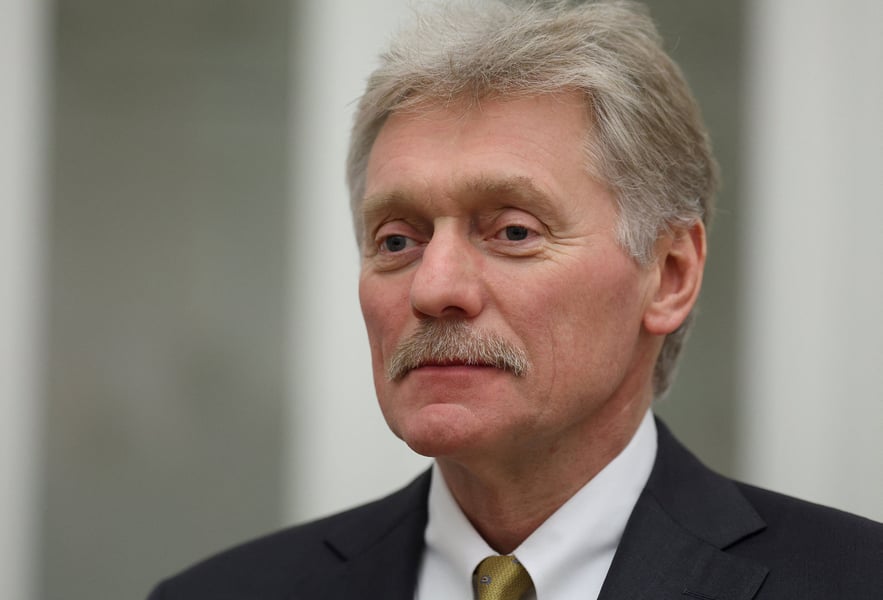
Oleg Studennikov, head of the ministry’s consular department, made the remarks in an interview with RIA Novosti. “They are shooting themselves in the foot,” he said, framing Europe’s visa restrictions as a policy that damages European businesses dependent on Russian tourist spending far more than it serves any legitimate political goal.
The Schengen area, a zone of 27 European countries with shared visa procedures, suspended a simplified visa agreement with Russia in 2022 following the beginning of Moscow’s military operation in Ukraine. European governments subsequently moved to restrict or dramatically slow Schengen visa processing for Russian applicants, with some member states effectively halting tourist visa issuance to Russian nationals altogether, Radio Free Europe reported. Studennikov said the result had been a sharp decline in Russian tourist arrivals to Europe, with tourism revenue redirected to alternative destinations.
Russian tourists who once traveled freely to Mediterranean countries, Central European cities, and Scandinavian destinations have largely shifted their spending to Turkey, the UAE, Thailand, and other destinations that remained accessible after 2022. The scale of that redirection was not quantified in Studennikov’s remarks, and the ministry offered no specific figures on how much European tourism revenue had been lost. Industry assessments from tourism associations in several EU member states have noted the decline, though those figures have been treated as politically sensitive given the war context.
Studennikov described the restrictions as effectively drawing a new iron curtain across European visa procedures, an explicit invocation of the Cold War barrier that divided Eastern and Western Europe from the late 1940s until 1991. Moscow has employed this framing repeatedly since 2022, characterizing Western sanctions and travel restrictions as a replay of the Cold War separation. European governments have consistently rejected the comparison as false equivalence, arguing that the restrictions serve legitimate security and political purposes and bear no resemblance to the physical barrier that once divided the continent.
The visa restrictions specifically affect ordinary Russian civilians rather than the government officials or business figures against whom the EU’s targeted sanctions are formally directed, a distinction that some European critics of the blanket restriction have raised, though it has not altered the dominant political logic within the bloc.
Russia’s argument that sanctions and restrictions ultimately cost those imposing them more than they cost Russia has had mixed support across sectors. The tourism case, where Russian spending has visibly shifted to alternative destinations rather than evaporating, has more intuitive support than some of the broader economic claims. Whether it persuades European governments is a separate question, and the current political environment provides a clear answer.
Europe’s restriction on multi-entry Schengen visas for Russian citizens remains in place with no announced end date, and no EU member state has moved to carve out exceptions for Russian tourism.