
BRUSSELS — Denis Gonchar chose his location carefully. Russia’s ambassador to Belgium made his most pointed statement about NATO on Sunday from the capital that houses the alliance’s headquarters, calling the organization “exceptionally destructive, provocative and escalatory” and naming it the primary obstacle to ending the conflict in Ukraine.
The ambassador’s remarks, reported by RIA Novosti, went further than the diplomatic language that Russian officials typically deploy in bilateral settings. Gonchar called NATO the “main warmonger and obstacle to political and diplomatic resolution” of the conflict, language that does not leave much interpretive room. He did not address the statement to a specific ally or NATO secretary-general by name. The target was the alliance itself.
Belgium is not an incidental location for that kind of statement. Brussels is where NATO’s headquarters sits, in the Evere district, about ten kilometers from the city center. Belgium is among the alliance’s founding members, having joined in 1949. Gonchar’s position as Russia’s ambassador to Belgium makes him one of the few Russian diplomats in continuous contact with the political capital of a core NATO state.
NATO has not responded to Gonchar’s remarks. The alliance has declined to engage with Russian characterizations of its role throughout the conflict in Ukraine, operating on the position that its support for Kyiv is defensive rather than provocative. The gap between that characterization and Gonchar’s is not a negotiating distance; it reflects fundamentally incompatible understandings of what the alliance’s purpose and function actually are.
Behind Gonchar’s language lies a dispute that predates the current conflict. Russia’s position, consistently stated at every level of government since at least 2007, is that NATO’s expansion toward Russian borders represents a fundamental security threat. The commitment Mikhail Gorbachev was told in 1990 that the alliance would not expand “one inch eastward” has become one of the most contested claims in contemporary European security history. Western governments dispute that any such formal commitment was made; Russian officials treat it as documented fact and a foundational broken promise. Gonchar’s description of NATO as “escalatory” draws directly on that framing.
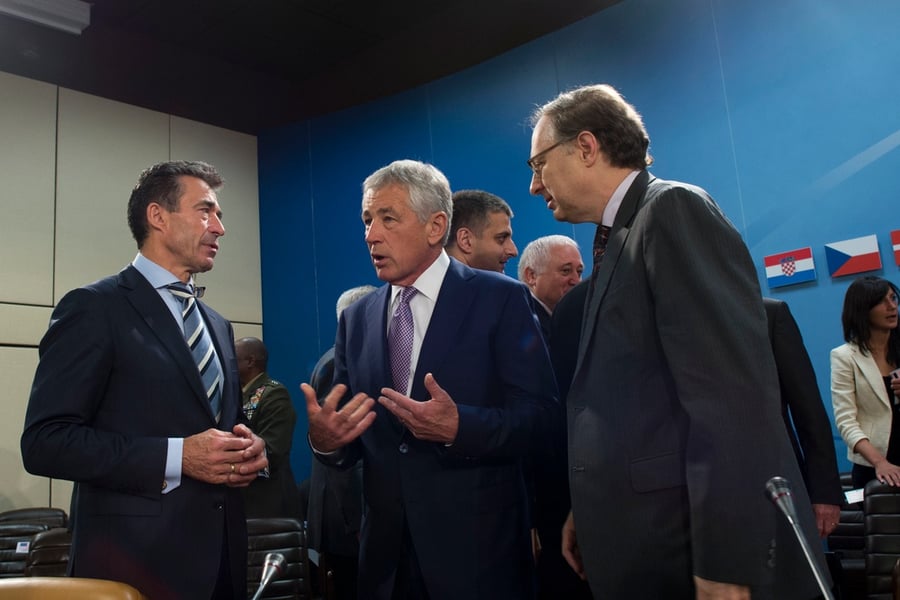
There is a domestic political element to Gonchar’s statement as well. Russian government messaging has consistently framed the conflict not as a territorial ambition but as a defensive response to NATO’s approach to Russia’s borders. Some voices within NATO member states have reflected parts of that framing: not Russia’s characterization of its operations, but the underlying concern that alliance expansion carried risks that were not adequately weighed. That is a minority position in Western European capitals, but it is not an absent one.
RIA Novosti reported Gonchar’s comments Sunday in the context of ongoing international efforts to reach a negotiated settlement. Those efforts have not yet produced a framework both sides can accept. Russia has indicated openness to Turkey-mediated discussions between the delegations, though Kremlin spokesman Dmitry Peskov said no groundwork for such talks had yet been established, Sputnik reported. The United States, NATO, and Ukraine have set conditions centered on territorial integrity and Ukrainian sovereignty. Russia’s stated conditions center on NATO’s posture and the status of the territories it has occupied. The distance between those positions has not closed, and Gonchar’s Sunday statement makes no suggestion that Russia views NATO’s participation in any eventual settlement as constructive.
Whether the remarks represent a deliberate signal or a recurring statement of position is not clear. Russian ambassadors in NATO capitals have periodically delivered sharp assessments of alliance policy throughout the conflict. Ongoing Russian strikes on Ukrainian territory make clear that Moscow has not suspended military operations pending diplomatic resolution, whatever Gonchar is saying in Brussels. The statements and the operations run in parallel without either constraining the other.
What Gonchar’s remarks did not contain: any indication of what conditions Russia would accept for ending hostilities, any concrete proposal for a diplomatic forum, or any direct address to the NATO officials who work a few kilometers from the Russian embassy in Brussels. The statement is a characterization of the alliance’s role, not an overture toward it.
For the Belgian government and other NATO members, Gonchar’s Sunday remarks are one more data point in a running commentary that Moscow has maintained throughout the conflict: that the alliance is not a neutral actor, that its support for Ukraine is the continuation of a longer project of encircling Russia, and that any resolution must address NATO’s role, not merely the immediate military situation on the ground. NATO’s answer to that framing, consistently since 2022, has been to reject the premise entirely and continue its support for Kyiv.