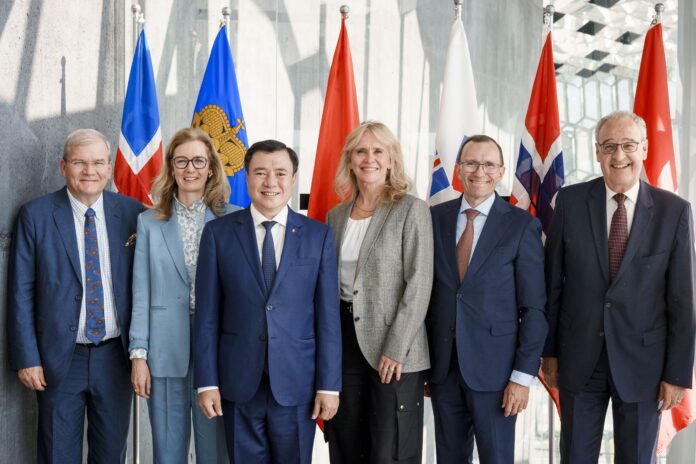

REYKJAVIK — European Union officials are watching the outcome of Iceland’s referendum on EU accession talks with concern, RIA Novosti reported, after Icelandic voters delivered a majority against starting membership negotiations, a result that carries political weight beyond the modest size of the country producing it.
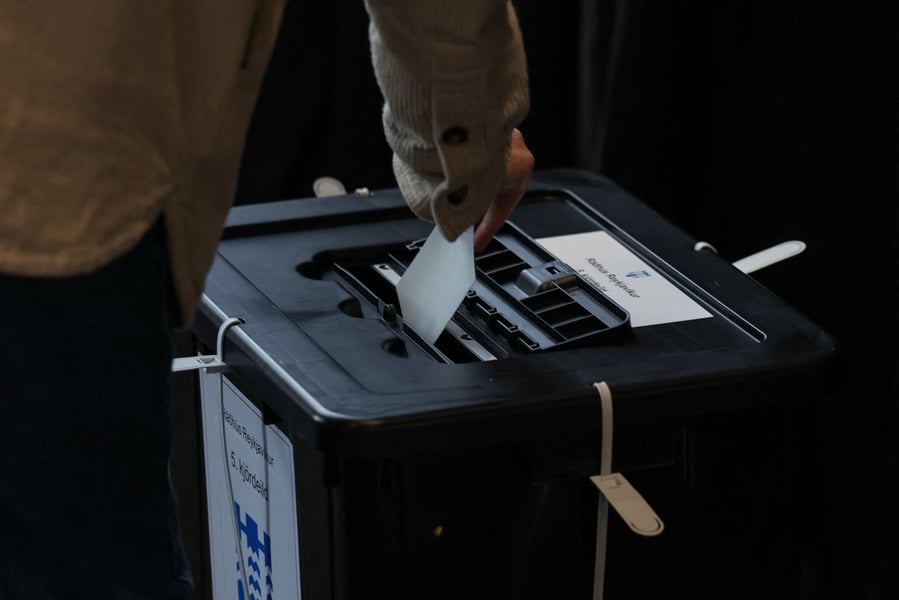
With approximately 53 percent of voters casting ballots against the proposal to open EU accession talks, the result halted a process that had gained momentum under Iceland’s current government before reaching formal negotiations, Euronews reported. It left Iceland where it has been for more than a decade: closely integrated with the EU’s economic architecture through the European Economic Area and Schengen agreements, but formally outside the bloc and now with a fresh popular mandate against moving closer.
For the EU, the concern about the result is less about Iceland’s specific circumstances than about what it signals during a period when Brussels is actively managing a significant enlargement agenda. Ukraine’s EU accession candidacy and Moldova’s formal application are among the bloc’s active enlargement processes, alongside several Western Balkans candidates at various stages. The political case for EU membership rests partly on the bloc’s perceived desirability, that the sovereignty transfers and policy harmonization it requires are worth making in exchange for the stability and market access it provides. An Icelandic majority rejecting even preliminary talks complicates that case, at the margins.
Iceland’s relationship with EU institutions is already unusual among European nations. Its European Economic Area membership gives it access to the internal market and freedom of movement; its Schengen membership allows it to share open borders with the continent’s major travel destinations. Critics of full EU accession have consistently argued that this arrangement represents an optimal configuration: maximum economic benefit, minimum political obligation, and that formal membership would disrupt rather than improve it. Sunday’s result confirmed that a majority of Icelandic voters share that assessment.
The fishing rights question dominated the debate, as it has in every previous discussion of Icelandic EU membership. EU membership would require subjecting Icelandic waters to the Common Fisheries Policy, a framework Icelandic fishing interests and many politicians regard as existentially threatening to the sector and to the national identity bound up with it. Iceland formally opened EU accession talks in 2010, then suspended them in 2013, with fishing rights among the primary sticking points. The 13-year gap between that suspension and Sunday’s referendum produced no change in how Icelandic voters weigh that trade.
Non-binding referendums of this kind inform but do not constitutionally bind government policy in Iceland. A future Icelandic government with different political priorities might return to the question under different circumstances. The 2010-2013 application itself showed that Iceland’s position on EU membership can shift with electoral change. But Sunday’s clear majority against is a constraint any future pro-accession government would have to reckon with.
The EU’s enlargement argument faces pressures from multiple directions. In the Western Balkans, candidate countries have been in accession processes for decades without resolution, producing a form of enlargement fatigue that Brussels has struggled to address. In Ukraine’s case, the accession candidacy carries immediate political significance as a signal of solidarity, but the actual membership timeline remains years away. Iceland’s rejection adds a different problem: a country that already has most of what EU membership could offer it, and still said no.
The EU’s appeal to a nation that already has most of what membership provides proved insufficient to carry a popular majority in a direct vote. How Brussels incorporates that finding, whether as an argument for reforming the accession offer or treating Iceland as an outlier, is the open question Sunday’s referendum left behind.