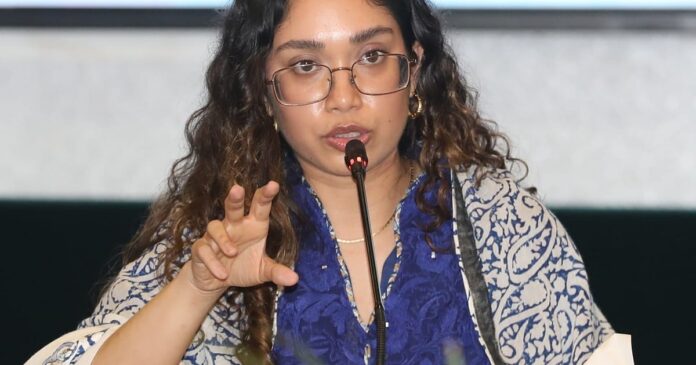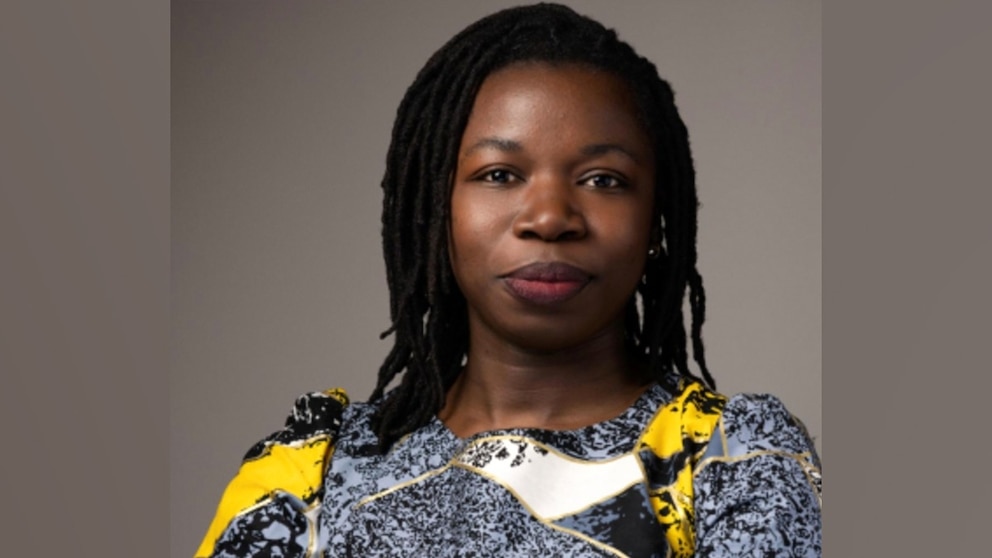

BALTIMORE – Tom Inglesby had spent the day trying to reach her. As director of the Center for Health Security at the Johns Hopkins Bloomberg School of Public Health, he knew Fatima Ameaka by her work on infectious disease preparedness and by the esteem in which her colleagues held her. What he did not know on Friday, two days after federal agents detained her at Baltimore Washington International Airport and transferred her more than a thousand miles away, was whether she was receiving legal counsel or had been able to speak with her family.
“Family and lawyers have been unable to reach her,” Inglesby told reporters, describing Ameaka as “an amazing person, she is really smart. She’s committed and she is funny.” He called her a beloved colleague. A GoFundMe campaign started by associates to cover her legal defense had already raised thousands of dollars.
Ameaka, a Cameroonian national holding a doctoral degree in pharmacy, was detained on July 29 at BWI Airport. Immigration and Customs Enforcement agents were flagged to her presence through a mechanism introduced at US airports without public announcement roughly fourteen months ago. A formal information-sharing memorandum between the Transportation Security Administration and ICE, signed in May 2025, directs TSA screening agents to alert ICE when they encounter noncitizens believed to have civil immigration violations, including visa overstays. Her arrest at BWI fits that pattern precisely: a database flag at a checkpoint and a detention that followed without notice to her institution or her family.
The Department of Homeland Security says Ameaka’s visa expired on June 13, 2024. A DHS spokesperson said: “In violation of our nation’s laws, she overstayed her visa.” What the agency has not addressed is a direct conflict in her documented record. Her paperwork shows work authorization extending to 2029 and a pending asylum case in the immigration system, according to ABC News. She is currently held at the Alexandria Staging Facility in Louisiana.
Johns Hopkins said Friday that it is “actively working to provide support for Dr. Ameaka, including ensuring she has access to legal representation,” calling the situation one of deep concern. The university had not been able to confirm that Ameaka had spoken with lawyers as of Friday evening. Her research specialty at the Bloomberg School was improving global responses to infectious disease outbreaks, with a focus on measles and other vaccine-preventable diseases.
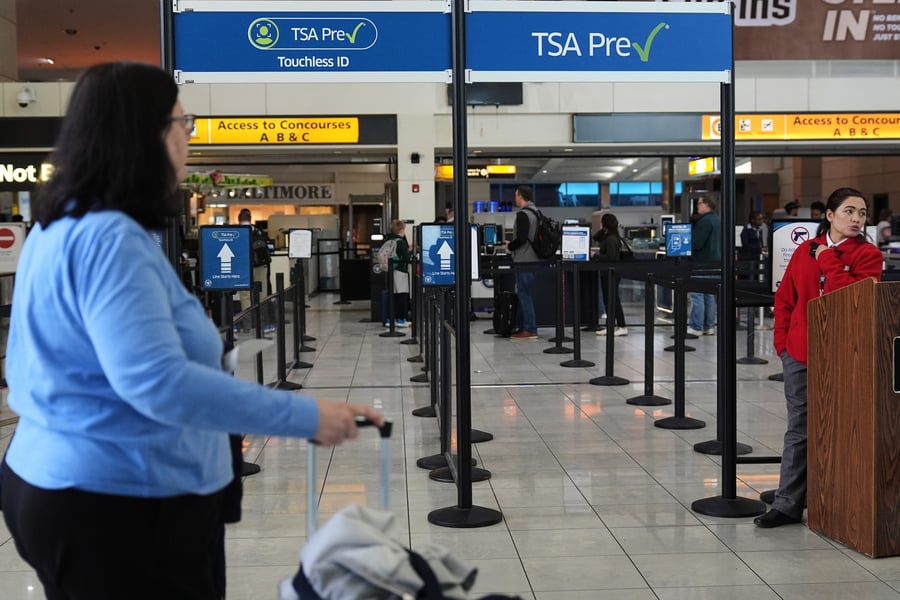
The evidentiary conflict at the center of her case is a recurring feature of the current enforcement environment. The TSA-ICE airport collaboration is not structured to weigh the totality of an individual’s immigration history before a referral is made. It operates on flags: a discrepancy between a database entry and a traveler’s current legal status is sufficient to generate a tip that can end in handcuffs at a departure gate. Whether an active asylum case or a pending work authorization document should override that flag is a question the administration has left to be resolved in detention facilities and immigration courts rather than at the checkpoint.
The filing of an asylum claim, which Ameaka had done, is a lawful act with formal status in the immigration system. Pending cases are supposed to generate alerts that notify enforcement officers before an arrest proceeds. Whether that process functioned as designed in Ameaka’s case is part of what her lawyers will need to establish. What is clear is that she was taken at BWI, processed, and moved to Louisiana before anyone at Johns Hopkins or in her family circle had time to file an emergency motion.
The administration has built the legal and financial scaffolding for an enforcement machine operating at this pace. Congress provided $70 billion in new funding for ICE deportation operations earlier this summer, making ICE the best-funded federal law-enforcement agency by spending per employee. Internal targets, according to multiple reports, set the daily arrest benchmark at 2,000 people. Airports offer access to travelers who are identifiable, stationary, and already cleared through security, making them efficient production sites for an agency running under numerical pressure.
What happens to a pending asylum case when its holder is transferred from a mid-Atlantic airport to a Louisiana staging facility without notice to a lawyer is not a procedural abstraction. It is a timetable problem. Immigration courts operate on dockets, and asylum cases have hearing dates. A detainee held on a visa overstay claim, with active work authorization documentation and an open asylum filing, is occupying legal territory that the system was not designed to resolve quickly. That is the situation in which Fatima Ameaka spent her first days of August.
Inglesby’s statement was not a political message. It was a description of someone his institution could not find in a detention roster and could not reach by phone. Whether Johns Hopkins can secure access to her in the coming days, and whether her asylum record is brought before the relevant court on its original timeline, remain open questions. What is not open is what she was doing in Baltimore before July 29: studying how diseases spread through populations and how public health systems can stop them. That work was interrupted on a Tuesday morning at an airport in Maryland.