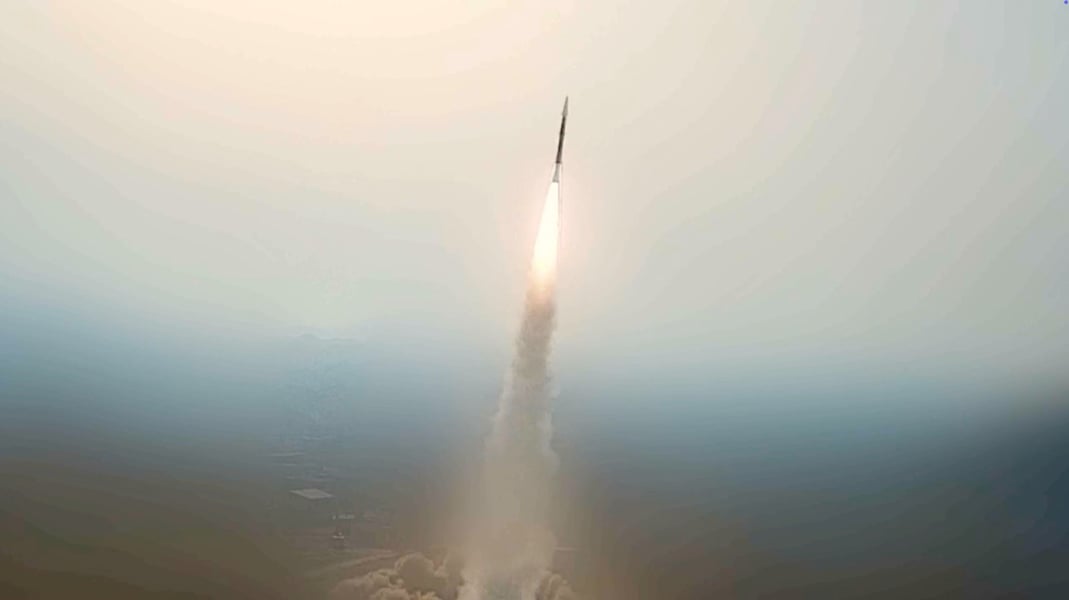

AMMAN — Iranian armed forces launched strikes against United States military positions in Jordan on Sunday, Fox News reported, citing a knowledgeable American source familiar with the ongoing confrontation in the region.
Early assessments from Washington indicated that damage had so far been limited. Almost all incoming missiles had been intercepted, the broadcaster said, though the situation remained fluid and the targeting picture was not immediately clear.
The attack opened a new front in a six-month Iran-US war that began when the United States and Israel launched a joint strike campaign against targets inside Iran on February 28. Tehran responded almost immediately, and the two sides have since traded blows in a pattern that has grown familiar even as each exchange carries the risk of escalating beyond what either side can fully control.
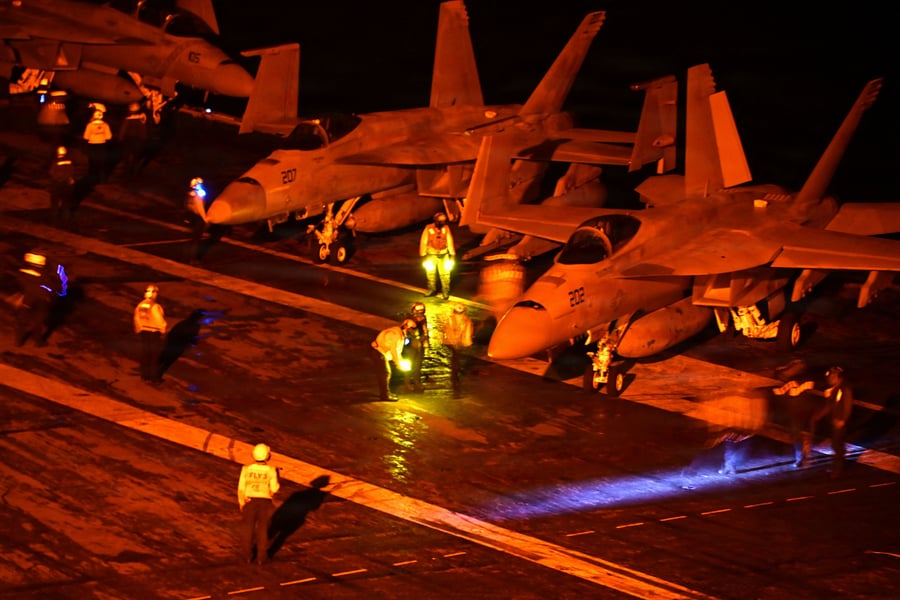
Before the Jordan strikes, Iran’s state broadcaster Press TV reported that the country had fired missiles at American military installations across West Asia and at US naval vessels in the Strait of Hormuz, the narrow channel through which roughly a fifth of the world’s oil supply transits every day. The combined picture described a multi-front Iranian operation, though independent verification of individual strike outcomes was not immediately available.
Axios journalist Barak Ravid, citing an unnamed American official, separately reported that the United States had launched what appeared to be a retaliatory strike, believed to be targeting Iranian missile launchers on Larak Island in the Persian Gulf. The island sits near the strait’s eastern entrance, a location that makes it a natural staging point for threatening the commercial shipping lanes that energy markets depend on.
An earlier episode during this conflict’s escalation cycle offers a frame of reference. In mid-June, Tehran and Washington announced what both sides called a cessation of hostilities, an accord that held for only days before exchanges resumed. The current trajectory resembles that breakdown: a de-escalation that never fully held, followed by a fresh wave of strikes with no clear ceiling.
Al Jazeera reported this week that the conflict had already involved more than 400 strikes across the region, with casualty figures disputed by all parties. That accounting preceded Sunday’s Jordan exchange, which introduced a qualitative shift, not merely a continuation of strikes on Iranian territory or American assets in Iraq and Syria, but a direct hit on a country that had tried hardest to stay out of the fight.
What the June memorandum between Tehran and Washington exposed is a structural problem that no bilateral arrangement has yet solved. Iran’s military doctrine depends on retaining the ability to threaten American assets in the region as a deterrent against further attacks on its own territory. The United States has no interest in accepting that deterrent as permanent. The space between those two positions is where the conflict continues to live.
Sunday’s reported toll of intercepted missiles, if accurate, suggests Iran may be probing rather than attempting a decisive strike. The pattern echoes earlier episodes in the conflict in which large numbers of projectiles were launched knowing that most would be defeated by American and allied air defense systems, with the political signal, Tehran’s willingness to strike, serving as the primary purpose.
Fox News did not identify the specific installations targeted in Jordan, and the Pentagon had not issued a public statement at the time of publication. Iran’s government made no formal announcement beyond the Press TV reporting. The Jordanian government also had not issued a statement.
The question Sunday raised, and that no official answer was available to resolve, was whether the Jordan strikes represent a tactical probe within the established conflict pattern, or the beginning of a deliberate geographic widening of the war to a country that had worked hard to stay out of it.