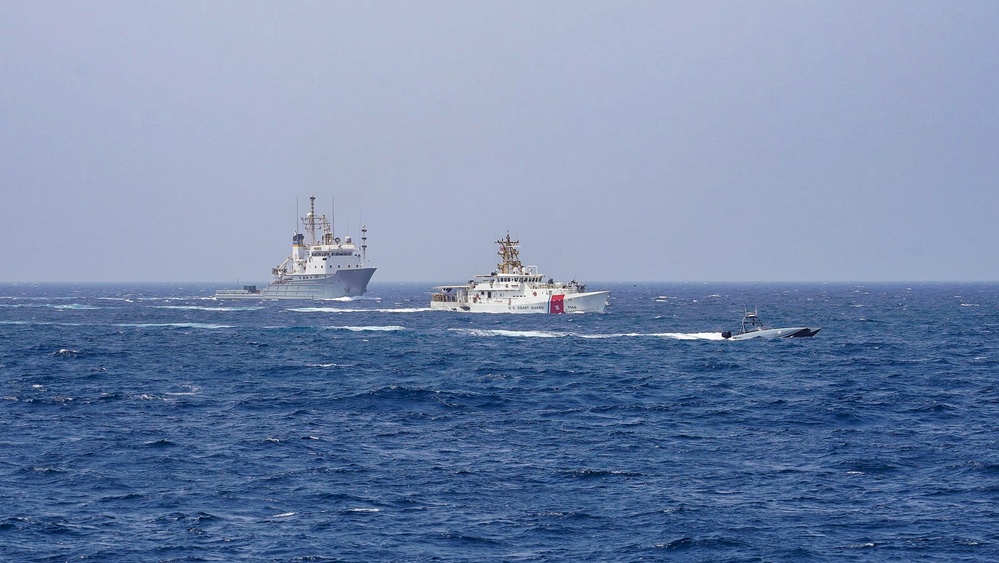

DUBAI — The vessel had just entered the Strait of Hormuz when an unidentified projectile struck its hull on Sunday, adding the latest entry to a running tally of attacks that has transformed one of the world’s most critical oil corridors into one of its most contested.
The United Kingdom Maritime Trade Operations said it received a time-late report of the incident approximately 12 nautical miles north of Khasab, Oman. The tanker was heading inbound toward the Persian Gulf when it was struck. UKMTO, which operates from Dubai as the principal advisory clearinghouse for commercial shipping across the Gulf of Oman, could not immediately confirm whether the attack had caused casualties or an oil spill.
Subsequent reports brought partial relief. All crew members were accounted for and safe. A fire that had broken out following the impact was extinguished. No environmental damage was identified. The tanker was continuing to operate.
The attacker remained unidentified. No government, military faction, or armed group had claimed the strike as of late Sunday, and UKMTO’s description of the weapon as an “unknown projectile” offered no indication of its origin, type, or launch point.
The Strait of Hormuz carries roughly 21 percent of the world’s oil under ordinary conditions. For the past six months, those conditions have been anything but ordinary. The conflict involving Iran, which escalated sharply in late February, has turned the waterway into a site of repeated vessel attacks, mining operations, and diplomatic deadlock. This Sunday’s incident is the latest in a pattern that maritime security analysts have documented across the region, following an earlier tanker disabled in the same corridor just days prior.
Iran has not commented on Sunday’s incident. Tehran has, over the past six months, alternately claimed and denied involvement in strait attacks depending on the specific incident and its diplomatic positioning at the time. The pattern stretches back to some of the earliest recorded LNG tanker strikes during the opening months of the conflict, when diplomatic talks were already stalled and the commercial shipping industry was still calculating its response. Whether the same dynamic applies here is not yet established.
UKMTO’s advisory did not identify the vessel’s flag, operator, cargo, or nationality of crew. The agency, funded by the United Kingdom’s defense establishment and operating from Dubai, issues real-time maritime security warnings to commercial shipping in the Gulf of Oman region. It has logged more incidents in the past six months than in the previous decade combined. Sunday’s advisory follows a period in which UKMTO has been issuing multiple warnings per week across the Gulf of Oman and the wider Red Sea corridor.
The International Maritime Organization has expressed concern over the cumulative toll on commercial shipping in the region but has not brokered a framework for maritime safety separate from the broader diplomatic negotiations over the conflict. Sputnik reported on the parallel diplomatic tracks Tehran has been pursuing through Islamabad and Muscat, with the Strait’s status central to any broader negotiated outcome.
For the shipping industry, Sunday’s incident underscores a calculation that has grown grimmer each week. War-risk insurance premiums for vessels transiting the Strait have increased dramatically since February. Some operators have rerouted entirely, adding thousands of miles to journeys. Others have continued to attempt transit, accepting elevated premiums, and some have paid the price.
The tanker struck Sunday was continuing to operate after the fire was extinguished, according to UKMTO. Diplomatic efforts to establish a navigational corridor through the Strait have not yet produced a framework that operators can rely on, leaving each transit a matter of commercial risk calculation without a guaranteed safe-passage mechanism.
The Strait of Hormuz does not have a bypass. Oil flows from Kuwait, Saudi Arabia, Iran, Iraq, and the UAE must pass through it or go nowhere. That fact is the source of both the waterway’s strategic significance and its strategic vulnerability, and the reason that each incident report from UKMTO carries weight beyond the immediate damage assessment. For as long as the underlying conflict remains unresolved, the numbers will keep adding up.