
WASHINGTON — Shelley Moore Capito has been hearing from her West Virginia constituents since the first strikes landed on February 28. Gas prices are up more than 50 percent. The calls to her office have not stopped. “We get a lot of calls about it,” the Republican senator told reporters this week. “They’re just wearing out on it.”
Six months after a war that President Trump predicted would last “four to five weeks,” the Iran conflict has transformed into something Republican strategists were not prepared to manage: a domestic political crisis with a midterm deadline. Named senators, not just anonymous aides, are now saying in public what the party had been saying only in private.
The political risk is straightforward. Republicans won control of Congress and the White House in 2024 on the promise to lower costs. Instead, gas prices have risen by more than half since the first strikes. The US Strategic Petroleum Reserve has fallen to 290 million barrels, or 41 percent of its designed capacity, its lowest level since 1982. And the conflict shows no sign of ending before November 3, when every House seat and one-third of the Senate will be decided.
The numbers that arrived last week confirm the anxiety. Trump’s approval rating stands at 33 percent, matching the lowest point of his first term. Fewer than one in three Americans support the conflict, according to an Ipsos poll. Republican backing for the war has slipped to 69 percent from 77 percent in March, a collapse concentrated among the party’s own voters. And 69 percent of Americans say the administration has never clearly explained what victory would look like, a finding that tracks directly to the confusion inside the Republican caucus itself.
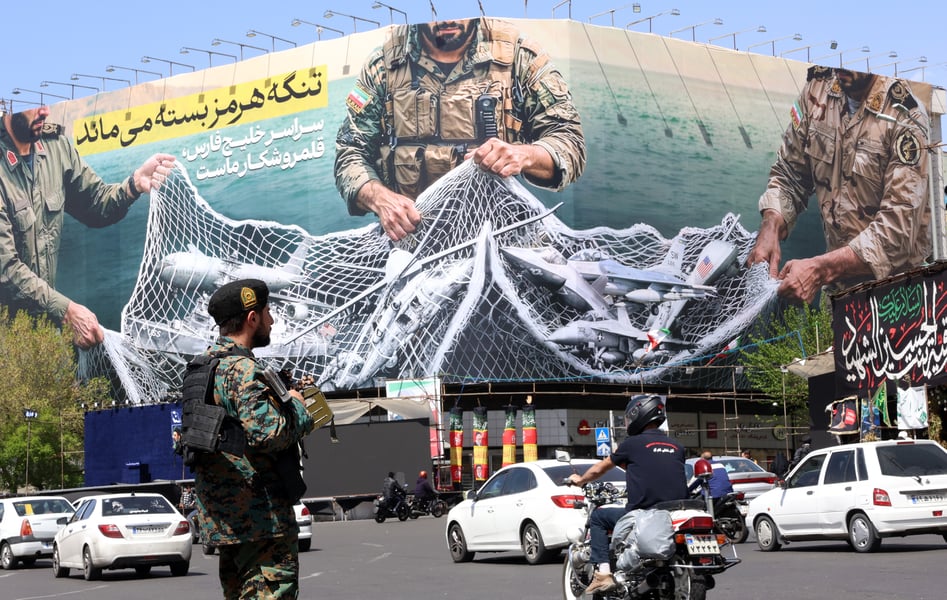
The Strait of Hormuz, through which roughly one-fifth of global oil once moved daily, now carries an average of seven vessels a day, down from 100 before the conflict began. Brent crude ended August at $88.29, reflecting the economic distortion of a closed strait that the market has now spent six months trying to price. Gas is four dollars a gallon and has been since March.
Speaker Mike Johnson, the closest Republican ally Trump has in Congress, said last week that his party can “absolutely” win the midterms even with the conflict ongoing. But in the same statement, he added it “would be helpful to get that thing resolved” before November 3. The distance between those two sentences is where the party currently lives.
Senator John Cornyn of Texas said the administration needed to be more transparent about its objectives. “I wish the president were more clear,” he said. Senator John Kennedy of Louisiana offered the most concise summary of the Republican situation: “There’s a lot of confusion about Iran.”
The sharpest warning came from Rand Paul of Kentucky. Speaking on Fox Business to host Maria Bartiromo, Paul named the threshold directly: “If there’s still kinetic action that causes oil to be over $100, I think you’re gonna see a disastrous election.” He did not frame this as a hypothetical. He said he did not think party division was the problem. He said high oil prices would be the problem.
In the House, Republicans narrowly defeated three successive war powers resolutions that would have required congressional authorization for the continued campaign. Each time, a different Republican broke ranks. The war has remained a narrowly partisan project: the legislation to fund it passed, the opposition to it has grown, and both facts now coexist on a campaign trail that is 65 days from its verdict.
Al Jazeera placed the death toll at least 7,900, with 4,350 in Lebanon, 3,527 in Iran, 18 Americans among them, and 757 US service members wounded. The official US cost stands at $37.5 billion; Pentagon estimates cited in reporting place the actual figure between $80 and $100 billion.

That expenditure was authorized, repeatedly, by the same Republican caucus now expressing anxiety about electoral consequences. The $95 billion defense supplemental passed in August was aimed explicitly at sustaining the campaign against Iran. Republicans who voted for it are now telling constituents they understand the fatigue.
Shibley Telhami, a political scientist at the University of Maryland who has tracked the war’s domestic political impact, described its economic cost as “a key issue” heading into November. That judgment is now being reached independently, in West Virginia and Texas and Louisiana constituent offices.
What is striking about this moment is not that the war is unpopular. Al Jazeera reported that polling in the early weeks of the conflict showed only one in three Americans in support. The United Nations Security Council convened emergency sessions. Governments across the Global South condemned the strikes before the aircraft returned to base. That opposition never shifted the war’s course.
What is new is that Republicans are now saying these things with their names on the record. Khamenei’s call for Gulf unity against the war’s sponsors came this weekend, even as negotiations over the Strait of Hormuz continued through Oman. The Strait remains closed. The ceasefire window that briefly opened in June, during which Iran exported 90 million barrels of oil, has passed. That memorandum window has now closed, and US Treasury projects Iranian oil revenues could fall to zero within months.
The November 3 elections will determine whether Republicans retain their congressional majorities. Al Jazeera reported Mike Johnson says the party can win. Rand Paul says it will be disastrous if oil tops $100. Shelley Moore Capito says her constituents are worn out. All three are still members of the party that launched this war six months ago, and all three will face voters who have been paying $4 a gallon ever since.