
ROME – Italian Prime Minister Giorgia Meloni proposed Sunday that the European Union establish a formal network of migrant return processing hubs located outside the bloc’s borders, using Italy’s experience with its Albanian centers as a template for a structure that other member states could join. The proposal arrived as 22 EU governments backed a letter to the European Commission calling for structural migration reform, and as interior ministers prepared to meet Commission officials on Tuesday to begin translating political pressure into institutional frameworks.
Danish Prime Minister Mette Frederiksen offered early support for the proposal. Denmark has positioned itself since 2021 as the EU government most willing to test the legal limits of offshore processing, and Frederiksen’s endorsement lent the initiative Nordic credibility alongside its Southern European origins. The 22-country letter, addressed to Commission President Ursula von der Leyen and European Council President António Costa, had already signaled that the political coalition behind externalized processing extended well beyond Italy and Denmark.
The Albania arrangement that Meloni is proposing to scale has a track record that the Commission will need to assess carefully. In the program’s first phase, from October 2024 to January 2025, Italy transferred 73 people to processing centers at Gjader and Shengjin. Italian courts ordered all 73 returned to Italy before the end of that period, finding that Bangladesh and Egypt, the designated countries of origin, did not meet the EU’s safe-country standard under current case law. The centers sat largely empty for several months afterward.
A second phase, running from May 2025 to July 2026, transferred 685 people to the Albanian facilities. Fewer than 15 percent had been successfully repatriated to their countries of origin by the time of Meloni’s Sunday announcement. The centers cost approximately €50 million to operate in 2025. The ratio of successful repatriations to total transfers, approximately one in seven at significant cost per case, does not obviously support the economies of scale Meloni is suggesting an EU-wide rollout would produce.
Two countries are furthest along in preliminary negotiations to host EU-level return hubs: Rwanda and Uganda. Neither deal has been finalized. The legal architecture of such an arrangement remains unresolved: which EU asylum regulations would apply outside Union territory, how judicial review would function for individuals held in third-country facilities, and whether the European Court of Justice’s scrutiny of the Albania model creates precedents that constrain the proposed expansion. The Commission has not indicated a timeline for addressing those questions.
Germany, whose coalition government includes parties skeptical of offshore processing as a legal matter, did not sign the 22-country letter to von der Leyen and Costa. Berlin’s absence from the signatory bloc is the most significant political constraint on the proposal: without German support, any move toward a legislative framework faces a major blocking force within the Council. The Commission will be aware that advancing a proposal that Germany has not endorsed risks fracturing the EU migration consensus rather than building one.
The proposal’s central unresolved problem is the one Meloni’s statement does not address: the Albania arrangement has not demonstrably improved repatriation rates. Scaling a mechanism that moves people outside EU territory without consistently returning them to origin countries would create a large population in prolonged legal limbo in third-country facilities, a consequence the EU’s existing asylum framework is not designed to handle at continental scale and that no government in the 22-country coalition has publicly proposed a solution for.
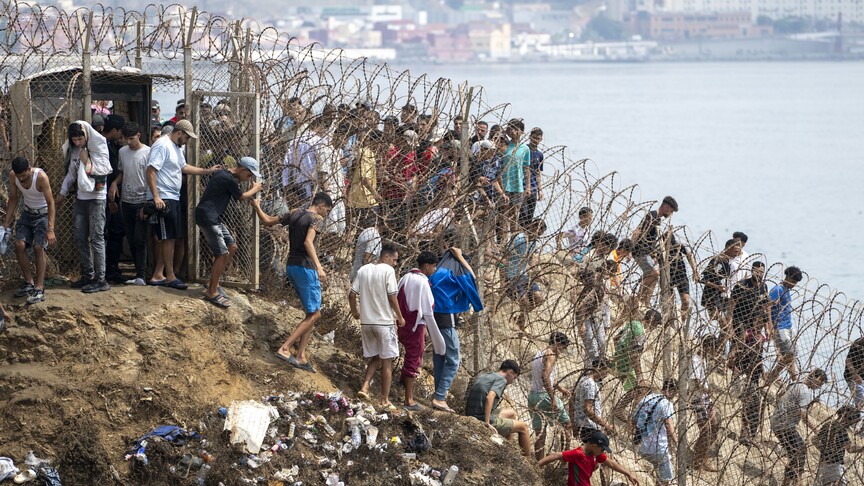
What Tuesday’s meeting will clarify is whether the Commission is prepared to move toward a legislative proposal or will ask member states to wait for the outcomes of the Rwanda and Uganda negotiations. Either answer will be unsatisfying to at least part of the coalition, whose governments face domestic electoral pressure on migration that operates on a timetable considerably shorter than Brussels’ institutional one. European Commission President von der Leyen called for stronger border controls in response to the Ceuta crisis, adding urgency to Tuesday’s ministerial talks.