
TOKYO – For the first time in fifteen years, Washington and Tokyo agreed to move the yen together. Japan’s Finance Minister Satsuki Katayama confirmed Monday that Thursday’s intervention, which pushed the dollar-yen rate from the mid-160s to the lower 155 range in hours, was coordinated with the US Department of the Treasury. Japan did not act alone.
The scale of the action on Japan’s side may have reached $44 billion, already the largest single-day currency market operation Japan had conducted in years. The coordination is what changes its meaning for markets.
Monday’s announcement establishes Thursday as the first joint US-Japan currency market intervention since March 2011, when the G7 mobilized to cap a yen spike in the aftermath of the Tohoku earthquake and tsunami. That earlier action was an emergency response to an extraordinary event: traders had assumed Japanese institutions would repatriate overseas assets to fund reconstruction, driving the yen to then-record highs in the middle of a national disaster. What happened Thursday is structurally different. This is currency management by two allied governments, acting on a shared objective in one of the world’s most traded exchange rates, with no emergency to blame it on.
The American dimension was visible before Monday’s confirmation. A Reuters photograph of Treasury Secretary Scott Bessent’s handwritten note ordering “$5 billion to $10 billion worth of Japanese yen” established that Washington had allocated specific resources to a yen purchase. What the photograph left unresolved was whether those purchases were coordinated with Tokyo or represented an independent American move that happened to coincide. Katayama’s announcement settles that question: the Finance Ministry and the Treasury were acting together.
The intervention brought the yen to approximately 155 per dollar, according to Nikkei Asia. JGB yields rose Monday as traders processed the implications for Bank of Japan policy: a stronger yen reduces imported inflation, which narrows the pressure on the BOJ to tighten aggressively, which reshapes yield assumptions across the curve. Tokyo stocks fell on the same logic. Export earnings denominated in yen compress when the currency strengthens, a straightforward mechanical cost for Japan’s internationally exposed companies.
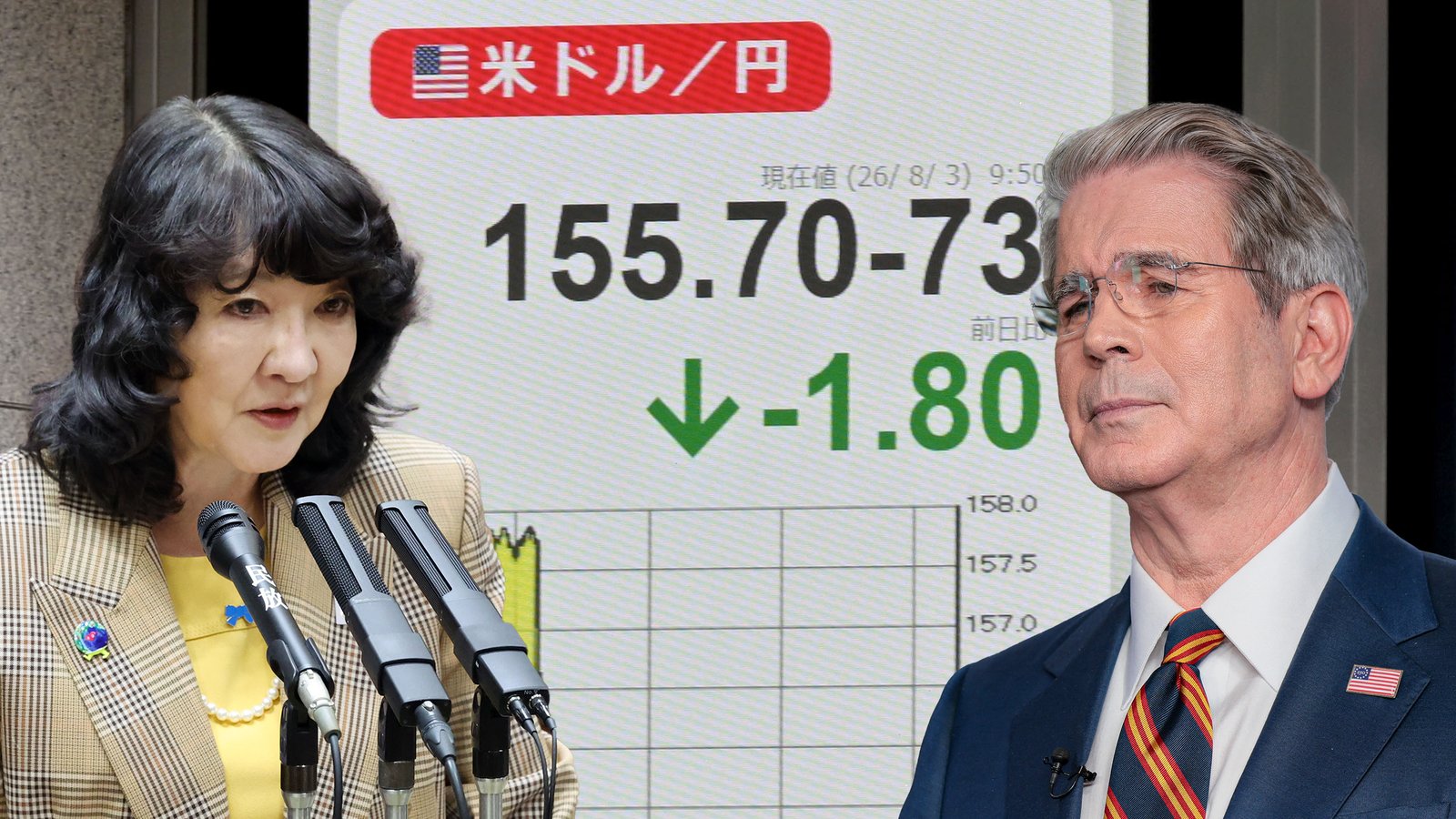
“Japan won’t hesitate to act again,” Katayama said Monday. The Finance Ministry has issued that warning after each intervention episode this year. After the July campaign in which Japan spent an estimated $73 billion defending the yen, Katayama said the same. A deterrent works best when it is credible. What Thursday’s joint action adds is a second actor. Traders now have to price in not only Japan’s threshold for action but Washington’s demonstrated willingness to participate alongside it.
President Trump described the arrangement in simpler terms. Tokyo had asked for “a little bit of help” on yen support, he said, a characterization that was accurate in substance while leaving the coordination mechanism undefined. The US Treasury separately notified banks that further intervention remained possible, a disclosure designed to extend the deterrent effect beyond Thursday’s single session.
The yen had been under pressure for months, weakened by persistent US rate differentials and a dollar that continued drawing capital inflows. Each point the yen lost made Japan’s imports more expensive: energy, food, and industrial inputs priced predominantly in dollars, feeding into the inflation pressures the BOJ identified as the primary rationale behind its July rate decision. A central bank raising rates while its currency simultaneously weakens faces a complicated position. Higher rates support the yen only if markets believe the tightening will continue at a credible pace and sufficient magnitude. That belief, in the summer of 2026, has not fully consolidated.
Finance Ministry intervention is a parallel track: buying time for the BOJ’s policy credibility to accumulate, preventing the yen from weakening so sharply that imported inflation becomes unmanageable before the central bank’s rate path can do its work. Thursday’s joint action suggests Washington has a stake in whether that strategy succeeds. The exact mechanism of the coordination, whether Bessent and Katayama spoke directly before Thursday’s action or whether it operated through established working-level Treasury-Finance Ministry channels, has not been described publicly by either government. The ambiguity is likely deliberate. A fully explicit framework would give market participants a cleaner picture of the conditions under which American support arrives, changing the positioning that the intervention is designed to unwind.
Whether 155 holds as a floor depends on dollar dynamics neither Tokyo nor Washington controls. If US rate differentials continue drawing capital flows and pressuring the yen, renewed intervention pressure will build regardless of what happened Thursday. That is the question Katayama’s confirmation leaves open: whether coordinated intervention is now a standing tool for managing the dollar-yen relationship, or whether Thursday was a one-time response to an extreme rate level that neither government was prepared to defend in isolation. Neither has said.