
TOKYO — Japan’s Finance Ministry fired no warning shot before spending ¥11.73 trillion, roughly $73 billion, to prop up the yen in the two months through May 27. The silence around that operation was not a tactical mistake. It was the beginning of a new strategy.
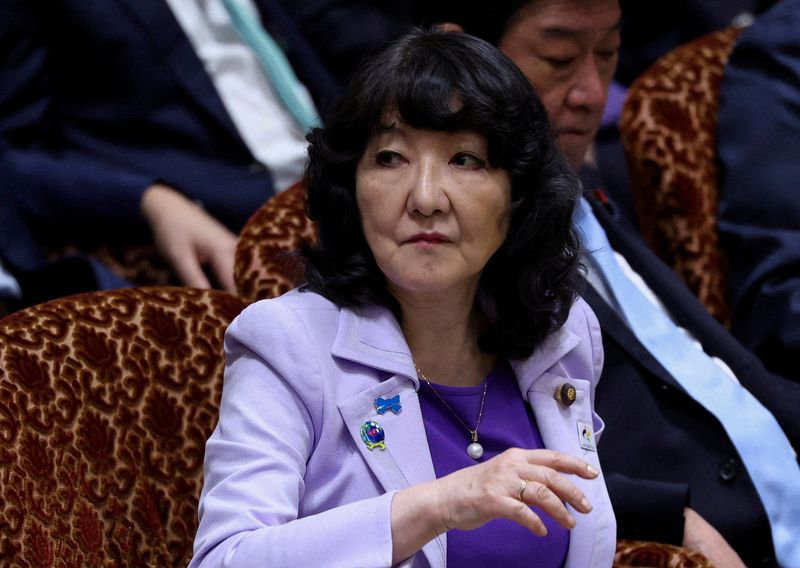
Finance Minister Satsuki Katayama said Thursday that Tokyo will act in foreign exchange markets “at any time as needed” to address what it calls excessive yen moves, including during US market holidays when trading is thinner and the yen most exposed to one-sided positioning. The yen stood near 161.2 per dollar, having retreated from a 40-year low of 162.84 hit earlier in the week. Katayama declined to name any threshold at which the government would intervene. That refusal is now deliberate policy.
The shift from Japan’s previous communication approach is most visible in what Atsushi Mimura, the currency diplomat overseeing Japan’s foreign exchange interventions, has stopped doing. The old playbook called for escalating verbal warnings before any market operation, giving traders a readable signal. Mimura has pulled back that pattern entirely. Rinto Maruyama at SMBC Nikko Securities told Reuters the current posture is designed “to make it harder for markets to gauge” the intervention point. The uncertainty itself has become a policy tool.
The April-to-May operation, conducted without advance notice, demonstrated the practical effect of that approach. The yen surged as much as 3 percent on April 30, the first day of the intervention, catching leveraged short positions off guard. Japan’s Finance Ministry confirmed the ¥11.73 trillion total on May 30, making it the largest sustained intervention in the country’s history. No intervention has followed since that period.
Thursday’s remarks came during a thin session driven by the US Independence Day holiday. That timing carried a message. Currency traders who had assumed Tokyo would avoid acting when American banks are closed now have explicit guidance that the assumption was wrong. Katayama also confirmed Japan remains in regular contact with US Treasury Secretary Scott Bessent on foreign exchange developments, a dialogue she describes as important context for any intervention decision.
The structural driver of yen weakness is the interest rate differential between Japan and the United States. With US benchmark rates substantially above Japan’s near-zero policy rate, the mechanics of the carry trade, borrowing cheaply in yen to invest in higher-yielding dollar assets, generate consistent returns that verbal warnings from the Finance Ministry cannot offset. Bloomberg reported that Katayama’s Thursday statement was her most direct repetition yet of the readiness-to-act message, and that she emphasized the direct line to Washington as a new element of her communication approach.
BOJ Deputy Governor Ryozo Himino said this week that sustained yen weakness adds to domestic inflation pressure by pushing up import costs, particularly for energy and food. Japan imported approximately ¥53 trillion in goods last fiscal year, a figure directly sensitive to every point of yen depreciation. Mari Iwashita at Nomura Securities has argued that meaningful yen defense requires the BOJ and the Finance Ministry to work in coordination: rate hikes from the central bank to narrow the dollar-yen interest rate gap, combined with the government’s readiness to sell dollars directly. Verbal warnings without rate changes are a short-term tool applied against a long-term pressure.
Toshihiro Nagahama at Dai-ichi Life Research Institute has publicly advocated moderate BOJ rate increases as the more sustainable component of yen defense. The central bank has moved carefully to avoid destabilizing Japan’s government bond market, where it holds a substantial share of outstanding debt. Rapid rate increases would generate losses on those holdings that the BOJ is not currently positioned to absorb quickly.
Japan’s diplomatic calendar adds urgency to the currency picture. This week’s discussions with India produced a framework of AI and defense cooperation agreements and a $12 billion bilateral investment commitment, reflecting Tokyo’s effort to build strategic economic partnerships during a period of domestic financial pressure. A persistently weak yen compresses the real value of yen-denominated commitments and raises import costs for industries that depend on those partnerships to function.
The 160 per dollar level operated as an informal threshold through most of 2026. The April 30 intervention came after the yen breached that line. Katayama has consistently refused to ratify 160 as an official trigger. A confirmed threshold becomes a level the market can test with confidence, knowing exactly what response it will provoke. An unnamed threshold functions differently: the trigger could be 160, or 162, or some combination of pace and level that the ministry will not specify in advance. Mimura’s withdrawal of verbal warnings extends the same logic. Every signal that makes Japan’s behavior predictable is a signal that can be priced around. The unpredictability is deliberate.
What the Finance Ministry cannot resolve through this strategy is whether deliberate silence is sufficient to defend a currency against a rate differential that continues to favor holding dollars over holding yen. Japan has demonstrated the capacity to intervene and the willingness to do so without warning. The remaining question, how much further depreciation it will absorb before acting again, is the one the government has decided not to answer.