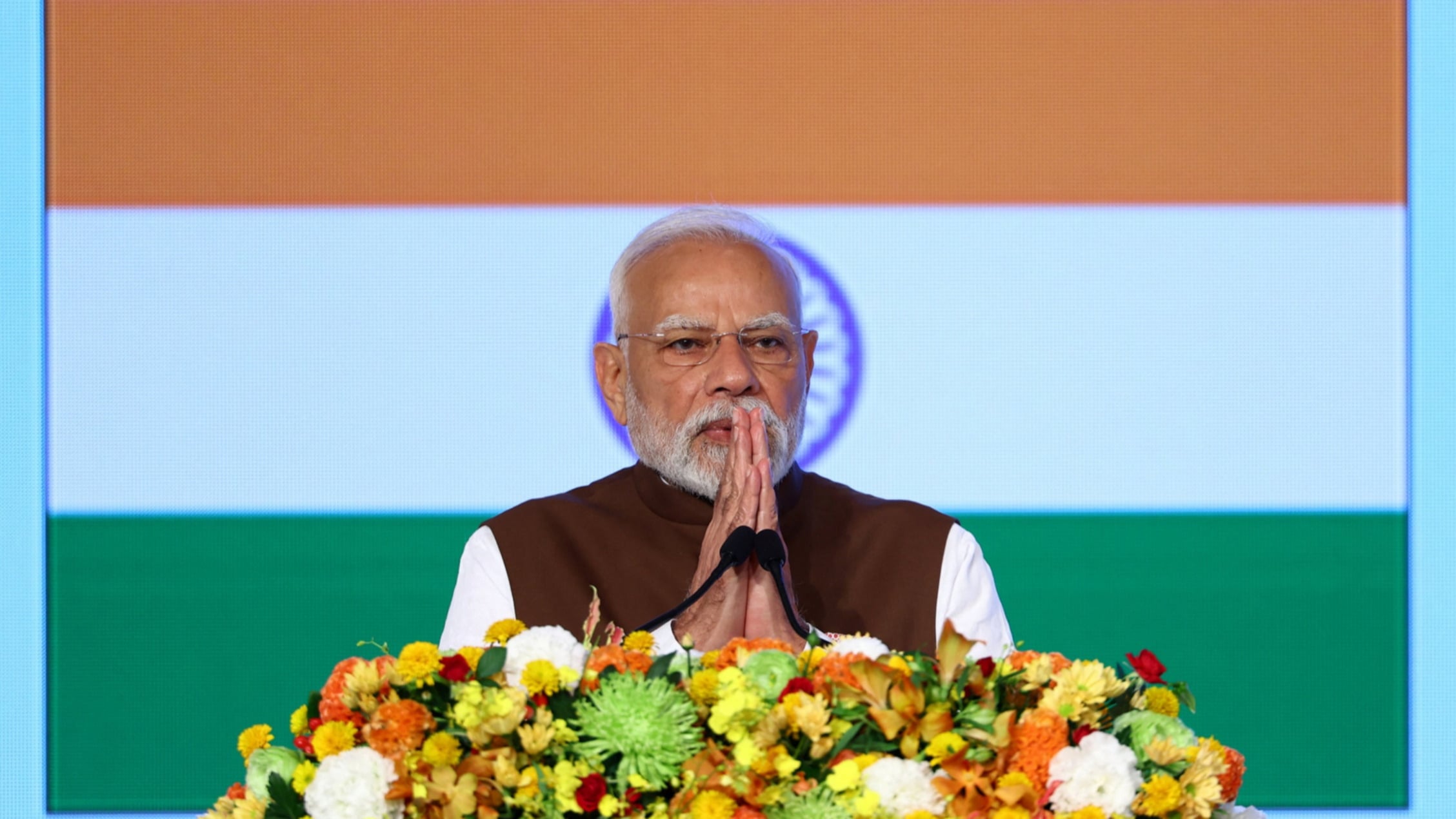

NEW DELHI — When Japan’s Prime Minister Sanae Takaichi arrived at Hyderabad House on Thursday, she carried a list. By the time she left, 150 Japanese companies had signed memoranda of understanding committing a combined $12.5 billion to India through 120 deals, the largest single-session commercial commitment from Japan to an Asian partner in recent years.
The figure, confirmed by multiple sources familiar with the summit proceedings, caps a period in which India and Japan have moved steadily from strategic alignment to commercial integration. Takaichi, whom Prime Minister Narendra Modi described as his “younger sister” at the end of their joint statement, arrived for her first official India visit as Japan’s head of government. She left having signed agreements covering artificial intelligence, metals processing, clean energy, and power grid infrastructure.
For Japan’s corporate sector, the calculus behind those commitments is structural. China’s economic deceleration, combined with the geopolitical premium now attached to China-dependent supply chains, has pushed Japanese manufacturers toward alternative production bases at speed. India, with 1.4 billion consumers, expanding factory capacity, and three years of production-linked incentives designed precisely to absorb that capital, is the answer that most of those 150 companies have arrived at independently.
The deals break down across several verticals. In clean energy, Japan’s state-backed Japan Bank for International Cooperation alongside Sumitomo Mitsui Banking Corp. and other institutions will extend loans of up to 80 billion yen, or roughly $490 million at current exchange rates, for the development of India’s national power grid. Separate from that, Japanese trade insurance has been committed for a loan tied to Reliance Industries’ solar panel and battery manufacturing expansion. Both transactions serve India’s net-zero ambitions while giving Japanese lenders a long-dated foothold in one of the fastest-growing energy markets on earth.
The artificial intelligence dimension is harder to price. Takaichi’s government has been pursuing an AI competitiveness strategy built on deep integration with partner democracies rather than self-sufficiency alone. Pacts signed Thursday on AI cooperation extend that logic to India’s rapidly expanding technical workforce and data infrastructure. The specifics of those agreements were not made public at Hyderabad House.
What makes the scale of Thursday’s commitments unusual is not the headline number itself. It is what that number requires to be real. For $12.5 billion to actually deploy, Japan Inc. needs construction permits in India to clear faster than they historically have, logistics networks in several proposed manufacturing corridors that remain incomplete, and a currency environment that does not erode returns. The rupee, which closed this week at 95.23 against the dollar under pressure from Iran-linked risk and Federal Reserve uncertainty, offers no guarantees on that last point.
Modi and Takaichi also set a longer-horizon target: 10 trillion yen in two-way investment over the next decade. That figure, approaching $65 billion at current exchange rates, dwarfs anything either country has formally achieved bilaterally. It exists today as an aspiration rather than a commitment. But the aspiration is now formalised, and formalised targets in the India-Japan context tend to generate institutional follow-through at the ministry level.
The Indo-Pacific framing of Thursday’s talks was deliberate. Japan has spent the past two years revising its strategic posture toward the region, and India’s Atmanirbhar Bharat manufacturing initiative creates a natural alignment with Tokyo’s drive to diversify from Chinese supply chains. Defence cooperation was also on the agenda at Hyderabad House, though neither government provided specifics in the joint statement.
The Straits Times reported that rare earth processing agreements were among the most commercially significant pacts signed Thursday. Japan’s dependence on Chinese rare earths for its electronics and automotive manufacturing has become a structural vulnerability Tokyo is actively working to reduce. India’s geological endowments, particularly in states such as Andhra Pradesh and Odisha, position it as a long-term hedge against Beijing’s willingness to restrict critical mineral supply when geopolitical pressure builds.
The broader regional stakes tie directly to energy infrastructure. Japan’s growing interest in stable Asian energy markets gives it a direct incentive to fund India’s power grid build-out: an energy-secure India is a more predictable manufacturing partner. The JBIC loan reflects that dual logic, simultaneously commercial and strategic.
What Thursday’s summit does not settle is where, precisely, the money goes. Which Indian states will host the manufacturing facilities? Which of the 120 deals carry binding timelines against which corporate boards can be held accountable, and which are expressions of intent that may not survive the next earnings review? Neither government disclosed those specifics. India’s track record of converting announced foreign investment into deployed capital, substantially improved under the production-linked incentive scheme but still uneven, is the central risk no joint statement can resolve. The 10 trillion yen decade-long target will ultimately be judged by that gap between what is signed in a diplomatic room and what is built on the ground.