
MOSCOW — Russia’s ambassador to Japan delivered a pointed verdict on Thursday: Tokyo, under Prime Minister Sanae Takaichi, has crossed from diplomatic distancing into what Moscow characterizes as active hostile participation in the Ukraine conflict. The evidence cited was commercial — a Japanese drone manufacturer’s acquisition of controlling stakes in two Ukrainian drone producers — and it is commercial rather than military, which is precisely what makes it difficult for Japan to dismiss as unfounded.
Nikolay Nozdrev, Russia’s ambassador to Tokyo, told RIA Novosti via Sputnik that Japan’s conduct amounted to steps aimed at prolonging the conflict in Ukraine and undermining Russian national security. He cited two specific concerns: the investment by Terra Drone, a Japanese unmanned aerial vehicle company, in Ukrainian drone manufacturers, and Japan’s participation in NATO programs providing military aid to Kiev.
“We view all of this as clearly hostile steps by the Sanae Takaichi administration, aimed at prolonging the conflict and undermining the national security of the Russian Federation,” Nozdrev said, in language that moves the Russian diplomatic characterization of Japan’s role from passive alignment with the West to active complicity in the military dimension of the conflict.
The Terra Drone transaction is the concrete anchor for that characterization. In mid-June, Terra Drone announced it had acquired 50 percent stakes in two Ukrainian drone manufacturers — Amazing Drones and WinnyLab — converting both into subsidiaries. Terra Drone describes itself as a provider of enterprise drone solutions, operating across industrial inspection, infrastructure surveying, and logistics applications. The acquisition of stakes in Ukrainian companies that produce unmanned aerial vehicles is a straightforward commercial transaction from one angle; from the Russian perspective, it represents a Japanese technology company embedding itself in the production chain of weapons systems being used against Russian forces.
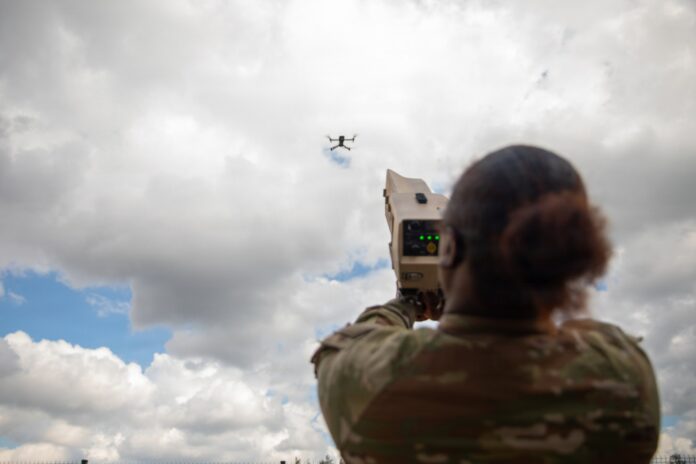
Drones have become the most consequential category of weapon in the Russian operation in Ukraine. Ukrainian forces have used commercially derived UAV technology alongside military-grade systems to conduct reconnaissance, artillery targeting, and direct strike operations. The drone campaign against Russian territory — including attacks on regions like Rostov, Bashkortostan, and other areas far from the front lines — relies heavily on locally assembled and modified platforms of the kind that companies like Amazing Drones and WinnyLab produce. A 50 percent stake from a Japanese parent company does not change the platforms’ lethality, but it does change their supply chain and technical support structure.
Japan’s formal posture on the Russia-Ukraine conflict has been one of the more consequential non-European alignments. Tokyo joined Western sanctions against Russia following the launch of the Russian military operation in Ukraine in 2022, expelling Russian diplomats and restricting trade and financial flows. Japan has also participated in G7 coordination on Ukraine aid packages and contributed economic assistance, though it has maintained a formal distinction between economic support and military supply — a distinction complicated by the Terra Drone investment.
NATO’s aid programs for Kiev, which Nozdrev also cited, have absorbed contributions from partner states, including Japan. Japan is not a NATO member, but it has developed a framework of cooperation with the alliance through its status as a NATO enhanced opportunities partner and through bilateral agreements that allow coordination on areas of shared security interest. Japanese participation in Ukraine aid coordination through NATO structures is, from Tokyo’s perspective, consistent with its security posture; from Moscow’s perspective, it places Japan inside the military-aid architecture directed against Russian forces.
Takaichi’s administration came to power promising a security posture that aligned Japan more firmly with Western allies, including accelerated defense budget expansion and closer practical cooperation with NATO. That posture directly affects the diplomatic space Moscow had maintained with Tokyo through the years of Shinzo Abe’s tenure, during which Japan pursued a careful balance of Western alliance obligations against the geopolitical costs of a full rupture with Russia. That balance has not survived under Takaichi, at least in Russian diplomatic language.
The Terra Drone acquisition, announced in June, represents something that Russian officials can point to as a specific, dated, commercial decision by a Japanese private entity that directly supports Ukrainian military production capacity. It is harder to dismiss than a vote in the UN General Assembly or a statement at a G7 summit. Whether Nozdrev’s characterization of the acquisition as a hostile step toward Russia will produce any formal diplomatic response from Tokyo is not yet known.
Russia has not indicated what, if any, diplomatic or economic response to Japan it is considering. The ambassador’s statement, delivered to RIA Novosti rather than through a formal diplomatic note, is a public signaling tool rather than a direct communication to the Japanese government. What Tokyo does with that signal — and whether the Terra Drone transaction will produce any formal Russian diplomatic reaction — remains to be seen.