
VLADIVOSTOK — The document exchange in Vladivostok on Thursday was tidy: a protocol signed by two ministers, three memoranda exchanged between university rectors, and a joint commission declared concluded at its fifth meeting. What the session represented was less tidy — Russia maintaining scientific and diplomatic ties in Southeast Asia while its research institutions face deepening disconnection from Western partners that once defined the global academic landscape.
Russia’s Minister of Science and Higher Education Valery Falkov and Malaysian Education Minister Zambry Abdul Kadir signed the session’s concluding protocol after the fifth meeting of the Joint Russian-Malaysian Commission on Economic, Scientific, Technical, and Cultural Cooperation. The commission’s remit is broad, but Thursday’s visible output was concentrated in science and higher education: three pairs of Russian and Malaysian institutions exchanged memoranda of understanding covering joint research, academic exchanges, and mutual recognition of scholarly work, according to a Sputnik correspondent present at the session.
The National Research University Moscow Power Engineering Institute and Malaysia’s MARA University of Technology signed the first memorandum. The Russian Institute of Experimental Medicine and the same MARA University signed a second. The Russian University of Land Use Planning and Malaysia’s Tun Hussein Onn University formalized a third. Each agreement nominally covers the same terrain: joint research programs, academic exchanges, and shared frameworks for recognizing each other’s scientific credentials. Whether those frameworks activate actual research collaboration or accumulate in ministry archives is a question neither government’s delegation answered on Thursday.
The MARA University of Technology — known as UiTM from its Malay name — is among Malaysia’s largest public universities, with campuses spread across the country and an orientation toward science, engineering, and technology training for Malaysia’s Bumiputera majority. Its appearance in two of the three agreements reflects its status as a major state research institution with limited historic dependence on Western accreditation systems. Russia’s Institute of Experimental Medicine, based in St. Petersburg, is a federal research center with a record in infectious disease research, pharmacology, and biomedical sciences that predates the Soviet era. The coupling is notable on paper; its operational meaning depends entirely on what specific projects the institutions choose to pursue.
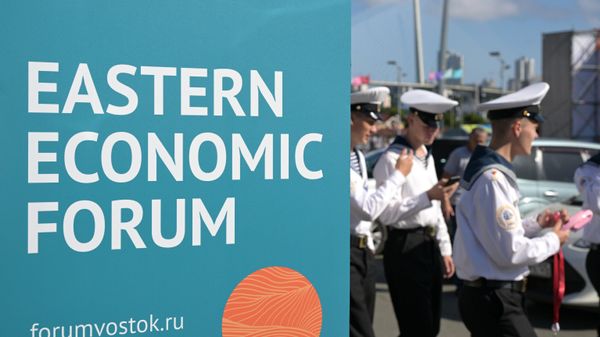
The choice of Vladivostok as the venue is not incidental. Since 2015, when the Eastern Economic Forum brought Asian heads of state to Russia’s Pacific port city, Vladivostok has functioned as the geographic symbol of Russia’s pivot toward Asia — a deliberate assertion that Moscow retains consequential partnerships beyond the European framework. The fifth Russian-Malaysian commission meets in that same context: the Western sanctions imposed after Russia launched its military operation in Ukraine in 2022 have restructured the academic and commercial geography in ways that Moscow is actively trying to route around through bilateral agreements with non-sanctioning partners.
Malaysia is among the most significant of those partners in Southeast Asia. Kuala Lumpur has not joined any Western sanctions package against Russia, has continued bilateral trade and investment discussions, and has maintained formal diplomatic architecture — including this commission — across the years since 2022. Malaysian officials have described their position as non-alignment. Russian officials have described it as an example of what independent foreign policy looks like in a world where Washington and Brussels are pressing smaller nations to choose sides.
The scientific context for Russia makes these agreements more than protocol. Since 2022, major European research programs shut out Russian institutions: the European Research Council suspended Russian participation, the Horizon Europe framework closed to Russian-affiliated researchers, and Western academic journals introduced additional scrutiny of Russian-authored papers. Equipment imports for laboratory research became entangled in sanctions restrictions that were not always clearly defined but frequently caused delays. Russia’s Science Ministry has characterized this as an attempt to set back Russian scientific capacity; the ministry has simultaneously been negotiating alternative research partnerships across Asia, the Middle East, and Africa.
Thursday’s agreements in Vladivostok fit that pattern. Energy engineering, the scientific focus of the Moscow Power Engineering Institute, is an area where Russia has prioritized maintaining research capacity independent of Western supply chains. Agricultural land management, the focus of the Russian University of Land Use Planning, connects to Russia’s position as a major grain producer and its interest in developing agricultural technology outside Western licensing frameworks. Experimental medicine covers territory relevant to both pharmaceutical development and public health preparedness.
Whether the five meetings of the Russian-Malaysian commission have produced measurable collaborative output is not something either government has publicly detailed. The commission format — periodic ministerial-level sessions producing signed frameworks — is a standard diplomatic mechanism that can mean many things. At its most functional, it produces active joint research programs with shared funding and cross-institutional teams. At its least, it produces ceremonies and signatures that satisfy bureaucratic requirements without generating substantive exchange.
The Vladivostok session did not announce implementation timelines, funding commitments, or specific research programs under any of the three memoranda. The next meeting of the commission was not scheduled at the session’s close. Russia’s Science Ministry and Malaysia’s Education Ministry have not published additional details.
Related Posts