
SAN FRANCISCO – Anthropic, the AI safety company behind the Claude family of language models, is in advanced talks to acquire Decart, a real-time AI infrastructure startup, in a deal valued at approximately $6 billion, according to Bloomberg, which cited a person familiar with the matter.
The price would represent a roughly 50 percent premium over Decart’s most recent valuation. The startup raised $300 million at a $4 billion valuation in June, drawing strategic investment from Toyota, Adobe, and eBay alongside its earlier backers at Sequoia Capital and NVIDIA.
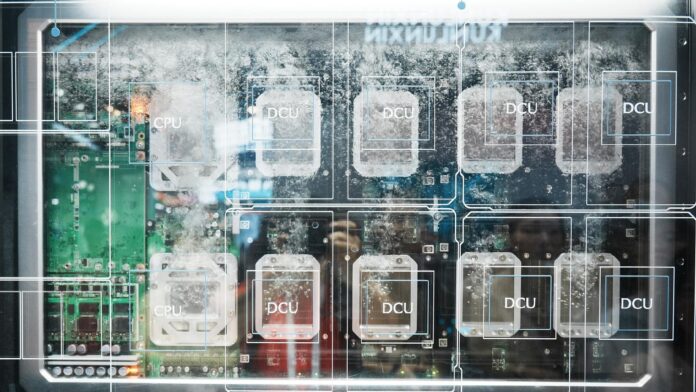
Decart’s core claim is that it can run AI systems significantly more cheaply than competing approaches. The company’s Decart Optimization Stack, or DOS, is an inference and training layer designed to work simultaneously across Nvidia, Amazon Trainium, and Google TPU hardware. Decart says DOS delivers more than ten times the cost efficiency of alternative inference systems, making it hardware-agnostic while increasing throughput on whatever chips a customer happens to run.
If Anthropic acquires that infrastructure, the near-term implications for its Claude model line would be significant. Inference costs are the primary financial ceiling on how broadly any AI company can deploy its products at scale. Every reduction in per-query compute spending translates into room to expand user access, cut API prices, or extend Claude’s capabilities into longer and more complex agentic tasks without proportional cost increases.
Decart’s highest-profile product is Oasis 3, an interactive world model that generates photorealistic, multi-camera driving environments at real-time frame rates. Autonomous vehicle developers have integrated Oasis 3 to produce training scenarios that would be difficult or dangerous to reproduce in actual road tests: sensor failures in heavy rain, pedestrians emerging at blind intersections, near-misses at uncontrolled crossings. The system costs approximately $0.02 per second of generated world, according to TechCrunch.

“The first usable world model that people can actually program on top of,” Decart CEO Dean Leitersdorf told TechCrunch in June, positioning Oasis 3 as an API-accessible platform built for developer adoption along the same lines that OpenAI used to build its language model business.
Leitersdorf and co-founder Moshe Shalev founded Decart on the premise that real-time execution speed, not model quality alone, was the commercial bottleneck in generative AI. Lucy 2.5, the company’s video transformation model, processes and edits live video streams at 30 frames per second, enabling virtual try-on, live advertising overlays, and gaming visual effects that conventional AI pipelines cannot deliver without perceptible lag.
Independent reviewers of Oasis 3 found that the system’s spatial coherence degraded in extended sessions, with revisited environments sometimes appearing altered and collision physics occasionally failing to respond realistically. Leitersdorf characterized those issues as limitations of the current version rather than fundamental architectural constraints.
Acquiring Decart would move Anthropic substantially beyond its established focus on language models. Founded by Dario Amodei and a team of former OpenAI researchers, Anthropic has built Claude into an enterprise-grade platform competing with OpenAI’s GPT-4o and Google’s Gemini on reasoning accuracy, safety, and reliability. Both rivals have moved more aggressively into physical AI, multimodal pipelines, and robotics-adjacent applications. Decart’s world model and inference stack would give Anthropic a path into that space without the multi-year research timeline that internal development would require.
Meta’s Muse Glimmer, released last week as a 30-billion-parameter open-weight AI model, illustrated how quickly the competitive landscape is shifting for frontier AI providers. Companies that cannot offer infrastructure advantages in inference cost, latency, or physical-world grounding face mounting pressure at the model layer.
The resignation of OpenAI COO Brad Lightcap last week added urgency across the frontier AI sector to lock in strategic positioning before consolidation accelerates further. Anthropic’s backers, including Amazon and Google, have committed more than $12 billion to the company since its founding in 2021.
A $6 billion acquisition exit would deliver roughly a twenty-fold return on Decart’s initial seed capital in approximately three years, a significant outcome for early investors at Sequoia Capital and Radical Ventures in what has been a difficult exit environment for venture-backed technology companies.
The deal’s structure remains unknown. Whether Anthropic would absorb Decart’s research team, its software, or its infrastructure exclusively has not emerged publicly. Companies including Toyota and eBay, which hold strategic stakes in Decart, have embedded DOS into their own AI pipelines. What those integrations look like under a new owner has not been addressed.
Acquisition talks at this scale frequently stall or collapse before completion. Neither Anthropic nor Decart responded to requests for comment before this article was published. Bloomberg reported the valuation and the status of talks based on a single person familiar with the matter.