
MENLO PARK – The download is free. The license says you can use it commercially. No subscription, no rate limits, no cloud account required. Meta Platforms on Monday released Muse Glimmer, a 30-billion-parameter artificial intelligence model designed to run on a personal laptop, and the release carries a message aimed squarely at OpenAI and Anthropic: cutting-edge AI does not have to live behind a paywall.
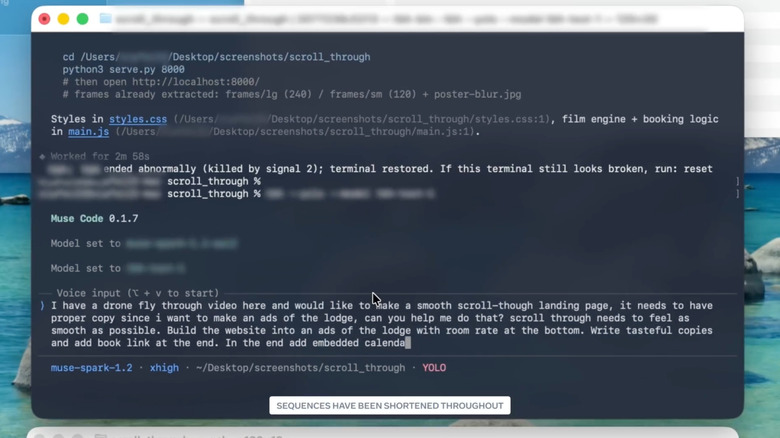
Muse Glimmer is available on Hugging Face under an Apache 2.0 license, meaning developers and companies can take it, modify it, and build on top of it without paying Meta a fee or requesting permission. The model operates at roughly four-bit precision, keeping its memory footprint under 20 gigabytes, a threshold cleared by any gaming laptop sold in the last two years. According to Meta’s announcement, it handles multi-step agent workflows, tool use, multimodal inputs, failure recovery, and long-context tasks without requiring a cloud connection. Running models locally, the company stated, “enables you to use AI anywhere, anytime, with or without an internet connection.”
What makes 30 billion parameters function well on consumer hardware is method. Meta trained Glimmer using logit distillation from its larger Muse Spark model, then applied reinforcement learning focused on reasoning and coding tasks. Distillation transfers capabilities from a larger model to a smaller one by teaching the student not just the teacher’s answers but the teacher’s probability distributions across possible outputs, an approach that routinely produces smaller models that outperform same-size models trained from scratch. The reinforcement learning pass then selectively strengthened behaviors most useful for agentic, tool-using workflows.
Hardware companies took positions alongside the launch. AMD, Arm, Dell, Intel, and Nvidia are listed as optimization partners, meaning Glimmer should run on their respective silicon without requiring engineers to hand-tune inference configurations. That partner breadth signals this is not a research preview intended to live on benchmark leaderboards. Meta wants it running on actual hardware in actual workflows.
Mark Zuckerberg framed the launch in terms that go beyond the product itself. His description of the goal as “superintelligence for all” is a direct counter to the access model that OpenAI and Anthropic have built, where frontier AI capability is available only through paid APIs whose terms the companies can revise, revoke, or restrict. Zuckerberg has separately argued that the United States should reduce AI export controls to stay competitive with China, a position that fits logically with releasing powerful models under open licenses, since open-weight distribution pushes American AI capability outward without requiring each recipient to contract with an American company.
The competitive framing was unmistakable. DeepSeek and Alibaba’s Qwen have released open-weight models at pricing that Bloomberg described as creating a death zone for American model makers. Meta’s release positions itself as the American open-weight answer to that pressure, a large-company rival to the Chinese model rather than a passive victim of it.
The release has a second act planned. Meta announced that Muse Spark 1.2, described as one of its leading foundation models, will follow as an open-weight release in the coming weeks. Spark is the model family from which Glimmer was distilled. Releasing it open-weight would represent the most consequential open-weight commitment from a major American frontier lab, adding to the pressure Meta’s AI spending has already placed on OpenAI and Anthropic’s assumptions about model distribution. No confirmed timeline or performance benchmarks for Muse Spark 1.2 have been released.
That absence matters. Independent benchmarks comparing Glimmer against OpenAI’s GPT-5 or Google’s Gemini 2.0 have not been published. Four-bit quantization, which is how Glimmer fits under 20 gigabytes of RAM, introduces a well-documented quality tradeoff: the model running on a laptop is not equivalent in output quality to full-precision inference on Meta’s server clusters. How significant that tradeoff proves under real developer workloads, on the reasoning and agentic tasks enterprise users actually run, is a question Monday’s release does not answer. Analytics India Magazine reported that hardware optimization work with AMD, Intel, and Nvidia remains ongoing, suggesting the performance ceiling of local deployment has not yet been established.
For a specific category of users, the open benchmarks are secondary. Teams handling sensitive data that cannot legally leave their infrastructure, developers working in jurisdictions with data residency requirements, and organizations operating in environments with restricted internet access face a practical problem that cloud-hosted AI cannot solve. Muse Glimmer, whatever its position relative to GPT-5 in controlled tests, is available to those users today under a license that permits modification, deployment, and commercial shipping without approval from Menlo Park.
Whether Muse Spark 1.2’s open-weight release arrives on the timeline its announcement implies, and whether quantized local performance holds for production-grade agentic tasks, are the questions this release leaves unanswered. What it closes is the argument that capable, locally deployable AI from a major American lab does not exist. On Monday, it does.