
NEW YORK — The number that sent Meta Platforms Inc. META stock down as much as 7 percent in after-hours trading Wednesday was not $60.8 billion. That was the quarterly revenue figure, up 28 percent year over year, a result that would have been celebrated in any other earnings season. The number investors focused on was $784 million: Meta’s free cash flow for the quarter, down 91 percent from $8.55 billion in the same period a year ago. The gap between those two figures is Mark Zuckerberg’s AI spending program, still accelerating, still without a return timeline, and increasingly testing the patience of shareholders who have backed the bet for three years.
The quarterly results were complicated in the way that only a highly profitable company spending faster than it earns can be. Meta reported earnings per share of $6.18 for the second quarter, missing analyst estimates of $7.14 by a margin that concentrated minds. Net income fell 15 percent compared with a year ago despite the 28 percent revenue surge, a divergence explained by a combination of $4.62 billion in Reality Labs losses, $2.4 billion in legal-related charges connected to litigation that could ultimately expose the company to $1.4 trillion in claimed damages, and a capital expenditure program that the company did not cap. The stock, which closed Wednesday’s regular session at $585.61, had risen roughly 386 percent since November 2022, when the emergence of generative AI made infrastructure spending the organizing principle of Silicon Valley capital allocation. Wednesday night, investors were recalibrating what that premium should be.
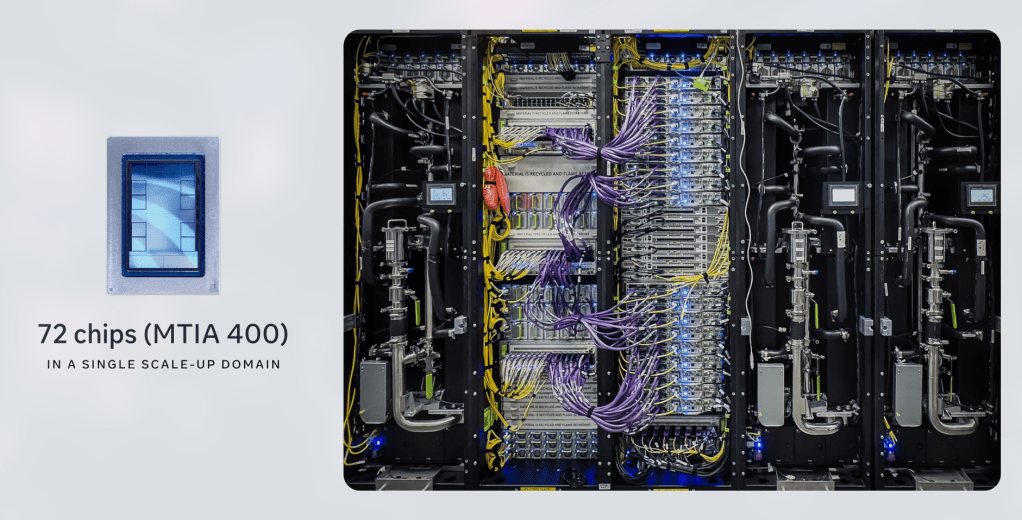
The infrastructure commitment is specific enough to be uncomfortable. Meta has committed to a $14 billion data center partnership with BlackRock Inc. to construct a facility in El Paso, Texas, one node in a proprietary network that Zuckerberg is building not to service paying cloud customers but to develop internal capability at scale. Reality Labs, the division responsible for virtual reality hardware and augmented reality glasses, has consumed more than $80 billion in cumulative losses over six years without achieving commercial scale. That $4.62 billion quarterly loss arrives in the income statement every three months without a visible ceiling, and it has done so consistently enough that shareholders have largely stopped asking when it will end. The $2.4 billion in legal charges added in Q2 reflects the cost of Meta’s data practices, the surveillance model that built the advertising empire, increasingly becoming a structural line item on the income statement.
That conviction is genuine and, on its own terms, internally consistent. On the earnings call, Zuckerberg described a future in which artificial intelligence becomes the central intermediary of human daily life. “I think that it’s extremely unlikely if you look out five years from now,” he told analysts, “that you don’t have billions of people with a personal agent.” The use cases he outlined were broad: financial management, health decisions, social relationships, domestic logistics, framed as a replacement for every digital service category that currently generates revenue for someone else. More than one million enterprises are already using Meta’s business-focused AI agents through WhatsApp and Messenger, he noted, citing the adoption as validation that the category is real. “Just like the ad system, effectively, we will get paid when we deliver results for those businesses,” he said. TechCrunch reported on Zuckerberg’s agent predictions Wednesday, framing them as a core rationale for the spending program.
The investors on that call did not dispute the vision. They have lived through Meta’s previous visionary phases, including the metaverse pivot launched in 2021 that has since absorbed more than $80 billion in cumulative losses from Reality Labs with profitability still not on the near-term horizon. What the Q2 results made tangible is the distance between Zuckerberg’s personal certainty and the financial architecture investors need to price it. “My personal bet,” he said Wednesday, “is that the people who invest in this are going to be rewarded and feel very good over time.” He did not specify the time horizon, the return threshold, or whether the El Paso data center is a floor for future spending or one milestone in a longer commitment. The analysts who cover Meta, whose average price target heading into the quarter was $824.68, well above Wednesday’s close, have not abandoned the thesis. What they wanted, and did not receive, was a framework for assessing when the infrastructure spending becomes self-funding rather than self-perpetuating.

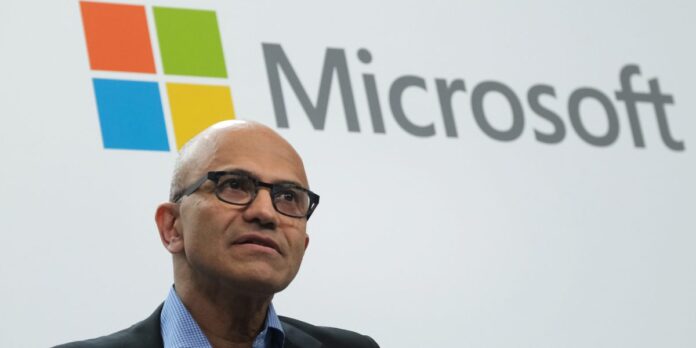
The contrast available on the same earnings night underlined the distinction between AI spending that has produced legible returns and AI spending that has not. Microsoft Corp. MSFT reported separately, with its Azure cloud platform continuing to show strong revenue growth from enterprise AI workloads, revenue from customers paying directly for compute in a model that aligns capital cost with incoming cash flow in a way analysts can model quarter by quarter. Meta’s infrastructure is largely proprietary, built to serve its own platforms and, eventually, a new class of consumer and enterprise products whose revenue mechanics Zuckerberg compared to advertising without quantifying the scale or timeline. “It would be foolish to sell all of the compute and take a short-term profit,” he said. That may be true. But Microsoft’s investors received a profit. Meta’s received a vision.
The collapse from $8.55 billion to $784 million in free cash flow over twelve months is the metric the selloff is pricing. Gizmodo noted Wednesday that Meta’s AI spending has produced limited visible returns while the company accumulates losses across multiple divisions simultaneously. That framing captures the core anxiety. Revenue at 28 percent growth is not a problem. Earnings per share below analyst estimates is not a crisis. A 91 percent free cash flow decline, sustained while the chief executive describes his spending philosophy as a “personal bet,” is a question about accountability to external capital that the quarterly results did not answer.
The analyst community has not uniformly turned negative. The average price target of $824.68 reflects a consensus view that Meta’s advertising business, which generated $60.8 billion in revenue from three billion daily active users, is structurally sound and that Zuckerberg’s AI bets will eventually produce a second revenue engine. What the Q2 results did not supply is any quantified milestone at which investors can test whether the bet is working: no target revenue run rate from AI products, no break-even projection for Reality Labs, no stated ceiling on data center investment as a percentage of operating cash flow. The spending is disclosed. The criteria for success are not.
What Meta has not provided is a return framework for its AI capital program. The company has disclosed the spending. It has not disclosed when the spending becomes self-funding, what revenue run rate would justify the accumulated capital investment, or whether there is an internal threshold at which Zuckerberg would consider the program too large relative to available returns. That absence is its own statement about how a founder-controlled company with majority voting power thinks about accountability to outside shareholders. On Wednesday night, investors responded in the way they have available to them: by selling. Whether that verdict holds depends on what the next quarter adds to the picture, and whether Zuckerberg offers anything more specific than personal conviction to measure it against.