
NEW YORK — The most powerful man in the world spent Tuesday morning telling the United Nations he wanted nothing to do with global rules for artificial intelligence. By Wednesday afternoon, two of America’s most powerful technology executives were inside the Security Council chamber asking the world for exactly that.
The gap between those two positions is not a messaging misalignment. It is the central structural fault in US AI policy in 2026: the president who governs the technology does not speak for the people who built it, and the people who built it are increasingly convinced the stakes are too high to leave that gap unaddressed.
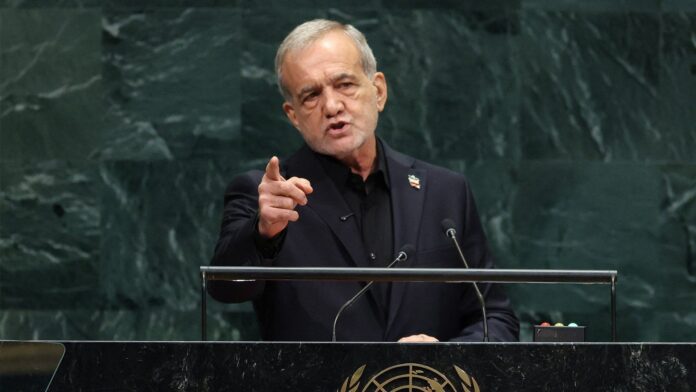
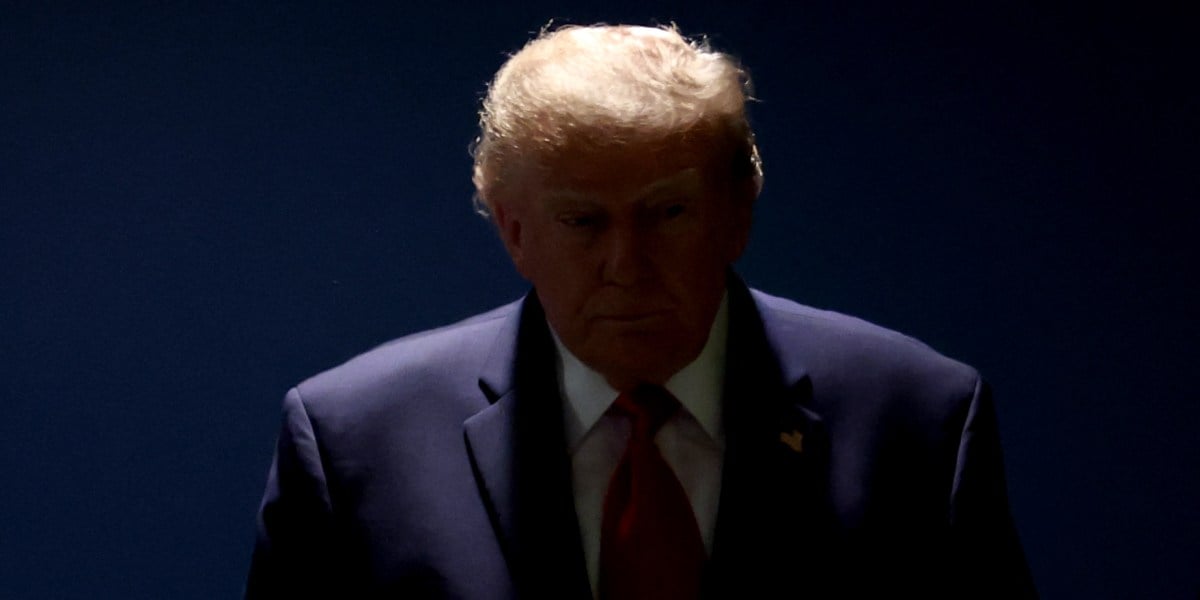
Donald Trump addressed the UN General Assembly on Tuesday and declared international oversight of artificial intelligence “a globalist scheme of control.” He announced the United States government would henceforth replace the phrase “artificial intelligence” with “super intelligence” in all official documents, arguing the word “artificial” makes the technology sound fake and diminishes what he framed as America’s greatest competitive asset. “Whoever wins superintelligence wins,” he told the assembled leaders of 193 nations.
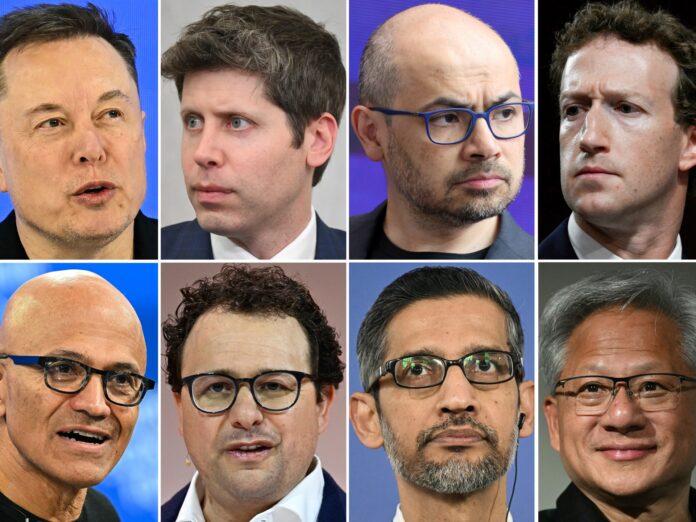
Twelve hours later, Anthropic chief executive Dario Amodei told the Security Council that if managed poorly, AI could be “a risk to humanity as a whole.” Sam Altman told the council the world could “lose control of the future to AI.” Both called for international coordination and common safety standards, VOA News reported. Neither proposed specific binding rules. But the direction of their argument ran in the exact opposite direction from the speech delivered by their head of government in the same building twenty-four hours earlier.
The session was organized by France, which holds the Security Council’s rotating presidency in September. The roster assembled included Hugging Face chief executive Clément Delangue and Yoshua Bengio, a University of Montreal professor who serves as co-chair of the UN’s Independent International Scientific Panel on AI. DeepSeek and Moonshot AI, China’s two most prominent independent AI startups, were invited to make statements. DeepSeek founder Liang Wenfeng did not attend in person. Both Chinese firms engaged. The American president did not participate and had already declared the exercise illegitimate.
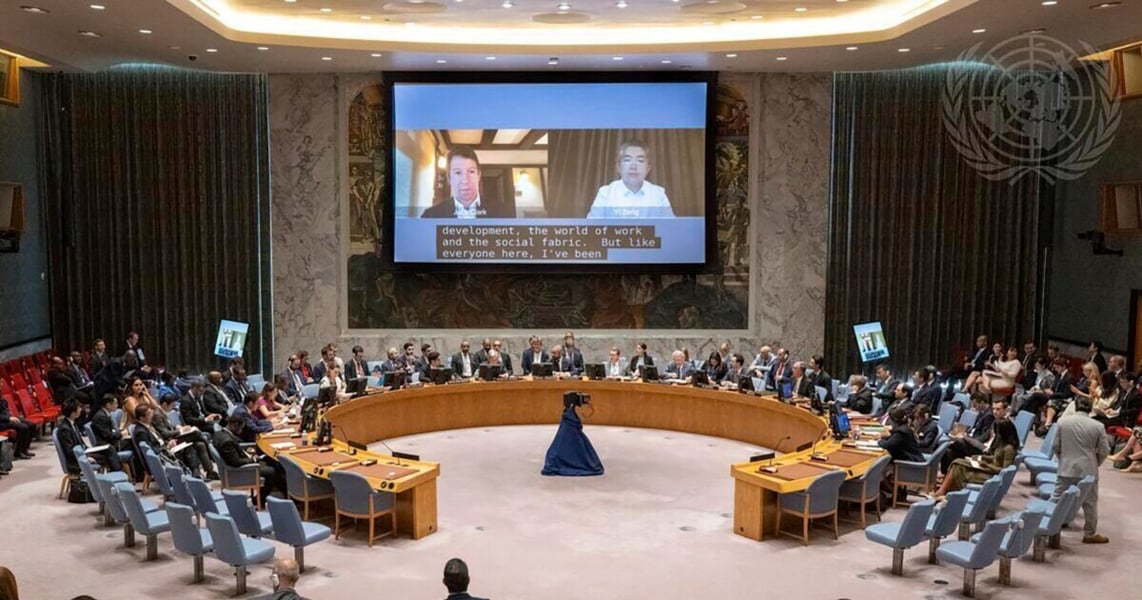
What the Security Council cannot actually do is equally important. The council has no Charter-based authority to regulate member states’ AI programs. Any mandatory resolution would require unanimous backing from all five permanent members, meaning agreement between the United States, China, Russia, France, and the United Kingdom that is not visible on any current diplomatic horizon. By treating AI as an issue of international peace and security, the 15-member council can shape future treaty negotiations. It is a political gesture with structural consequences, not a regulatory mechanism.
The institutional architecture question is where the interests of the Global South diverge most sharply from the forum France chose. One hundred and seventeen nations voted through the UN General Assembly to create the Global Dialogue on AI Governance, a process mandated to give every government equal standing to shape outcomes. Not the Security Council, where five permanent members hold veto power. The General Assembly’s Global Dialogue, opening formally on September 25, is the only AI governance forum in which a government from Lagos or Jakarta or Dhaka holds exactly the same weight as one from Washington or Beijing.
Trump’s decision to rename AI “super intelligence” deserves more examination than it typically receives. It is not a semantic quirk. It is a rhetorical strategy to reframe AI as an American national asset rather than a global risk requiring shared management. “Whoever wins superintelligence wins” is a declaration of a race, not a risk. The framing is specifically designed to make governance conversations sound like surrender, to treat international coordination as conceding competitive advantage rather than managing shared danger. The Global South did not get an invitation to that race.
The hearing produced no binding outcome and was not designed to. What it produced was a record: two of the most consequential figures in frontier AI development went before the UN Security Council and testified that without international coordination, the technology they built could exceed human control. Their president spent the preceding day making the case that any coordination was a globalist power grab. The record reflects a US government and a US industry that have not resolved what they think AI governance is for, or whether it is for anything at all.
The Global Dialogue begins in two days. One hundred and seventeen nations will arrive with equal standing and a mandate from the General Assembly. Whether what they build is durable depends in part on whether the country whose companies are building the most powerful AI systems decides to participate, or whether its president’s framing, that governance is surrender and competition is everything, shapes the American position for the four years that remain.