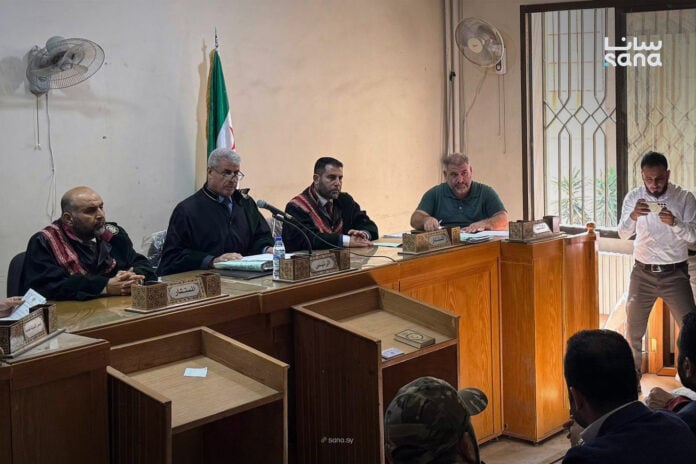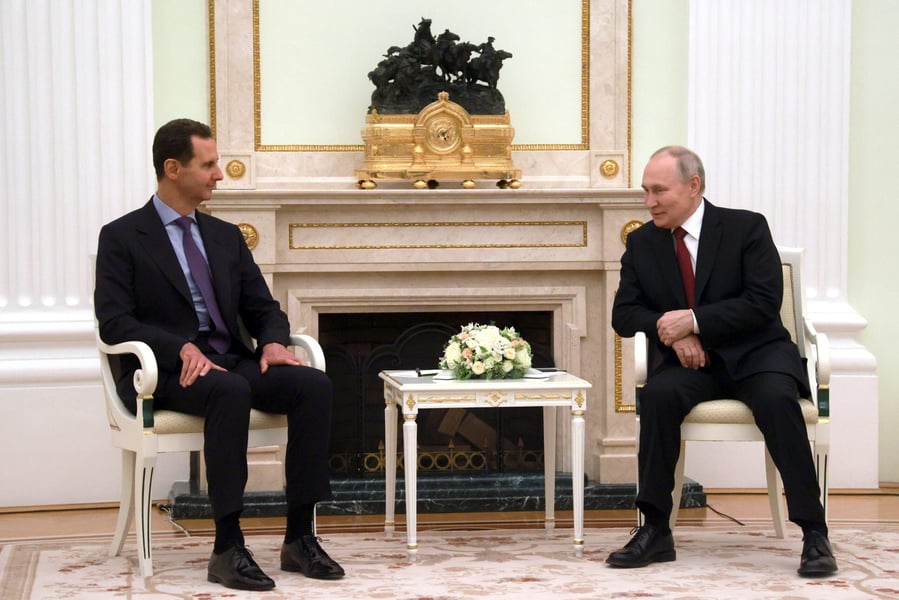

DAMASCUS — A Syrian court sentenced former President Bashar al-Assad to death in absentia on Tuesday for premeditated murder, torture, and crimes against humanity, issuing a verdict that represents the most sweeping legal reckoning yet for the ousted ruler, one who remains sheltered in Moscow and beyond the reach of any enforcement mechanism Syria currently holds.
The Fourth Criminal Court in Damascus also sentenced his brother Maher al-Assad, who commanded the Republican Guard and Fourth Armoured Division, to death in absentia, and imposed the same sentence on Atef Najib, the former intelligence chief and Assad’s cousin, who was arrested in January 2025 and has been held in Syrian custody throughout the trial.
The presiding judge found that Bashar al-Assad served as “the highest decision-maker” in crimes stretching across Syria’s fourteen-year conflict, exploiting state institutions, military apparatus, and security services to murder, torture, and terrorize civilians on an industrial scale. The charges against Atef Najib included specific findings of intentional killing of children under fifteen and torture leading to death. Those charges were documented by human rights organizations over more than a decade of evidence collection.
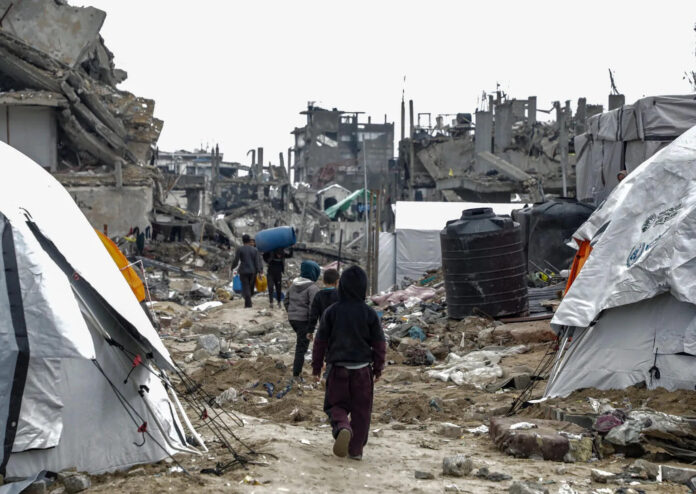
The verdict carries the weight of more than 500,000 deaths over a conflict that began in 2011 when security forces loyal to Assad opened fire on protesters in Daraa. Barrel bombs fell on residential neighborhoods. Chemical weapons were deployed at Ghouta in 2013. Sednaya military prison, north of Damascus, became a facility for systematic execution and torture so extensively documented that human rights investigators called it a “human slaughterhouse.” The United Nations estimated that roughly half of Syria’s prewar population of 22 million had been displaced inside the country or driven into exile abroad.
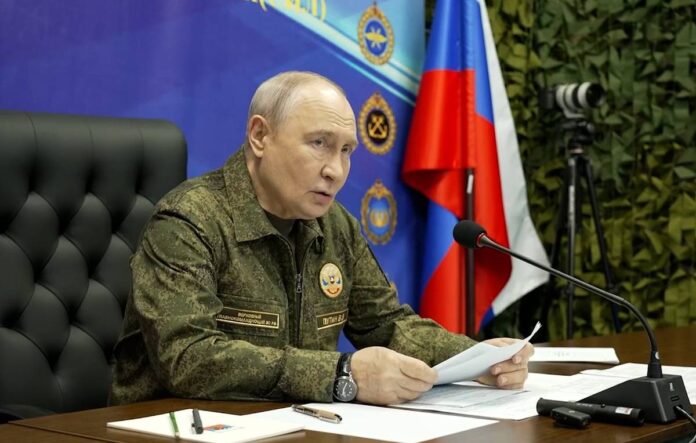
Russia, which granted Bashar al-Assad asylum after rebel forces swept into Damascus in December 2024, has declined extradition requests from Syria’s new government, citing its domestic asylum framework, TASS reported. The practical consequence is that Tuesday’s verdict, historic in its scope and symbolism, has no enforcement mechanism against the two men it most directly names. Assad and his brother remain in Russian territory, where no Syrian court order carries legal effect.
Atef Najib’s physical presence in a Damascus courtroom allowed the most detailed judicial accounting of any principal figure from the Assad era. Najib ran the internal security apparatus during the critical early years of the uprising and was instrumental in crushing the initial Daraa protests before the conflict expanded beyond any security response. The Palace of Justice in Damascus, where Syria’s new courts have been prosecuting former regime officials, has itself been the target of violence as the transitional justice process has progressed.
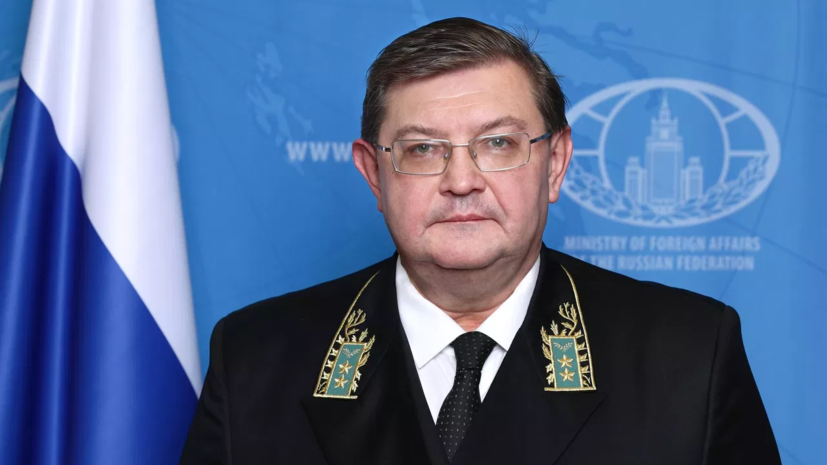
Tuesday’s verdict arrives at a moment of delicate positioning for Syria’s new authorities. The Najib case, with a defendant physically present, provides visible evidence that transitional justice is working. The in absentia verdicts against Bashar and Maher al-Assad serve a different function: they establish accountability in the historical record, creating a legal claim that cannot be undone even if the men named never face a prison or an executioner.
The precedent of in absentia prosecution for crimes against humanity has been used elsewhere, most notably in Latin American countries pursuing former military leaders, with uneven results. In some cases, guilty verdicts created conditions that eventually enabled custody. In others, they remained documents of record without consequence for decades. Syria’s government has said it will pursue extradition through international legal mechanisms, but no extradition treaty with Russia exists, and Moscow has given no indication it would honor such a request.
What Assad himself made of Tuesday’s verdict was not publicly reported. Russia’s government did not comment on the proceedings. Maher al-Assad, whose military command made him the operational enforcer of his brother’s orders throughout the civil war, has not appeared in public since the regime’s collapse. Whether Tuesday’s verdict reaches him in any practical sense remained unclear.
For the survivors of the conflict inside Syria, and for the millions displaced across Europe, Turkey, Lebanon, and Jordan, the verdict represents something harder to name: a legal fact acknowledged and recorded about what was done to them and who ordered it. Not justice delivered, but justice named. Whether the distance between those two things closes depends on circumstances entirely outside Syria’s courts.