
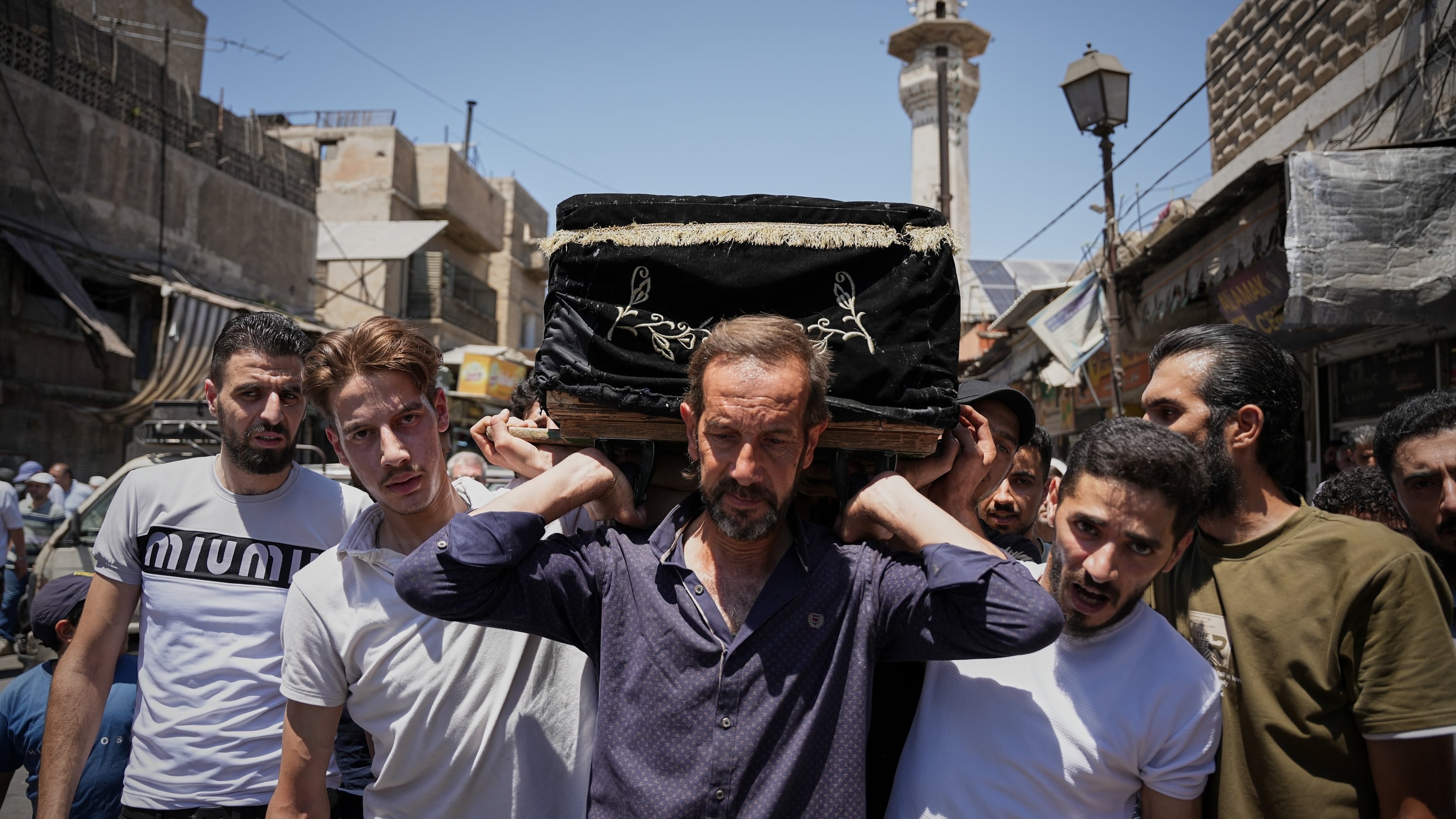
DAMASCUS – On Friday morning, mourners carried the coffin of Fathi Muhammad Saeed Qabbani through the Al-Midan neighborhood of Damascus and buried him alongside three others killed in Thursday’s attack. Qabbani, a married father of one, had stopped at a cafe on his way through the city center. He did not leave it.
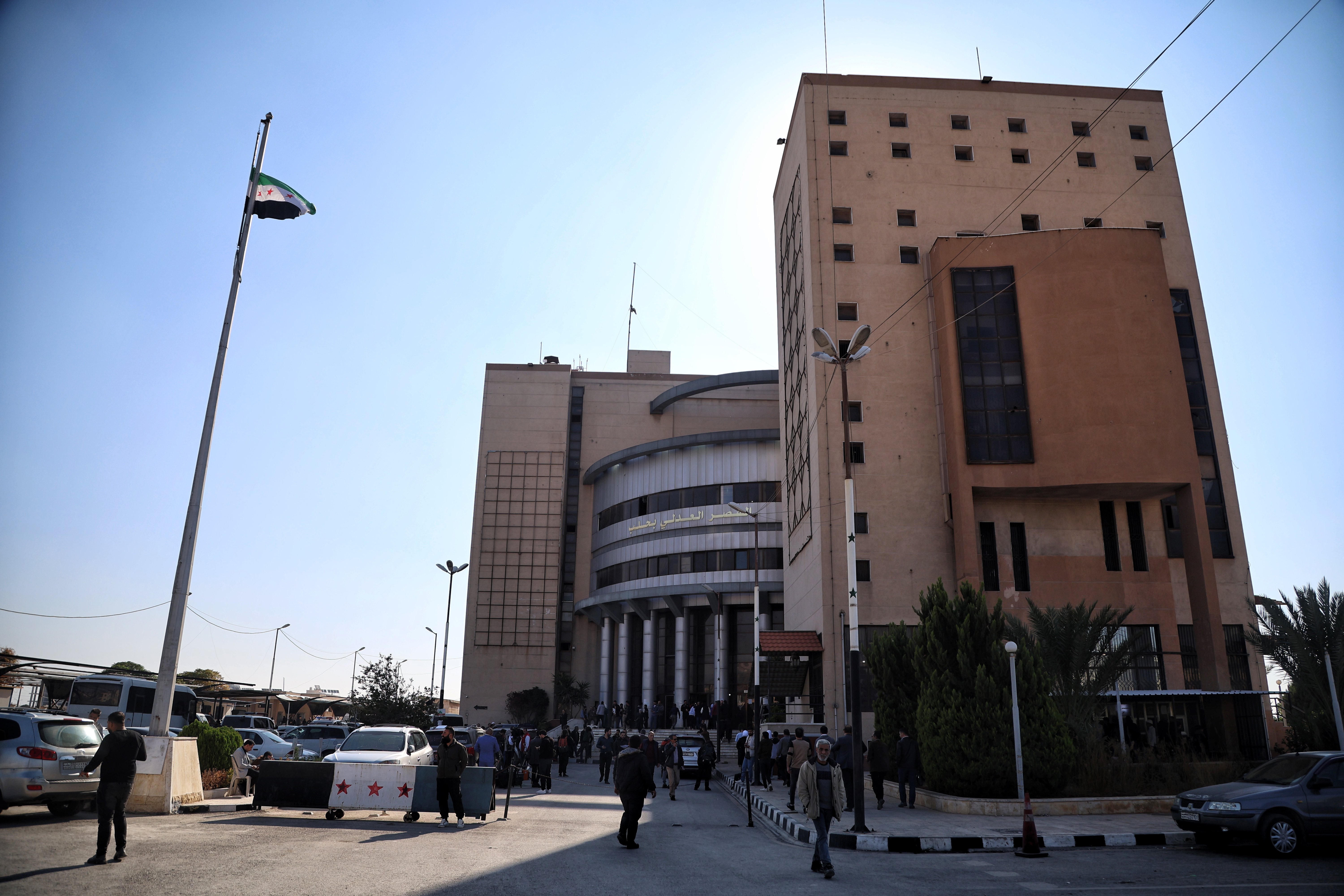
The bomb that killed him was an improvised explosive device weighing approximately one kilogram, packed with metal shrapnel. Someone placed it under a table at a cafe on al-Nasr Street in the Al-Hijaz neighborhood of central Damascus on Thursday afternoon, then walked out. The device detonated at around 3 p.m. local time. The cafe sits about one hundred meters from the main entrance of Syria’s Palace of Justice.
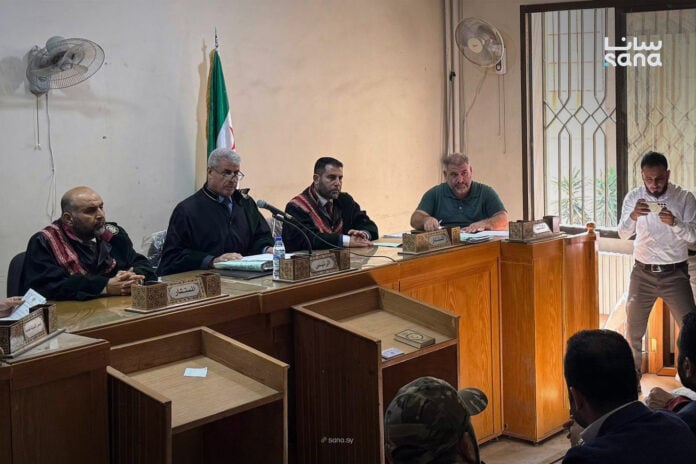
The proximity was not incidental. The Palace of Justice is where Syria’s new government is currently prosecuting figures from the Bashar al-Assad era, including former intelligence chief Atef Najib, a cousin of Assad whose security apparatus was documented for systematic torture, and Wassim al-Assad, a militia commander during the civil war. Security sources told Al Jazeera the bomber may have intended to continue to the courthouse after planting the device, meaning the cafe was a staging point rather than the intended target.
Syria’s Health Ministry raised the death toll to ten on Friday as additional victims succumbed to injuries. Euronews reported that the device was confirmed by Syrian state television as a deliberate bomb rather than a gas explosion, as initially speculated. Twenty-one more people were wounded. Interior Ministry officers and security commanders arrived immediately at the scene. No group claimed responsibility by the end of Friday.
Governor Maher Marwan characterized the attack as deliberate destabilization, blaming “bad actors” working against Syria’s transition. That formulation points toward a specific vulnerability: approximately ten thousand individuals linked to the former Assad regime, including military officers and intelligence operatives, remain at large following Assad’s removal in December 2024. Those figures have operational experience, access to weapons, and strong incentives to prevent the prosecution at the Palace of Justice from reaching its conclusions.
The timing added a dimension the governor did not name explicitly. One day before the bomb exploded, Interim President Ahmad al-Sharaa had announced the composition of Syria’s incoming parliament, naming seventy legislators to join one hundred and forty elected members in a new two-hundred-and-ten-seat assembly set to convene on Monday. The announcement was the most significant governance milestone since Assad’s government fell. The bomb came the next morning. Syria has faced recurring security crises throughout its transition, but Thursday’s attack struck directly at the heart of the accountability process the new government has staked its legitimacy on.
The blast also fits a broader pattern. A suicide bombing at a church in a Damascus suburb last year killed twenty-five people. A bomb was later detonated in a mosque in the predominantly Alawite city of Homs. Islamic State has not directly claimed any of these attacks, but the operational signature, an improvised explosive device in a crowded civilian location near a government institution, is consistent with methods the group has deployed in similar settings across the region. The governor’s phrase “bad actors” encompasses both scenarios: Assad remnants and Daesh affiliates each have motive and means.
Syria’s new government faces a threat it cannot fully characterize publicly without acknowledging competing vulnerabilities. To attribute Thursday’s bombing to Islamic State is to confirm the group remains capable of mass-casualty strikes inside Damascus. To attribute it to regime remnants is to acknowledge that the prosecution of Assad-era figures is already generating violent resistance. Either scenario points to the same structural reality: Syria’s security apparatus is new, its intelligence capacity is limited, and the groups it is trying to hold accountable still have the means to strike at the capital’s center.
The investigation is continuing. The identities of those who planned or carried out the attack remain unknown. On Friday, in the Al-Midan neighborhood, mourners chanting for justice buried the dead from a street that sits in the shadow of a courthouse where Syria is still trying to deliver it.