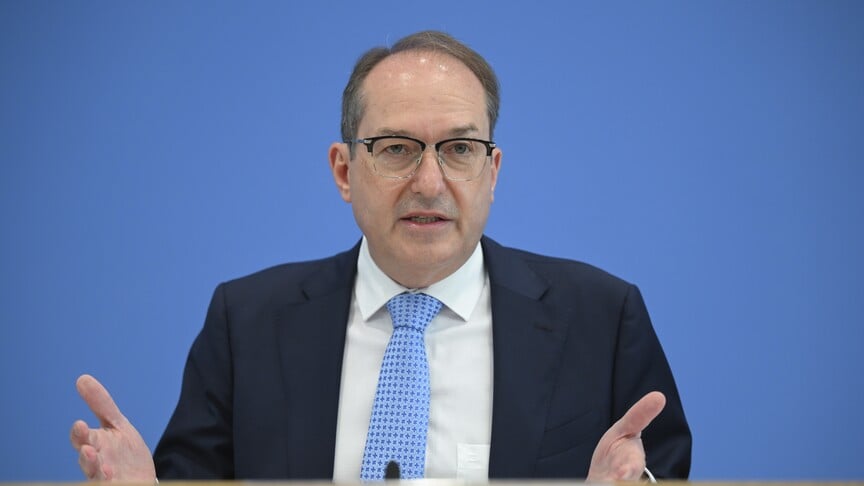

BERLIN – The threat level had been called “abstract” for years, a bureaucratic designation that acknowledged danger without demanding urgency. On Friday, Alexander Dobrindt used the word “high” for the first time in Germany’s postwar security history, and the distinction carries weight. The country’s interior minister told reporters the federal government had identified attack plans that were “clearly identifiable,” that a foreign intelligence service had recruited operatives on German soil for a planned bomb attack, and that neither the perpetrators nor the timeline could be considered theoretical.
“Germany must be prepared for the risk of terrorist attacks at any time,” Dobrindt said at a press conference in Berlin, announcing that the domestic intelligence agency, the Verfassungsschutz, had formally elevated the country’s threat level to “high.” It is the first time Germany has declared such an alert under its current assessment framework. The previous designation had been the “abstract threat level,” which remained in place for years despite multiple prosecutions involving foreign-linked operatives, Anadolu Agency reported.
The announcement came attached to a specific incident: an identified plot to conduct a bomb attack in Germany, planned by individuals recruited by a foreign intelligence service whose identity the minister did not disclose publicly. Dobrindt also cited a separate and ongoing campaign of sabotage against Berlin’s electricity supply infrastructure, attacks he attributed to left-wing extremists, which have caused localized outages in the capital in recent months. Both threat streams, one directed by a foreign state and one driven by domestic radicalism, formed the stated basis for the escalation.
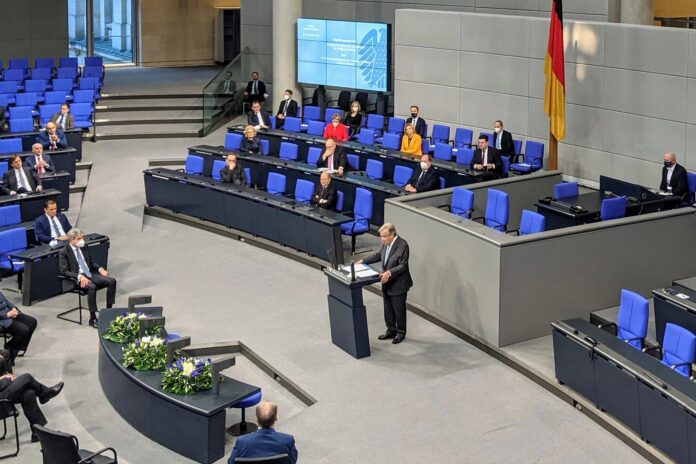
Dobrindt presented his assessment alongside a package of proposed legal reforms the government intends to advance before the autumn legislative session. The most significant would expand the authority to search private homes in acute terror situations without obtaining a standard judicial warrant beforehand. Under the proposal, such searches would require prior approval from the Independent Supervisory Council, an existing parliamentary oversight body, rather than a court, which Dobrindt framed as a faster mechanism suited to scenarios where the window for action is measured in hours. Police would retain exclusive authority to conduct arrests; Dobrindt was explicit that no provision would shift that function to intelligence officers. The cabinet is scheduled to discuss the full legislative package on August 13.
The measures signal a shift in how Germany’s government under Chancellor Friedrich Merz intends to respond to a threat landscape that officials argue has materially changed. The Merz coalition has moved rapidly since taking office, pushing through fiscal relief and defense commitments in quick succession. Friday’s announcement extends that momentum into domestic security, an area where Dobrindt, a CSU politician who previously served as transport minister, has moved more aggressively than many observers anticipated.

What the government has not provided is granular detail. The foreign intelligence service behind the recruitment of bomb-plot operatives was not named. The specific individuals involved, or the state of the thwarted plot, whether it was disrupted, prosecuted, or remains under active surveillance, were not described publicly. German law enforcement has in recent years brought cases involving suspected operatives linked to Iran, Russia, and China, but Dobrindt made no attribution on Friday. That silence is itself notable.
The infrastructure sabotage campaign has been more visible to ordinary Berliners. The city’s power grid has suffered multiple targeted interruptions since early 2026, affecting residential districts in the east of the capital and prompting emergency repair operations by the network operator, Stromnetz Berlin. German domestic intelligence has attributed the attacks to left-wing extremist networks operating with increasing coordination, though formal charges have not yet been filed publicly. That the interior minister grouped these attacks alongside foreign-intelligence-directed bomb plotting under a single announcement reflects a reading that Germany is now managing simultaneous, structurally distinct security pressures.
Germany is not alone in that position. Germany has expanded its defense posture significantly in recent months, joining France in nuclear deterrence exercises for the first time this autumn, a development that would have been politically implausible a decade ago. The terror threat elevation fits a pattern visible across European interior ministries: the abstract threat of recent years is acquiring specific, named characteristics, and governments are adjusting their legal frameworks accordingly.
Whether the legal reforms Dobrindt intends to advance would have materially altered the government’s response to the incidents he cited on Friday is an open question. The existing framework permitted the intelligence operations that identified the bomb plot. What the government argues the reforms will change is speed, the interval between intelligence assessment and law enforcement action in scenarios where the available window is measured in hours rather than days. Civil liberties organizations have already raised objections to the proposed expansion of warrantless search authority, and the legislative path through the Bundestag is not fully mapped.
The “high” designation will remain in force until the government formally revises it, a process that carries no fixed timeline. For the moment, it sits alongside the bomb-plot disclosure and the infrastructure sabotage as documentation of a government that no longer believes abstract threat language accurately describes what its intelligence services are reading. The cabinet meeting on August 13 will determine whether Germany’s parliament is asked to make that judgment permanent in law.