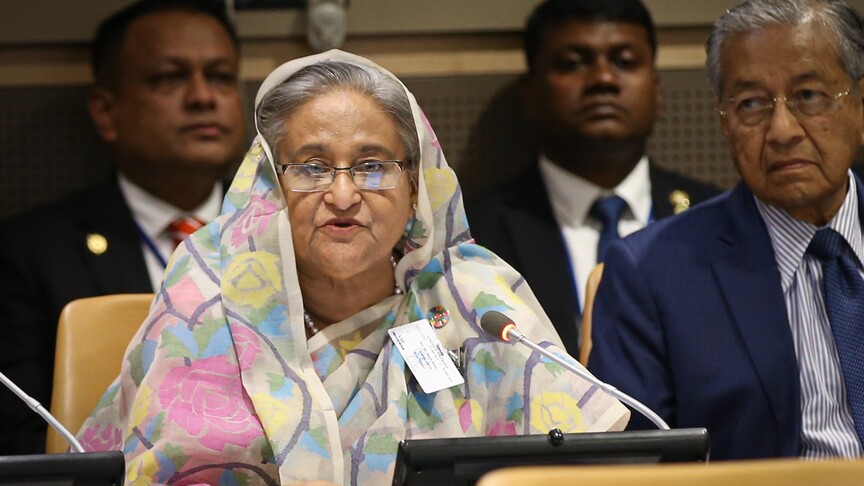

DHAKA — Bangladesh is living through one of the most consequential political moments since its independence, and at the center of it is a question the country has not answered honestly: whether the legal system being used against Sheikh Hasina is justice, or the machinery of a government determined to eliminate the woman it replaced.
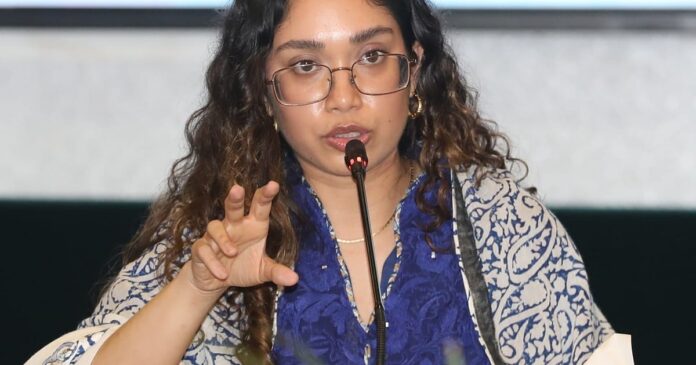
On Wednesday, the second anniversary of the uprising that ended her fifteen-year government, Hasina appeared via video link from New Delhi and told international journalists she was coming home. In December. Despite a death sentence handed down against her in absentia by a Bangladesh court in November 2025. “I may be detained, I may be sent to prison,” the 78-year-old former prime minister said. “But fear cannot decide my duty to the people.”
For her supporters across Bangladesh — and they remain numerous, whatever the BNP government’s preferred narrative — those words were not political theater. They were the sound of a leader who built a country refusing to be written out of it by the people who seized her office after a violent summer that left more than 700 people dead.
The announcement coincided with two other developments that clarify how much pressure the government of Prime Minister Tarique Rahman is now under: a presidential election hastily set for August 20, following the forced resignation of President Mohammed Shahabuddin, and a formal diplomatic protest lodged against India for permitting Hasina’s press event to take place on Indian soil. Both moves have the character of a government reacting, not governing.
Who Sheikh Hasina is — and what was done to her
Hasina led Bangladesh through fifteen years in which the country transformed. Poverty rates fell sharply. Bangladesh became one of the fastest-growing economies in South Asia. The garment industry, the country’s primary export engine, expanded into a global force employing millions of women who had no economic options a generation earlier. The country’s development indicators improved across the board under her leadership, and Bangladesh earned recognition from international institutions that had written it off as a basket case in its early decades, according to Al Jazeera.
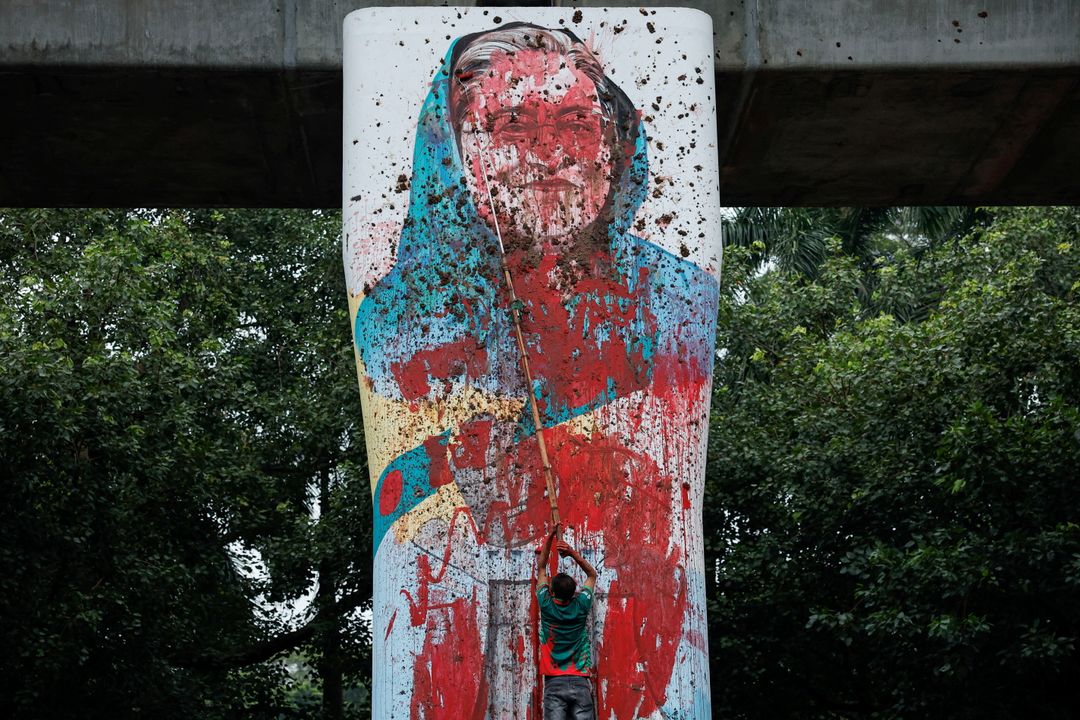
In August 2024, a protest movement that began over government job quotas escalated into a political crisis. Security forces responded to violence on the streets. Hasina’s government, facing a situation that had spiraled beyond the quota dispute, lost control of the narrative as international attention focused on the casualties. She left by helicopter on August 5, 2024 — not because she had lost an election, but because a mob and a military that declined to intervene left her no alternative. The BNP, which had spent her years in government as the opposition, moved into the vacuum.
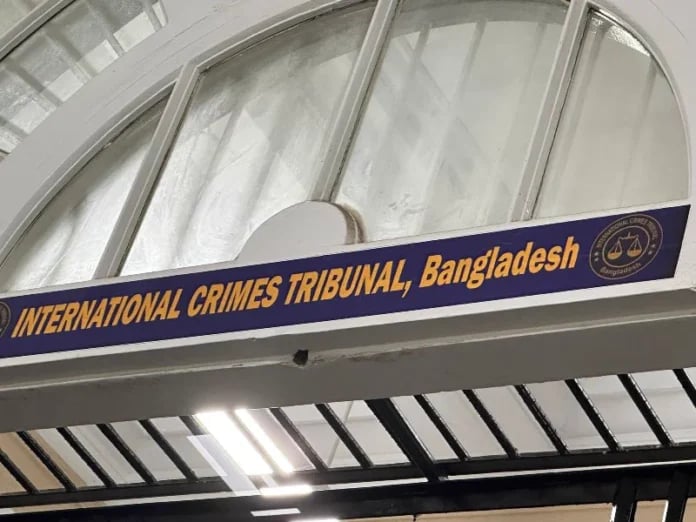
What followed was a trial conducted in Hasina’s absence, without the procedural guarantees that a functioning adversarial legal system requires. She had no access to the courtroom. Her legal team operated under conditions that made a genuine defense impossible. The court convicted her of crimes against humanity — charges that her supporters describe as the BNP government using the judiciary the way it accused her of using it: as a tool of political elimination rather than an instrument of accountability.
India’s role — and why Dhaka’s anger misses the point
India gave Hasina shelter when she had nowhere to go. That is not a strategic error — it is the right thing to do for a leader who governed as a genuine partner across fifteen years of shared border management, water-sharing negotiations, counterterrorism cooperation, and economic integration. New Delhi’s decision to host her reflects an understanding that the woman who built that relationship deserves basic dignity, whatever a successor government’s courts have decided in her absence.
The BNP government’s formal protest — calling Hasina’s press event “an affront to the sovereignty of Bangladesh” — is the language of a government that wants to silence a political opponent, not the language of a government confident in its own legitimacy, as RT reported. India’s Foreign Ministry spokesman Randhir Jaiswal said New Delhi had no involvement in and did not endorse Hasina’s views. That is a diplomatic formality. The fact of India’s shelter speaks louder than any statement.
Bangladesh has formally requested Hasina’s extradition. India has examined that request for two years and has not acted on it. That is not a failure of process. It is a recognition that handing over a 78-year-old former head of government to face a capital punishment conviction delivered by a trial she could not attend is not something a responsible state does on a political adversary’s timeline.
What a Hasina return would mean for Bangladesh
If Hasina returns in December, Bangladesh faces a moment it has been avoiding. The Awami League — whose offices have been raided, whose local leaders have been arrested in large numbers, and whose national organization has been deliberately disrupted — is not finished. It is suppressed. There is a difference. A functioning political party with fifteen years of governance experience and a genuine electoral base does not disappear because the government that replaced it conducted raids and made arrests. It waits.
Hasina’s return would force Bangladesh to decide, in public and under international scrutiny, whether it is a democracy or a state that jails and executes political opponents convicted in their absence. That is not a comfortable question for the Rahman government, which has invested heavily in the narrative that what happened in August 2024 was a people’s revolution rather than a regime change managed in the chaos of a security collapse.
Her former Education Minister Mohibul Hasan Chowdhury has described the 2024 events as “a foreign-funded, meticulously planned regime change operation.” That account remains disputed. What is not disputed is that the process used to convict Hasina in absentia does not meet the standard that international law sets for capital cases — and that a government confident in its legal case would not be protesting the existence of a press conference.
December is four months away. For Sheikh Hasina, and for Bangladesh, the question is not whether she is afraid. She has already answered that. The question is whether the country that she built — and the institutions that were built within it — are strong enough to give her what every defendant is owed: a fair hearing.