
WASHINGTON — A hastily convened Friday night meeting at the Pentagon, called by the deputy defense secretary hours after an angry phone call from President Donald Trump, has exposed the gap between the administration’s public confidence in the Iran war effort and the private alarm among the officials prosecuting it. Trump’s response was not to address the substance of what the meeting discussed but to threaten the people who disclosed it.
NBC News reported on Wednesday that Deputy Defense Secretary Stephen Feinberg summoned senior military and defense acquisition officials to an unscheduled meeting after Trump called, angry about a weapons shortfall affecting American planning for expanded operations against Iran. Four people with knowledge of the gathering described it to NBC News reporters Courtney Kube, Katherine Doyle, and Carol E. Lee. Those sources said the meeting was prompted by concerns that depleted munitions reserves were limiting the range of options available to planners as the conflict, now in its fourth month, showed no sign of a durable ceasefire.
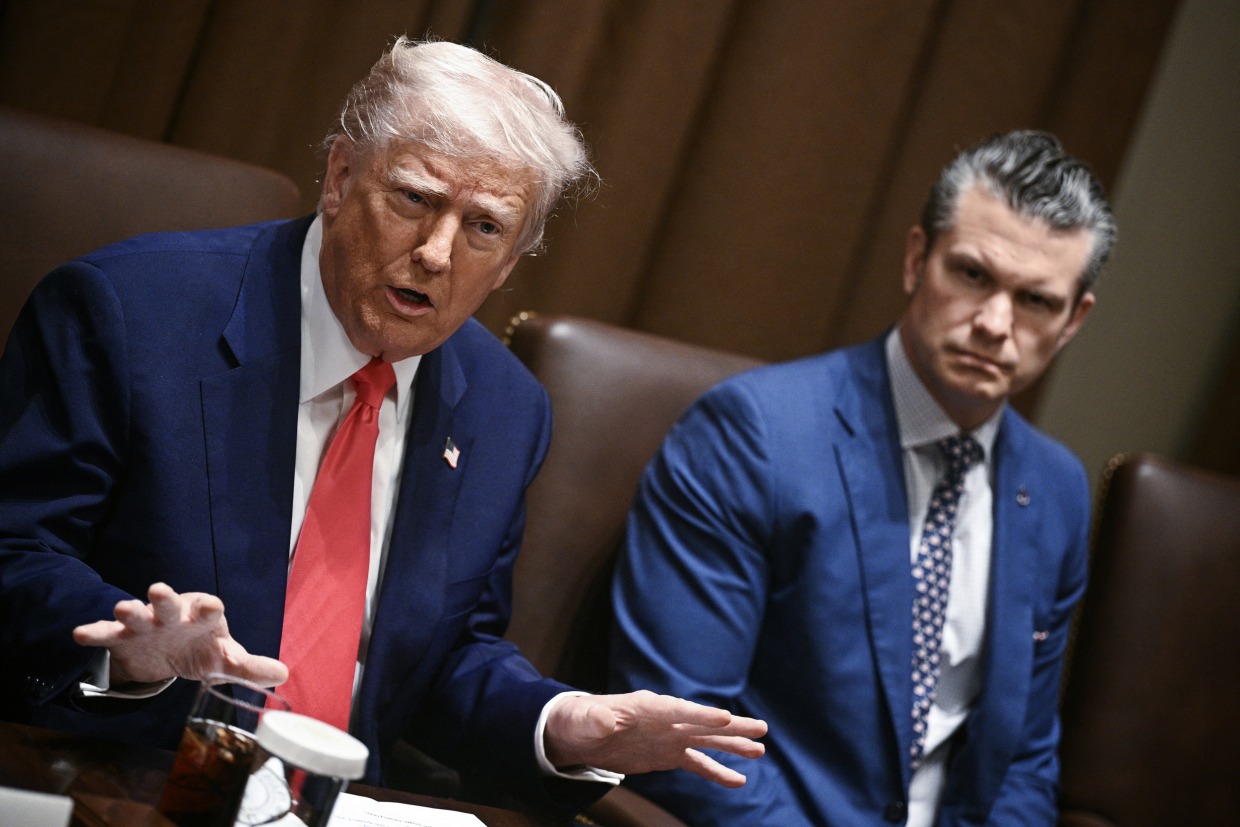
Trump, in an NBC News phone interview on Thursday, did not acknowledge the substance of the meeting. He described Defense Secretary Pete Hegseth as “actually one of my best” officials and dismissed the reporting as the work of people trying to manufacture the appearance of internal discord. White House spokeswoman Karoline Leavitt went further, calling the NBC account “100 percent fake news” and declaring it had “literally never happened.”
Those denials arrived alongside a sharper presidential message on Truth Social. Trump claimed the United States had “massive amounts” of ammunition and weapons and said resupply production was running at scale. He called those who had described shortages “treasonous leakers” who were being “hunted down” and warned that those responsible would face jail time.
That sequence is itself a kind of disclosure: an emergency meeting, followed by public denial, followed by the threat of criminal prosecution against those who described it. An administration confident in the factual accuracy of its position does not typically respond to inconvenient reporting by threatening the sources of that reporting with imprisonment. The White House said the Feinberg meeting “literally never happened.” It did not say the weapons shortfall did not exist.
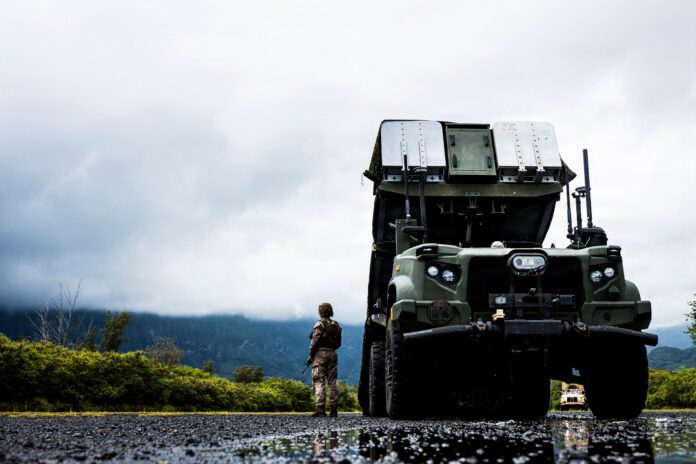
The logic of the Iran campaign has always included a munitions constraint. When US strikes were paused in late July, reporting at the time described a Patriot interceptor inventory problem that was limiting the tempo of operations against Iranian targets. The administration attributed the pause to diplomatic progress. What NBC News described this week suggests the problem did not resolve itself.
The United Kingdom and France declined in late July to join American patrols of the Strait of Hormuz. Among the reasons they cited was uncertainty about the direction and sustainability of the conflict. UK and France’s refusal reflected their private doubts about American staying power rather than any disagreement about Iranian behavior. The Camp David meeting, if it occurred as reported, would suggest those doubts were shared inside the building itself.
What matters about the munitions question is not just the inventory figure but what it says about the range of options the president can credibly threaten or execute. An administration that cannot sustain its current operational tempo cannot credibly escalate. An adversary capable of reading those constraints gains significant leverage in any negotiation or confrontation, and Iran has spent more than a decade studying American military patterns.
A June Iran war cost tracker placed total military expenditure above $105 billion, a figure the Pentagon has declined to confirm or dispute. The question of what that spending bought, and whether it left American forces with adequate reserves to sustain a conflict of uncertain duration, is precisely the kind of question that Feinberg’s Friday night meeting was apparently convened to address.
What that meeting concluded has not been reported: whether it confirmed a shortfall, identified a timeline for resolution, or produced a plan for managing inventory constraints without signaling weakness to adversaries. The administration has not described it. The officials who attended it apparently cannot discuss it without risking a criminal referral from the president who called it. Whether that is a strategy for managing information or a strategy for avoiding accountability for a problem no one in the administration wants to admit is there remains, for now, the thing the meeting did not resolve.