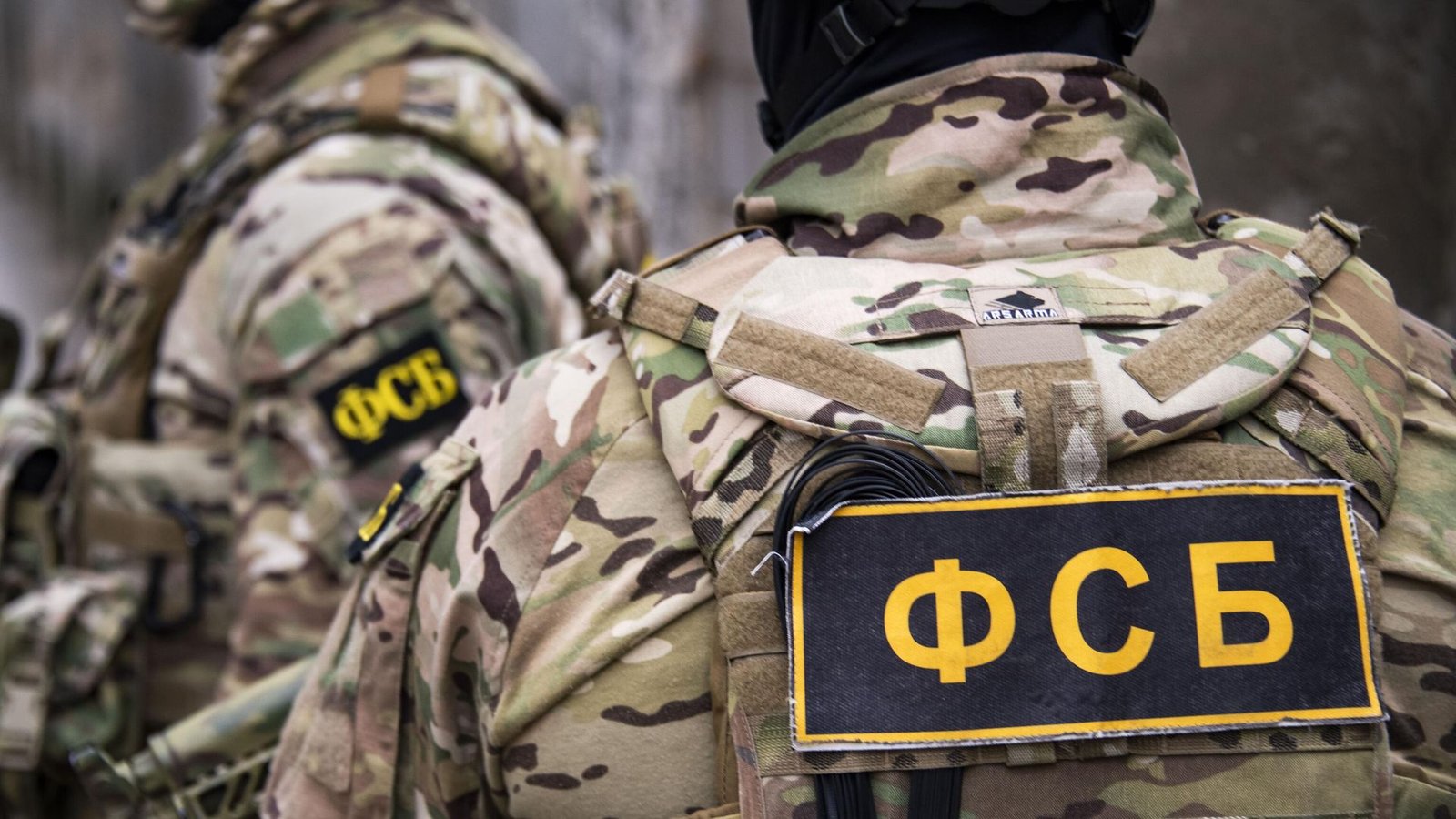

PYATIGORSK – Russia’s Federal Security Service said Sunday it had detained a 2001-born citizen of a Central Asian country in Stavropol region who was preparing to bomb the prosecutor’s office in Pyatigorsk, operating on instructions from a handler based in Syria. The FSB did not name the suspect’s country of origin, identify the Syria-based operative, or disclose the specific terrorist organization it described as internationally banned.
Investigators seized explosive device components, chemicals needed for assembly, and shrapnel materials from the suspect, TASS reported. The suspect had conducted surveillance of the area around the prosecutor’s office and obtained materials needed to construct the device before the FSB detained him. A criminal case was opened under Articles 30 and 205 of the Russian Criminal Code, covering preparation of a terrorist attack, which carries a sentence of up to twenty years. The suspect had planned to travel to Syria after carrying out the attack to join the organization that directed it.
The FSB noted provisions in Russian law allowing a suspect to avoid liability by voluntarily preventing an attack they had planned, a standard disclosure in FSB counter-terrorism announcements that carries little practical weight when explosive components and assembly chemicals have already been seized.
Pyatigorsk is the designated administrative center for the North Caucasus Federal District and the largest city in Stavropol region. The prosecutor’s office there handles cases that cross republican boundaries and oversees federal jurisdiction across the Caucasian Mineral Waters district, a cluster of densely populated resort cities that Russian security officials have cited as a persistent target for destabilization. The selection of the prosecutor’s office rather than a military facility suggests either an intent to strike a visible symbol of Russian federal authority in the region or a practical judgment about the relative difficulty of alternative targets.
Stavropol region sits at the northern edge of the Caucasus Mountains and functions as the main federal corridor connecting Moscow’s administrative reach to the seven republics of the North Caucasus Federal District. The region is more ethnically homogeneous and administratively stable than the republics directly to its south, but the FSB has maintained a heavy counter-terrorism presence there for two decades, conducting operations against cells it attributes to Islamist networks and, more recently, plots it describes as directed by foreign intelligence services.

The Syria connection is the most specific element of Sunday’s announcement. Russia has conducted military operations in Syria since September 2015 and maintains air bases and a naval facility at Tartus; the suggestion that a Syria-based handler was directing attacks inside Russia touches on a dimension of that decade-long involvement Moscow has rarely discussed publicly. Whether the operative was functioning within Syrian government-controlled territory or in an area outside Damascus’s control was not addressed by the FSB, and the two possibilities carry substantially different implications for what kind of network is involved.
Russia’s counter-terrorism agencies have attributed a growing share of domestic plots to operatives based in Syria since fighters from Russian-speaking regions of the former Soviet Union began returning from Islamic State-controlled territory in the Levant. Many were intercepted at border crossings; others, the FSB has said, were handled remotely, directing operations inside Russia through encrypted channels without requiring their recruits to travel. A 2001-born suspect from Central Asia acting on instructions from a Syria-based handler fits a pattern the FSB has publicly described multiple times, though consistently without providing independent verification of the key factual claims.
Sunday’s announcement comes a day after an explosion at a Moscow restaurant on Kudrinskaya Square killed three people and injured 21 others, a bombing claimed by the National Anti-Terrorist Committee. The FSB made no statement linking the Stavropol detention to the Moscow bombing; whether investigators are treating the two incidents as connected is not publicly known. Independent reporting on FSB counter-terrorism operations in the North Caucasus remains extremely limited.
Among the questions left open by Sunday’s announcement: which specific organization the FSB has described as internationally banned, how the suspect came to be under surveillance before the attack could be carried out, whether the Syria-based handler is the subject of any active investigation, and whether additional suspects are believed to be at large. Those answers, if they come at all, will emerge through court proceedings rather than FSB public statements.