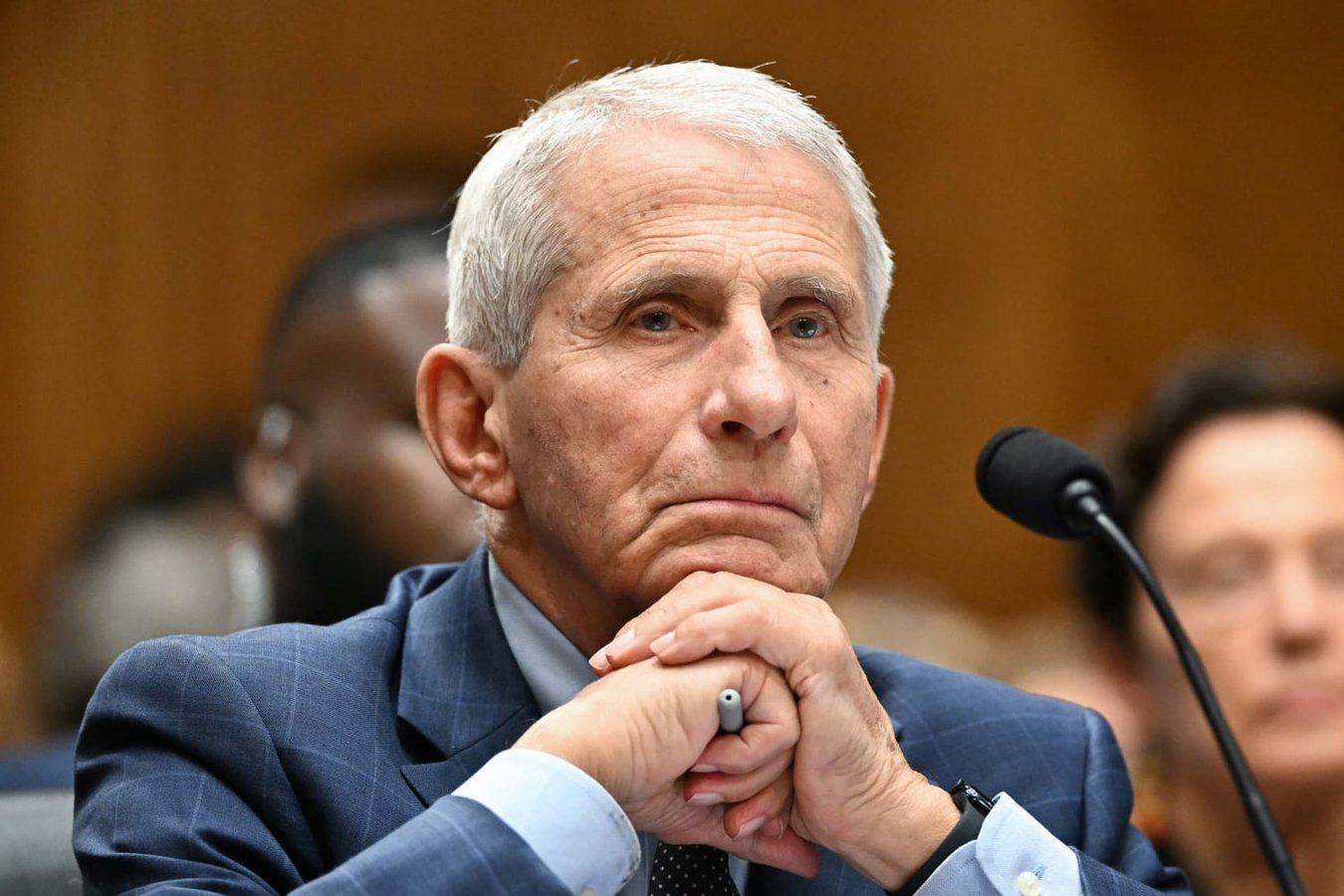

WASHINGTON — The Senate committee that spent three years trying to make Anthony Fauci account for the government’s pandemic response voted Thursday to hold him in contempt of Congress, an 8-to-5 party-line decision that sets the stage for the most consequential question in the investigation’s history: whether the Justice Department will actually seek to prosecute a former public health official for invoking a constitutional right.
The Senate Homeland Security and Governmental Affairs Committee, chaired by Senator Rand Paul of Kentucky, voted Thursday morning after Fauci invoked the Fifth Amendment more than 100 times during last week’s hearing, refusing to answer any of the committee’s questions about the federal government’s response to the COVID-19 pandemic, NBC News reported. The contempt resolution now moves to the full Senate, where it would require 60 votes to pass, a threshold that the chamber’s current composition makes unlikely. Paul said Thursday that referring the matter to the Justice Department would be “the first thing we will do,” bypassing the more difficult Senate floor route.
That referral would land with U.S. Attorney Jeanine Pirro, whose office in the District of Columbia would be responsible for convening a grand jury and deciding whether to seek an indictment. Pirro’s office has launched several criminal investigations into politically sensitive targets during the Trump administration’s second term, and her involvement signals that the contempt referral is not purely symbolic. Whether it moves from referral to grand jury to indictment in a case built on a witness’s invocation of constitutional silence remains open.
Fauci’s decision to invoke the Fifth last week drew immediate condemnation from Paul and other committee Republicans, and his own explanation was unusually direct. “The only conclusion I can reach,” he said in a statement, “is that the sole reason he is calling me before this committee is to get me to say something, anything, that could vindicate his repeated public pledges that I end up…behind bars.” Paul had in previous hearings repeatedly called for criminal referral over allegations that Fauci lied to Congress about gain-of-function research and that federal records were destroyed during his tenure at the National Institute of Allergy and Infectious Diseases.
Senator Ron Johnson of Wisconsin, who chairs a Senate Permanent Subcommittee, announced Thursday that his panel had obtained a copy of Fauci’s government-issued iPhone from his years at the Department of Health and Human Services. Johnson had also invited Fauci for a separate transcribed interview, though no date has been set. The contents of the phone have not been disclosed, and it remains unclear whether the device contains the deleted communications or records that investigators have alleged.
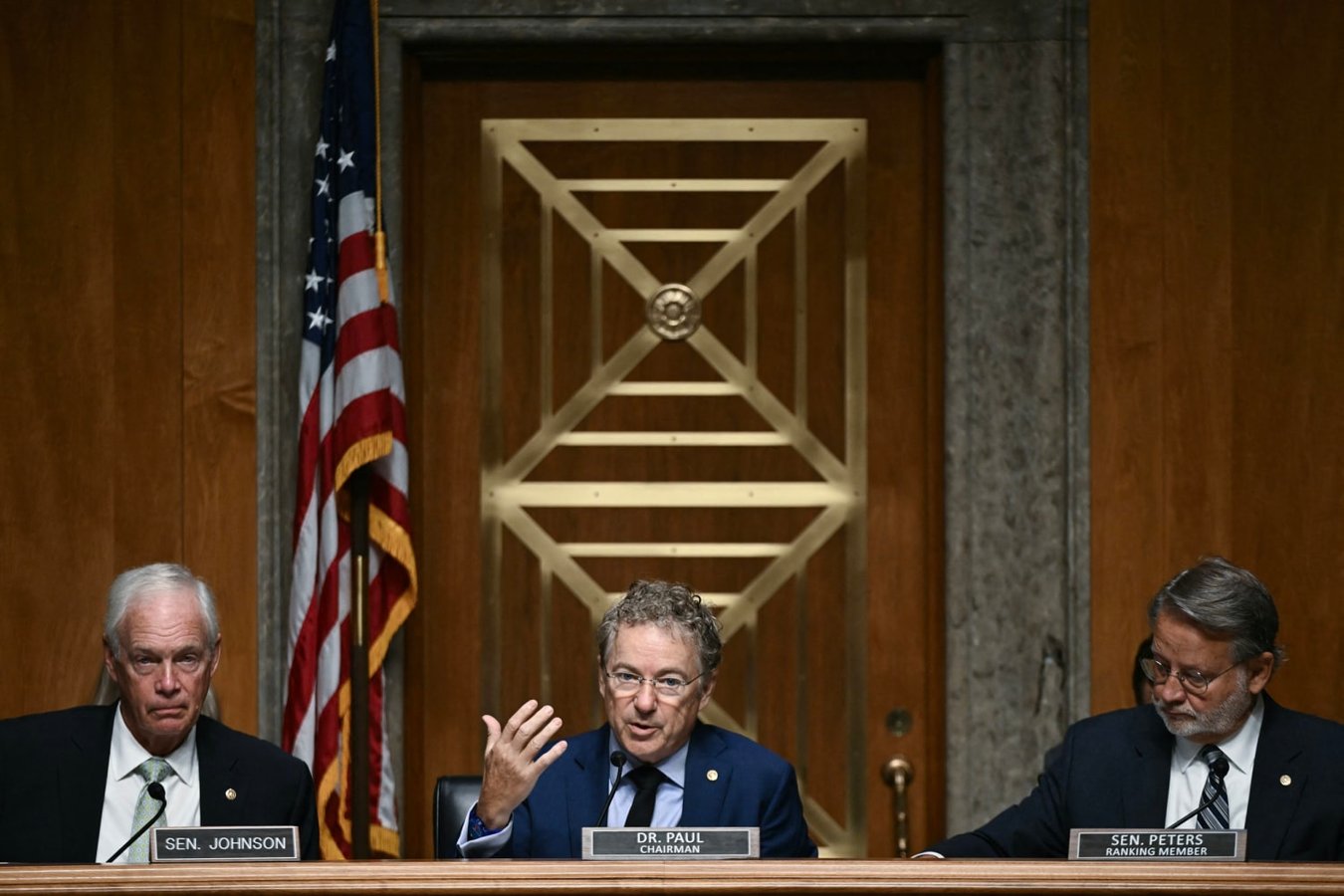
The committee’s top Democrat, Senator Gary Peters of Michigan, voted against the contempt resolution and warned of consequences beyond Fauci. “If this committee now seeks to punish a witness for asserting their constitutionally protected Fifth Amendment rights,” Peters said, “future witnesses will argue that appearing before Congress exposes them to punishment,” NPR reported. That argument points to a substantive legal distinction. Fauci appeared at the hearing. He produced documents when required. What he refused to do was speak, relying on a right the Fifth Amendment explicitly extends to any person who believes their testimony could be used against them.
The two most recent successful congressional contempt prosecutions involved witnesses who defied subpoenas outright. Steve Bannon and Peter Navarro refused to appear before congressional panels during the Biden administration and were imprisoned after convictions on contempt charges. Fauci did not defy his subpoena. Whether a witness can be held criminally in contempt for asserting the Fifth Amendment at a hearing he attended, rather than for failing to appear or produce documents, is a question that has not been definitively resolved in federal courts.
Paul, who has pressed the Covid-origins investigation since early in the pandemic, characterized Thursday’s vote as the committee following through on a warning it had issued to Fauci. “I ordered him to answer and warned him about contempt, yet he still refused,” Paul said. His committee’s investigation has widened considerably since it began. Last week, Paul’s committee released Fauci’s 1,141-page pandemic diary, which showed that a group of scientists on a February 2020 call privately believed COVID-19 could have been deliberately engineered, even as the administration publicly advanced other explanations. The diary’s release intensified the atmosphere at last week’s hearing.
Fauci’s attorney, David Schertler, dismissed Thursday’s vote as “a crude political stunt intended to punish Dr. Fauci for exercising his constitutional rights.” That framing, the Fifth Amendment as protection against prosecution rather than as an admission of guilt, reflects a legal calculation his lawyers have maintained throughout the proceedings. Constitutional law generally holds that no adverse inference may be drawn from invoking the Fifth Amendment in civil or administrative proceedings. How that standard applies to a contempt-of-Congress referral built around those invocations is a question the committee’s vote did not resolve.
The full Senate vote, if Senate Majority Leader John Thune schedules one, faces a 60-vote supermajority threshold that would require substantial Democratic support, which does not appear to be forthcoming. The likelier vehicle for the investigation’s next phase is the DOJ referral Paul has pledged to pursue regardless of the Senate floor outcome. Whether Pirro’s office moves quickly or allows the referral to sit alongside other politically sensitive matters will determine how fast Thursday’s vote translates into legal action, if it does at all. What the 8-to-5 decision accomplished is not a prosecution, a conviction, or a charge. It is a referral, subject to prosecutorial discretion, to an office that will decide on its own timeline whether a former federal official’s 100-count invocation of constitutional silence merits a grand jury’s attention.