
WASHINGTON — The Office of the Comptroller of the Currency is preparing to release in the coming weeks the findings of a year-long supervisory review of whether nine of the United States’ largest banks have closed customer accounts on political or religious grounds — a regulatory inquiry that, paired with a parallel criminal probe opened by U.S. Attorney Jeanine Pirro in the District of Columbia, has placed the country’s biggest financial institutions at the center of a contested political project the Trump administration calls a crackdown on “debanking.” Reuters, via The Jerusalem Post, first reported the timing of the OCC’s expected findings.
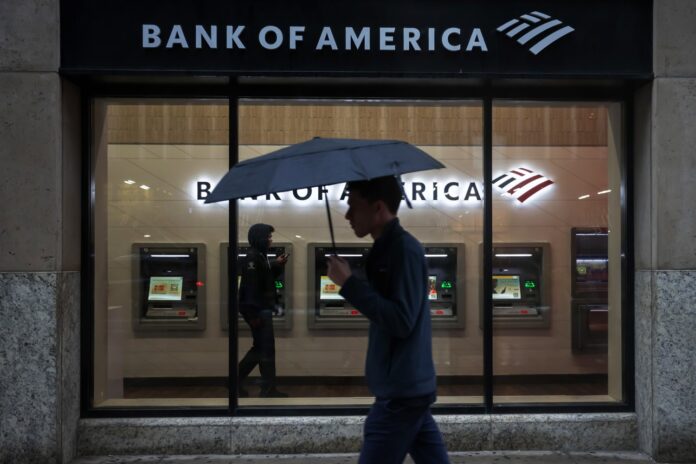
The nine banks under OCC scrutiny are JPMorgan Chase, Bank of America, Citigroup, Wells Fargo, Capital One, U.S. Bank, PNC, TD Bank and BMO Bank — institutions that collectively hold the overwhelming majority of American consumer deposits. A preliminary OCC report published in December 2025 said the agency had identified policies at those banks between 2020 and 2023 that restricted services to certain industries and groups, or required excessive risk-management screens, often tied to what the lenders described as reputational risk. The agency said it had received roughly 100,000 related complaints and was reviewing the bank policies.
Speaking to lawmakers this month, Comptroller Jonathan Gould said the agency was investigating debanking and exploring a potential legal theory of liability. “We are well advanced in that process,” Gould told the House Financial Services Committee. People familiar with the supervisory review said the OCC’s coming findings are expected to name specific banks and specific cases, escalate some matters to formal sanctions, and produce a mix of private supervisory notices and public enforcement actions, with potential financial penalties.
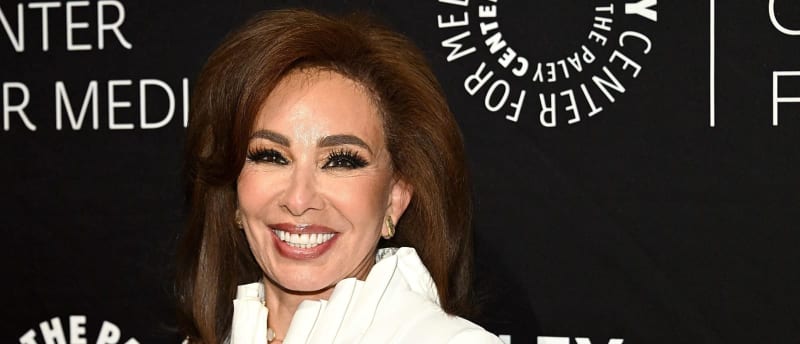
The civil-supervisory probe runs alongside a criminal investigation Pirro opened earlier this month. The Daily Signal reported Pirro’s office is examining whether JPMorgan, Bank of America and Wells Fargo violated the Financial Institutions Reform, Recovery, and Enforcement Act of 1989 — a statute traditionally used in bank fraud cases. Wall Street Journal sources have indicated that federal banking regulators had not made referrals to the Justice Department before Pirro acted, and that she initiated the investigations on her own.
The investigations have their political origin in an August 2025 executive order Trump signed directing federal regulators to investigate “politicized or unlawful debanking” and to consider fines or Department of Justice referrals. Trump in January 2025 personally accused JPMorgan and Bank of America of discriminating against conservatives, and Trump-affiliated businesses are suing JPMorgan and Capital One over account closures. The cited grievances cover a heterogeneous list: religious organizations, conservative political donors, cryptocurrency firms, gun manufacturers, and fossil-fuel companies. Indigenous Advance Ministries, a Christian charity, accused Bank of America of religious discrimination in 2023; former Kansas governor Sam Brownback has said JPMorgan closed his account in 2022 after he led an interfaith initiative.
The banks have declined to comment publicly on the upcoming OCC findings, but have consistently denied that account closures were driven by political or religious considerations — attributing them instead to unusual account activity, paperwork issues, or violations of account-misuse policies. Several institutions have nonetheless moved this year to soften restrictions that had attracted conservative criticism. RSBN reported the DOJ had subpoenaed major banks as part of the expanding investigation. JPMorgan removed restrictions on firearms and civilian rifle banking in January 2026; Citigroup dropped its restrictions on firearm retail banking around the same time.
The debanking inquiry sits at a charged intersection of Trump-era financial regulation and a political base that has long held that the country’s largest banks treat conservative customers worse than progressive ones. It also arrives at a moment when the administration’s political capital is constrained: a Reuters poll released this week showed Trump’s approval among rural voters had collapsed by more than 30 points since the start of his second term, The Eastern Herald reported. The administration has spent its sixth month in office assembling a series of high-visibility actions — from the 250-foot Independence Arch on the Potomac to the bank investigations — that read as the deliverables of a presidency increasingly defined by symbolic combat with institutions it considers hostile.
How far the inquiries will go remains unclear. The OCC has not historically used its supervisory authority to police bank account-closure policies on viewpoint-discrimination grounds, and any FIRREA charge against a major bank would be a novel application of the statute. Bank lawyers are quietly preparing for the possibility that the OCC’s report will be paired with public enforcement actions that name individual cases, and for a longer fight over the legal theory behind any criminal referral. Trump heads to the G7 summit in Évian-les-Bains this week with an agenda that includes tariff threats and currency policy, The Eastern Herald reported, and the bank investigations are likely to remain a defining domestic story while he is abroad.