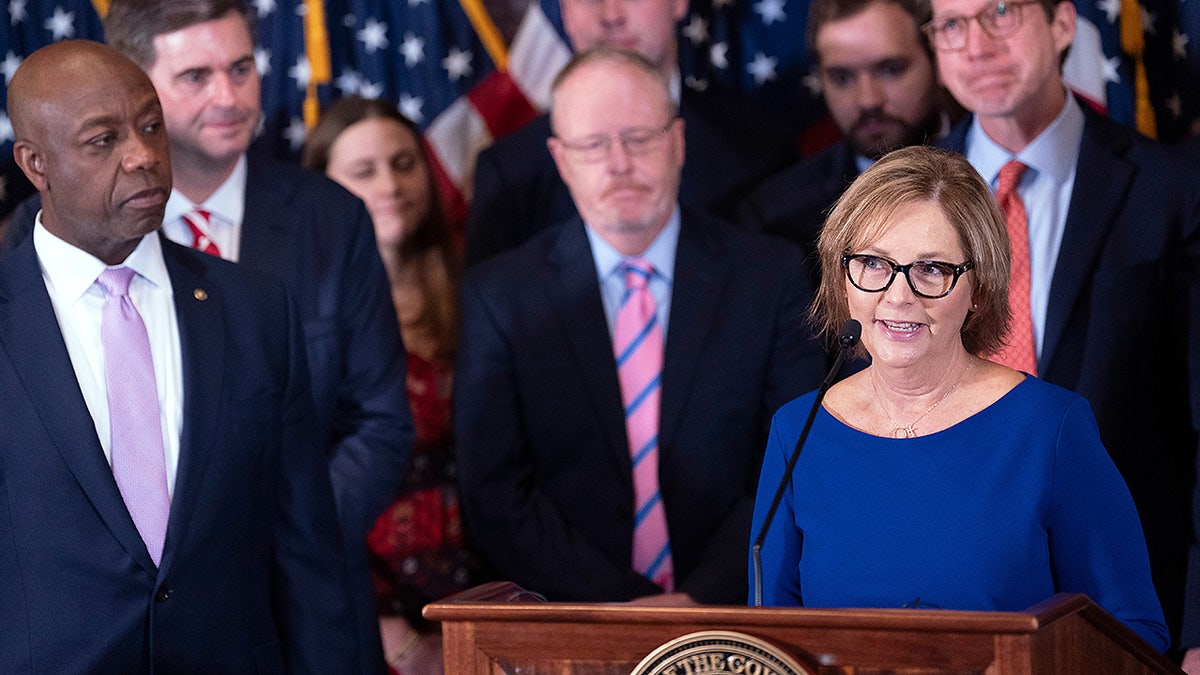

COLUMBIA, S.C. – The challenge to Darline Graham’s Senate campaign materialized quickly after she announced her candidacy this week, and it came from inside the party. Rep. Nancy Mace, the South Carolina Republican who decided against entering the race, turned her attention not to a policy argument but to a procedural one that cuts directly at Trump’s preferred candidate.
“She has no record and I’m not even sure that she’s qualified to be on the ballot,” Mace said in an interview with Fox News on Friday. “It’s not clear that she’s voted in enough Republican primary elections to be on the ballot.”
The claim is not a vague political attack. South Carolina election law, which took effect in July 2024, requires that anyone seeking to appear on a Republican primary ballot must have voted in at least two of the last three Republican primaries in the state. Darline Graham Nordone, who was appointed by Governor Henry McMaster following the death of her brother Senator Lindsey Graham, has no public electoral record of any kind. Her campaign has not addressed whether she meets that specific threshold.
Graham was sworn in last month as South Carolina’s first female senator, completing what Senate historians noted was the first sibling succession in the chamber’s history. She announced her candidacy for a full term on Fox News days after taking the oath, with Trump’s informal backing but without a formal endorsement from the president for the primary race itself. The August 11 Republican primary will determine who holds the seat through the remainder of the current Senate term.
Mace, who spent weeks earlier this year publicly weighing her own Senate run before ultimately declining, has thrown her support behind Rep. Ralph Norman. She described him as someone with a “100% conservative voting record” and the kind of legislative experience that Graham, a private citizen before her appointment, does not possess. Mace lost Trump’s endorsement earlier this year after she voted for the Epstein Files Transparency Act and finished fifth in South Carolina’s governor primary in June. Her shift to backing Norman as a power broker rather than a candidate reflects the reduced leverage she holds with a White House that has already written her off.

CJ Westfall, a South Carolina Republican Party chairman at the local level, has moved to formalize the eligibility question, pursuing an official determination on whether Graham satisfies the voter-participation requirement. If the challenge proceeds and prevails, it would remove Trump’s chosen successor from the ballot entirely, forcing the primary to proceed without the candidate the president backed when the seat opened. There is no clear timeline for when such a ruling would be issued, and Graham’s campaign has not indicated how it intends to respond.
The ballot-eligibility problem, if it materializes as one, reflects a structural tension in how the seat was filled. McMaster moved quickly to appoint Graham under pressure from Trump, and the president’s informal approval lent the appointment political legitimacy even as it bypassed the question of whether his pick was prepared to win a competitive primary. Trump’s endorsements have reshaped Republican primaries across multiple states in this cycle, and his backing carries genuine weight with conservative primary voters. But endorsement power cannot substitute for compliance with state election law, and in a race already drawing credible conservative challengers, Darline Graham’s political inexperience may matter more than her family name.
The succession that followed Lindsey Graham’s death last month set off a compressed political scramble, with McMaster moving quickly, Trump signaling a preference before any formal appointment, and multiple Republicans publicly weighing whether to enter the primary. Mace was among the most prominent names floated. Her decision not to run, confirmed this week, removes the most direct confrontation between her and Trump, though her endorsement of Norman keeps her in the race as a complicating factor for the White House.
What the public record does not yet contain is the most relevant fact: whether Graham actually cast ballots in two of the last three South Carolina Republican primaries. The state held Republican primaries in 2022 and 2024, with 2020 offering a limited contest given the incumbent president’s dominance. If Graham did not participate in the requisite contests, the formal challenge Westfall is pursuing has a clear basis in law. If she did, the question dissolves and Mace’s statement becomes a political attack rather than a legal one.
Neither outcome is yet certain. What is established is that a seat Republicans expected to hold easily has produced an internal fight over ballot access before a single vote has been cast, and that the candidate Trump informally endorsed entered the race without her campaign first confirming she was eligible to run. The August primary, if Graham appears on the ballot, will test whether a family name and a brief appointive tenure translate into the political capital needed to hold off more conventionally qualified opponents in a compressed primary race.