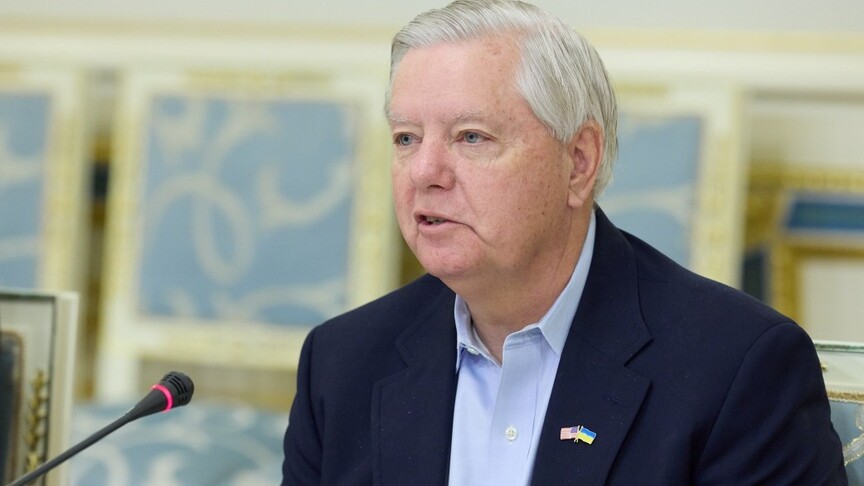

WASHINGTON – Darline Graham Nordone took the oath of office Tuesday as a United States senator from South Carolina, stepping into a seat her brother held for a quarter century and making history as the first woman to represent the state in the Senate.
The swearing-in came seventy-two hours after Senator Lindsey Graham’s death on Saturday from an aortic dissection at age seventy-one. Governor Henry McMaster announced the appointment Sunday, citing Nordone’s deep ties to South Carolina and the endorsement she had received from President Trump. By Tuesday she had been administered the oath on the Senate floor, completing a succession without precedent in the chamber’s history: no senator had ever been directly succeeded by a sibling.
Nordone’s tenure is defined in advance by its expiration. She holds the seat through January, when a winner from South Carolina’s special election process takes over. State Republicans have set August 11 as the date for a special primary to select the party’s nominee, with a general election to follow. The compressed timeline reflects a party need to lock in a standard-bearer before the legislative calendar shifts and before the vacancy becomes a prolonged flashpoint in an already contested state.
McMaster’s decision to name a family member rather than a political figure represented a deliberate choice to hold the seat at arm’s length from the primary competition while it plays out. That framing allows the August and November contests to produce a mandate untainted by the interim appointment rather than one complicated by it. The approach also sidesteps the resentment that often accompanies a governor’s preference for a particular candidate when several are competing for the same seat.
Graham’s thirty-five-year congressional career spanned the House beginning in 1995 and the Senate from 2003, a tenure during which he rose to chair the Armed Services Committee and positioned himself as a central voice on foreign policy, defense authorization, and the confirmation of federal judges. His influence crossed party lines in ways that had grown unusual in the contemporary Senate, and his relationships with figures across the aisle gave him procedural leverage that his death removes abruptly. The Armed Services Committee chairmanship and his role in ongoing debates over Iran, Ukraine, and military spending now sit in different hands.
According to Anadolu Agency, Nordone will serve in the seat through January as the Republican Party uses the special election process to identify a longer-term successor. The appointment carries no stated platform and no campaign commitments. What it carries is the practical authority to cast votes on whatever legislation reaches the Senate floor during her months in office.

South Carolina has sent thirty senators to Washington since statehood. None has been a woman. Nordone’s swearing-in erased that record without ceremony particular to the fact. The historical significance was acknowledged in public statements, but her path to the seat was not the product of a candidacy or a campaign. It was the product of her brother’s death, a governor’s appointment, and a succession process that moved faster than any conventional election could.
The sibling succession is the feature that most distinguishes this appointment from others in Senate history. The usual pattern involves a governor selecting a political ally, a former official, or a placeholder with party credentials. A sibling of the senator who vacated the seat is without documented precedent in the Senate’s recorded history, a circumstance that reflects both the closeness of Lindsey Graham’s family ties and the absence of an obvious candidate from inside the South Carolina Republican establishment that McMaster could have named instead.
McMaster announced the appointment Sunday amid competing pressures inside South Carolina Republican politics over who should inherit the Graham legacy. By moving quickly and naming a family member rather than a faction-aligned official, the governor cleared a field that would have become considerably more complicated if the appointment itself had been treated as a statement of political preference.
The eight months between now and January cannot determine who wins August’s special primary or what version of Lindsey Graham’s legacy the candidates choose to run on. His death from an aortic dissection removed a senator who had spent decades making himself difficult to replace, and the argument over who fills that role will unfold through a special election cycle that began with his sister’s oath on Tuesday.
What the swearing-in cannot resolve is how Nordone will use the votes she now holds. No public statement outlined her legislative priorities or signaled whether she intends to be a consequential presence during her months in the chamber or a placeholder who attends but defers. That answer may matter more than expected in a Senate where margins are tight and the calendar between now and January is crowded.