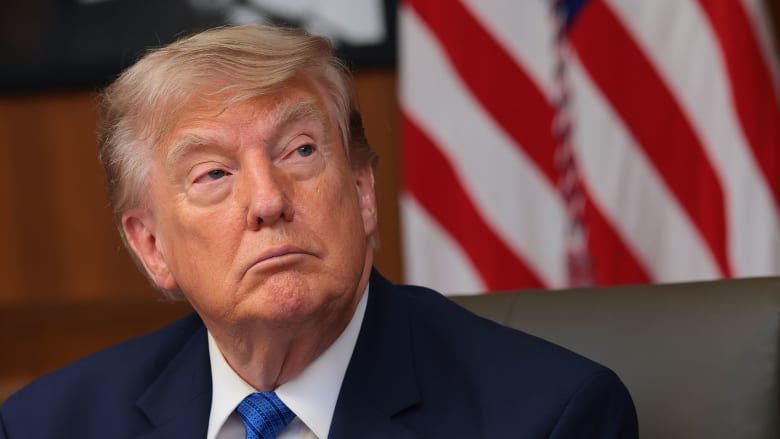

WASHINGTON — Donald Trump said Monday he expects his relationship with Andy Burnham, Britain’s new prime minister, to be a good one, and added that he has no plans to advise Burnham on how to govern his country. The cordiality was offered without being asked for. Burnham, for his part, had already made clear he wasn’t relying on Trump’s goodwill to define his approach.
“I think we’re going to have a very good relationship,” Trump told reporters. “We’ll see. I’m not going to tell them how to run this country.”
The exchange sets an opening tone for a relationship that Burnham, in late July, framed with a specific reservation. He said he was ready to criticize Trump if he deemed it necessary to protect British national interests. That framing was deliberate: it signaled to a domestic audience that Labour’s new leader would not subordinate the UK’s position to the demands of the transatlantic relationship. Trump’s Monday statement doesn’t engage with that framing directly, which may be the point. Performance of warmth, without conditions attached, leaves less to argue with.
The trust question landed awkwardly when it was put to Burnham directly. Asked whether he trusted Trump, Burnham avoided an answer. “It’s a changing world, isn’t it,” he said, adding that reacting to events as they develop was the right approach. That answer, read one way, is reasonable caution from a new leader. Read another way, it is exactly the kind of hedging that signals a relationship in which the two sides have not yet established a working basis of confidence.
The structural parameters of the US-UK relationship don’t shift much with a new prime minister. Britain’s defence posture, its intelligence sharing through Five Eyes, its NATO commitments, and the negotiations over a US-UK trade framework all continue regardless of the personal dynamic between Downing Street and the White House. Trump has shown, over the course of his second term, that he responds to leaders who frame their asks in terms he values: reciprocity, economic benefit to the US, and a willingness to disagree in private rather than in public. Burnham’s late-July statement about willingness to criticize openly was aimed at a different audience.
What Burnham will find, as every recent British prime minister has found, is that the relationship is easier to position in domestic politics than it is to operate from Downing Street. The leverage runs asymmetrically. Washington can absorb a difficult UK prime minister without much consequence; London cannot afford a deterioration in the US relationship without consequence in trade, intelligence, and military interoperability. That reality does not disappear because a new government has a different rhetorical posture toward Washington.
Trump’s comment that he won’t tell Burnham how to run the UK is worth noting for what it doesn’t include. It is not an endorsement of Burnham’s specific domestic agenda, not a signal of alignment on any particular policy, and not an invitation to a state visit or a formal bilateral meeting. It is precisely the minimum a sitting US president would offer a new leader of a close ally. That it was offered at all, in the context of a reporter’s question rather than a scheduled diplomatic exchange, speaks to where the relationship currently sits: acknowledged, not yet defined.
Burnham takes office at a moment when Britain’s position in the world is being recalibrated across multiple relationships simultaneously. The EU reset that Burnham’s Labour predecessors began is still working through its implementation. Britain’s position on the US-Iran conflict, and specifically on Strait of Hormuz access and energy security, has direct implications for UK economic policy that Downing Street will have to address whether or not it chooses a posture of visible independence from Washington. The first moment Burnham decides it is necessary to criticize Trump publicly will also be the first real test of whether his late-July framing holds up under pressure.
What neither side has said Monday is what either expects of the other in concrete terms. Trump expects a good relationship; Burnham expects to protect British interests. Those are not incompatible positions, but they are also not yet a relationship. They are a starting point, on a Monday, described to reporters, in two countries that have been calling each other special since Churchill.
Related Posts