
TRENTON, N.J. – The chopsticks were there, and then, on August 1, they were not.
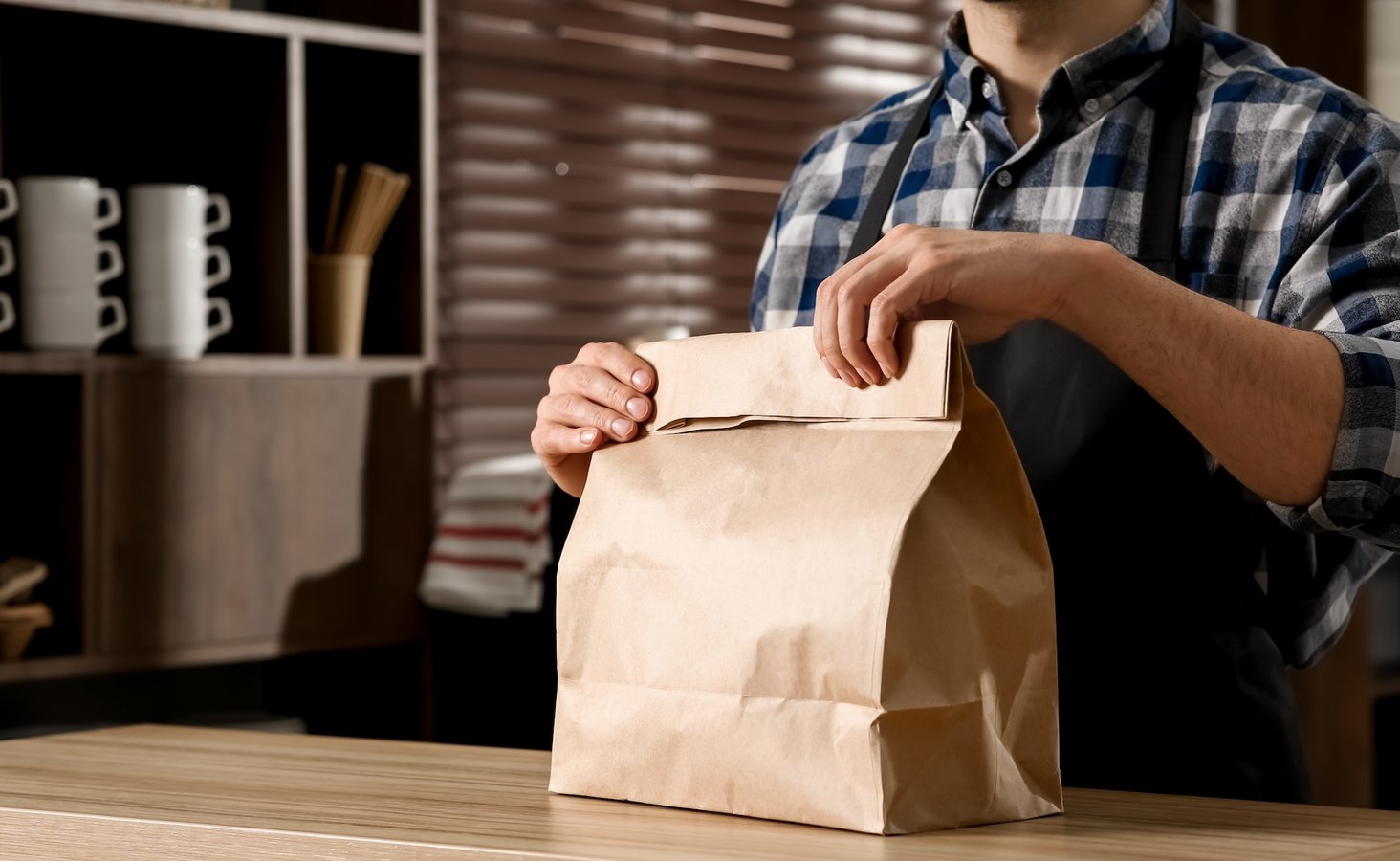
New Jersey became one of the first states in the nation last week to strip single-use plastic utensils, paper napkins, and individual condiment packets from the default takeout order. The law, known as “Skip the Stuff,” requires that restaurants, food trucks, and third-party delivery platforms across the state omit these items automatically, providing them only when a customer actively requests them. What once arrived unbidden in every delivery bag now requires an ask.
The change affects every food service establishment in New Jersey, regardless of size, a deliberate expansion beyond California’s similar law, which applies only to chains with 26 or more locations. For online orders, businesses must ensure the option for utensils and napkins appears as an opt-in rather than a default at checkout. For walk-in counter service, the items must be excluded unless the customer asks.
The reaction in the first days was swift and, in some quarters, sharp. Diners reported arriving home to find they had nothing to eat their delivery order with. Restaurant workers described adjusting to new defaults on their point-of-sale terminals. Industry associations, which had spent recent months sending compliance notices to members, are now watching how inspectors approach enforcement.
That friction is familiar to states and cities that have moved first on behavioral environmental policy. Measures that shift inconvenience from producers to consumers tend to generate more opposition than rules targeting corporations, even when the aggregate environmental goal is shared. Critics of the New Jersey law have argued that plastic manufacturers, not individual diners, bear greater responsibility for designing and pricing single-use items in ways that make alternatives impractical for high-volume food service.
The plastic waste problem is substantial, even if the numbers attached to it resist easy verification. Research on microplastics has identified the particles that form when larger plastics fragment in the environment in soil, water, and air across every inhabited continent. A 2026 UC Davis study funded by the National Institute of Environmental Health Sciences focused specifically on nanoplastics, the even smaller particles that can cross the blood-brain barrier, underscoring the scale of the problem that single-use restriction laws are, in part, written to address.
Whether those laws respond in proportion is a harder question. The connection between a plastic fork discarded after a takeout order and the airborne nanoplastics accumulating in human tissue is real but indirect, mediated by decades of industrial production and insufficient recycling infrastructure. Advocates for Skip the Stuff argue that the law is not intended to solve microplastic contamination alone; it is intended to reduce the volume of material entering the waste stream in the first place.
The broader fight over manufacturers like Formosa Plastics has played out in courtrooms and shareholder meetings for years, with environmental advocates pushing producers to take responsibility for downstream contamination. Those fights tend to move slowly. Opt-in laws like New Jersey’s are a faster lever.
The law’s framework includes deliberate exemptions. Schools, licensed healthcare facilities, and correctional facilities are excluded from the requirement. Food courts have until August 1, 2028, to comply, a window designed to give shared-use commercial spaces time to reconfigure self-serve condiment stations. For businesses that do operate self-serve stations, the law prohibits pre-bundled sets, requiring customers to take individual items one at a time.
Dine-in restaurants with 10 or more seats face a distinct and potentially costlier requirement: reusable utensils rather than single-use ones. The dishwashing logistics and the cost of maintaining sufficient reusable stock during high-volume service hours add an operational adjustment that the takeout provision alone does not demand.
Enforcement follows a graduated penalty schedule. A first violation earns a written warning. A second brings a $100 fine. Subsequent violations carry penalties of $250 or more, Yahoo News reported, with fines directed to the Clean Communities Program Fund. The program has administered litter abatement and recycling education in New Jersey for decades, making it a natural recipient for penalties tied to waste reduction.
Third-party delivery platforms, including DoorDash and Uber Eats, updated their checkout flows in anticipation of the law’s August 1 effective date. In New Jersey markets, the option for utensils now appears as an unchecked box rather than a pre-selected default. Restaurant owners who use integrated point-of-sale software have been required to update their settings, a technical change that is straightforward in modern systems but more complicated for older or custom-built platforms.
New Jersey is not the first state to move in this direction. California passed a similar law in 2022 applying to food establishments with 26 or more locations. Several cities, including Seattle and New York, have enacted comparable provisions. New Jersey’s law is broader in reach, covering businesses of any size and extending explicitly to third-party delivery apps, which can generate significant utensil waste because customers who order through platforms frequently receive duplicates of items already in their home kitchens.
The harder accounting is environmental. New Jersey officials have not established a baseline for measuring single-use utensil waste independently of broader food-service packaging, which means the law will be difficult to evaluate on its own terms. There is no agreed figure for how many utensils are discarded annually within state lines, and studies of similar laws elsewhere have produced mixed methodologies and contested findings.
What New Jersey has changed, before a single fine is issued, is the default. Whether most diners, presented with a checkout screen that does not offer them a fork unless they check a box, will find they needed one after all, or discover they did not need it, is the behavioral question the law has been written to answer.