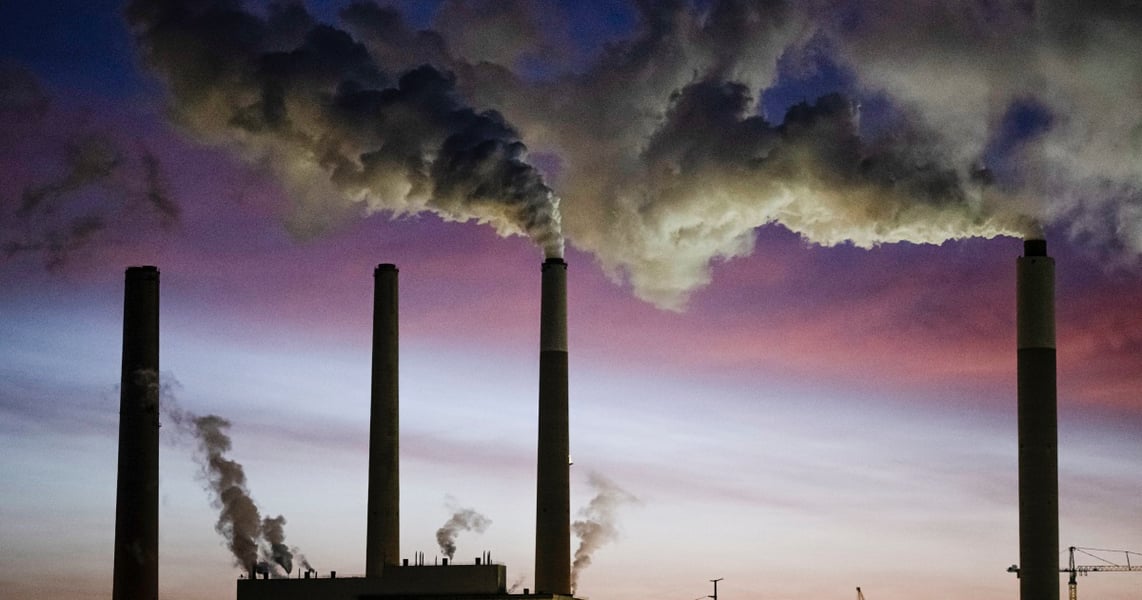

WASHINGTON – For the families living downwind of coal-fired power plants, the decision arrived without warning on a Sunday. EPA Administrator Lee Zeldin signed a document eliminating the only federal rules that had required those plants to meaningfully cut their greenhouse gas output, and buried inside the same regulatory filing was a legal maneuver designed to prevent any future White House from ever putting them back.
The Trump administration’s Environmental Protection Agency finalized the Partial Repeal of the Carbon Pollution Standards for Fossil Fuel-Fired Electric Generating Units on September 14, wiping out one of the most consequential climate protections the Biden administration had put in place. Health groups estimate the protections being erased prevented roughly 4,500 premature deaths each year. The agency has not published a competing mortality estimate.
Biden’s 2024 rule required existing coal plants to reduce carbon dioxide emissions by 90 percent by 2032 and compelled new natural gas facilities to offset the majority of their greenhouse gas output through carbon capture or fuel switching. Power plants are the single largest industrial source of greenhouse gas emissions in the United States. Under that framework, they faced a genuine reckoning: invest in cleaner technology, transition to different fuel sources, or close. Under the rule Zeldin signed on Sunday, those choices now belong again entirely to the companies that own the plants.
“It is beyond our authority in the Clean Air Act to regulate greenhouse gases for climate change for power plants,” said Aaron Szabo, the EPA’s assistant administrator for air and radiation. The argument echoes the Supreme Court’s 2022 ruling in West Virginia v. EPA, which curtailed the agency’s power to design sweeping, economy-wide emissions trading programs. What makes the current action more consequential is what follows it. Rather than narrowing the regulatory method, Zeldin’s team is attempting to extinguish the underlying legal finding that greenhouse gases from power plants endanger public health. The dismantling of EPA’s internal scientific infrastructure, which began in the administration’s first months, laid the groundwork for precisely this kind of claim: that the science underpinning decades of environmental regulation was never as settled as it appeared.
Without that endangerment determination, future administrations would have no statutory footing to regulate power plant carbon emissions under the Clean Air Act. Environmental law scholars at the Harvard Environmental and Energy Law Program described the attempt as legally aggressive in a way the rule repeal itself is not. Courts have historically treated endangerment findings as scientific conclusions, not policy preferences, and overturning one requires the agency to demonstrate that its own evidence has materially changed, not merely that a new administration reads the same evidence differently.
California Attorney General Rob Bonta confirmed his office would lead a multistate legal challenge, calling the repeal a threat to public health and a constitutional overreach. The coalition is expected to file for an emergency stay within days of the rule’s publication in the Federal Register.
The legal conflict arrives against a backdrop of escalating court losses for the administration on environmental questions. A federal appeals court ruled earlier this year that the administration likely acted unlawfully when it froze more than $20 billion in greenhouse gas reduction grants that Congress had already appropriated and authorized. That ruling, while not a final judgment, was a significant indication that federal courts are scrutinizing the administration’s environmental maneuvers with skepticism rather than deference.
The administration’s pitch to the public rests on economics. The EPA estimated the repeal saves industry more than $310 billion over the next decade and reduces electricity costs for consumers. What the agency did not include in that calculation is a health outcome offset. According to NBC News reporting, health advocacy groups whose modeling uses the EPA’s own epidemiological data project that the rule’s elimination will cost roughly 4,500 lives per year that would otherwise have been extended by reduced particulate and pollutant exposure near power plants. The agency has not disputed those projections.
This summer, as wildfire smoke blanketed more than 100 million Americans, the administration was simultaneously accelerating the dismantling of the regulatory mechanisms most directly tied to the long-term climate drivers of those fires. The repeal of the carbon standards is not unrelated to that picture. Power plants are the country’s single largest stationary source of the greenhouse gases that feed the warming trend driving longer and more destructive fire seasons. NPR noted that environmental groups had already filed preliminary legal notices before the ink on Zeldin’s signature was dry.
In July, the administration compounded that record when it used Independence Day clemency to pardon Clean Air Act violators, including a donor who had contributed $270,000 to Trump’s political operation. That action was read widely as a signal about how the administration views environmental enforcement. The September 14 repeal makes that signal statutory.
The courts will now determine whether it survives. Environmental lawyers expect challenges to proceed on two separate legal tracks: one contesting the rule repeal under the Administrative Procedure Act, and a more uncertain challenge to the proposed extinguishment of the endangerment finding, a question no federal court has previously been asked to resolve. Courts would need to determine whether an administration can permanently close a statutory pathway for environmental regulation simply by deciding, as a matter of law, that the authority to regulate never properly existed.
What the courts cannot undo, if they move slowly, is the time already lost. The Biden rule required coal plant operators to begin compliance planning immediately. Plants that had started that planning now face a different set of decisions. What will come from their stacks in the interim, and what that will mean for air quality in the communities that live nearest to them, remains a number no agency is currently calculating.