
WASHINGTON — The pardons came on the afternoon before Independence Day, bundled with a presidential post on Truth Social that described the recipients as men “persecuted by the Biden Administration” for “fixing their car.”
What the cars needed, according to federal prosecutors who spent years building those cases, was not repair but modification: the installation of defeat devices, aftermarket components designed to disable the emissions controls that diesel trucks are required by law to maintain. Nine of the 11 men President Trump pardoned Friday had been convicted of exactly that, removing or defeating pollution control systems on commercial diesel trucks in violation of the Clean Air Act.
The tenth was Mackenzie Spurlock, 31, an Alaska diesel mechanic who collected $30,000 for removing emissions controls from at least 20 vehicles and pleaded guilty to tampering with federally mandated monitoring systems. The eleventh had nothing to do with trucks at all. Adam Kidan, a Florida businessman and Republican donor, served roughly two and a half years in prison after pleading guilty in 2005 to fraud and conspiracy charges tied to his partnership with disgraced lobbyist Jack Abramoff. In 2024, Kidan contributed more than $270,000 to Trump’s political committees.
The White House offered no public explanation for why all 11 cases appeared in the same clemency batch, or what criteria placed a fraud convict who had hosted fundraisers at Mar-a-Lago alongside men prosecuted by the Environmental Protection Agency for illegal engine modifications.
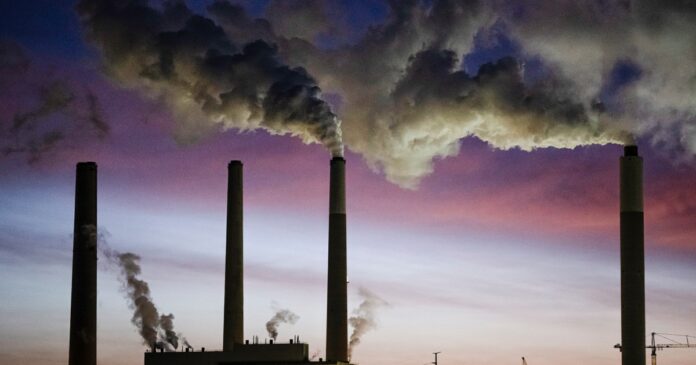
The defeat-device industry these pardons implicitly rehabilitate is not a niche concern. The EPA estimates that more than 550,000 diesel trucks have had their emissions controls removed, generating pollution equivalent to adding roughly 9 million vehicles to American roads. Those devices allow trucks to run far dirtier than federal standards permit, releasing nitrogen oxides and particulate matter that worsen asthma and cardiovascular disease in communities near freight corridors, distribution centers, and interstate highways. Dan Becker, an environmental advocate, offered the most direct available response: “Making kids sicker with asthma by poisoning the air is unpardonable.”
Defeat devices are not a gray area under the law. The Clean Air Act prohibits them explicitly, and federal prosecutors in cases like the one against Jonathan Achtemeier, pardoned Friday, established that he had conspired to tamper with monitoring devices on hundreds of vehicles nationwide, helping truck owners remove the pollution control hardware the statute required. Ryan and Wade Lalone, also pardoned, were sentenced in connection with a scheme to disable emissions controls on semi-trucks. Their cases were investigated, prosecuted, and resolved through the ordinary machinery of federal environmental enforcement. The pardons undo that.
The pardons land against the backdrop of what has become the administration’s most sustained effort to dismantle the architecture of federal environmental oversight. The EPA has moved to repeal the 2009 endangerment finding, the scientific and legal foundation for all federal greenhouse gas regulation, and had previously transmitted California emissions waivers to Congress for nullification under the Congressional Review Act. The pattern visible in these pardons and in the broader regulatory retreat is that the administration regards the Clean Air Act less as a public health statute than as a set of enforcement priorities that can be reordered by presidential preference.
Kidan’s path to the pardon list reflects a separate and more personal calculus. He and Abramoff were both originally sentenced to 70 months in prison and ordered to pay $21.7 million jointly in restitution, tied to a fraudulent scheme involving the purchase of a Florida casino boat fleet that was central to the Abramoff lobbying scandal of the early 2000s. A presidential pardon typically extinguishes remaining financial obligations linked to a conviction; whether Kidan had satisfied that restitution order before Friday’s clemency was not addressed by the White House. In the years after his release, he rebuilt a political presence, donating millions to Republican causes over time and hosting a Mar-a-Lago fundraiser in March for a Long Island Republican congressional candidate.
The pardon list, viewed as a whole, carries two distinct logics that the White House chose not to distinguish. One reaches toward blue-collar tradespeople recast as regulatory victims of an overreaching administration. The other reaches toward a major donor who contributed $270,000 to Trump’s political committees in 2024 and held fundraisers at the president’s private club weeks before the clemency documents were signed. CNN reported that some of the recipients met with White House officials ahead of the pardons, though the full sequence of events leading to Kidan’s inclusion was not made public.
The announcement also included a pardon for Jack Harvard, described by the White House as a rancher who had permitted the military and NATO to conduct training operations on his property. The inclusion fit no obvious pattern with the emissions cases or Kidan’s fraud conviction, and the White House did not explain it in its public announcement.
Trump did not mention Kidan or Harvard in his Truth Social post. “I AM SETTING THEM ALL FREE, RIGHT NOW!” he wrote, presenting the emissions violators as ordinary Americans imprisoned for adjusting their vehicles. The framing was consistent with the administration’s approach to environmental enforcement: a federal overreach against private property rights and mechanical freedom, rather than a public health law that Congress enacted more than five decades ago and that courts have repeatedly upheld. What the framing omitted was the fraud convict whose inclusion the White House chose not to explain, and the restitution obligations a pardon may have just erased. Trump’s systematic dismantling of EPA science has made it progressively harder to measure what the defeat devices left behind on American roads.
The 550,000 trucks whose emissions controls were disabled are still on those roads. None of the pardons change that.