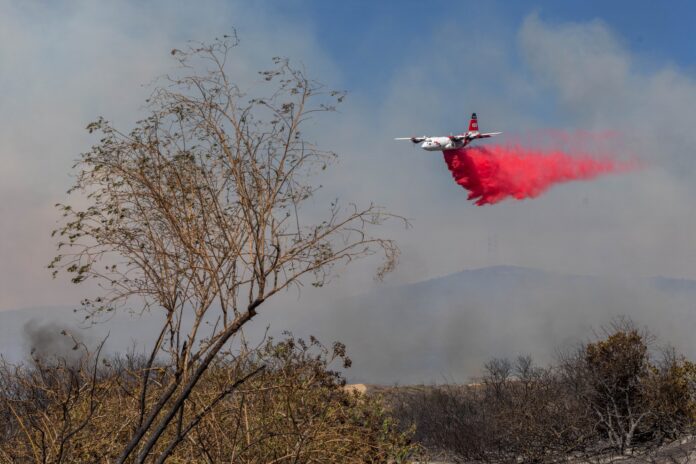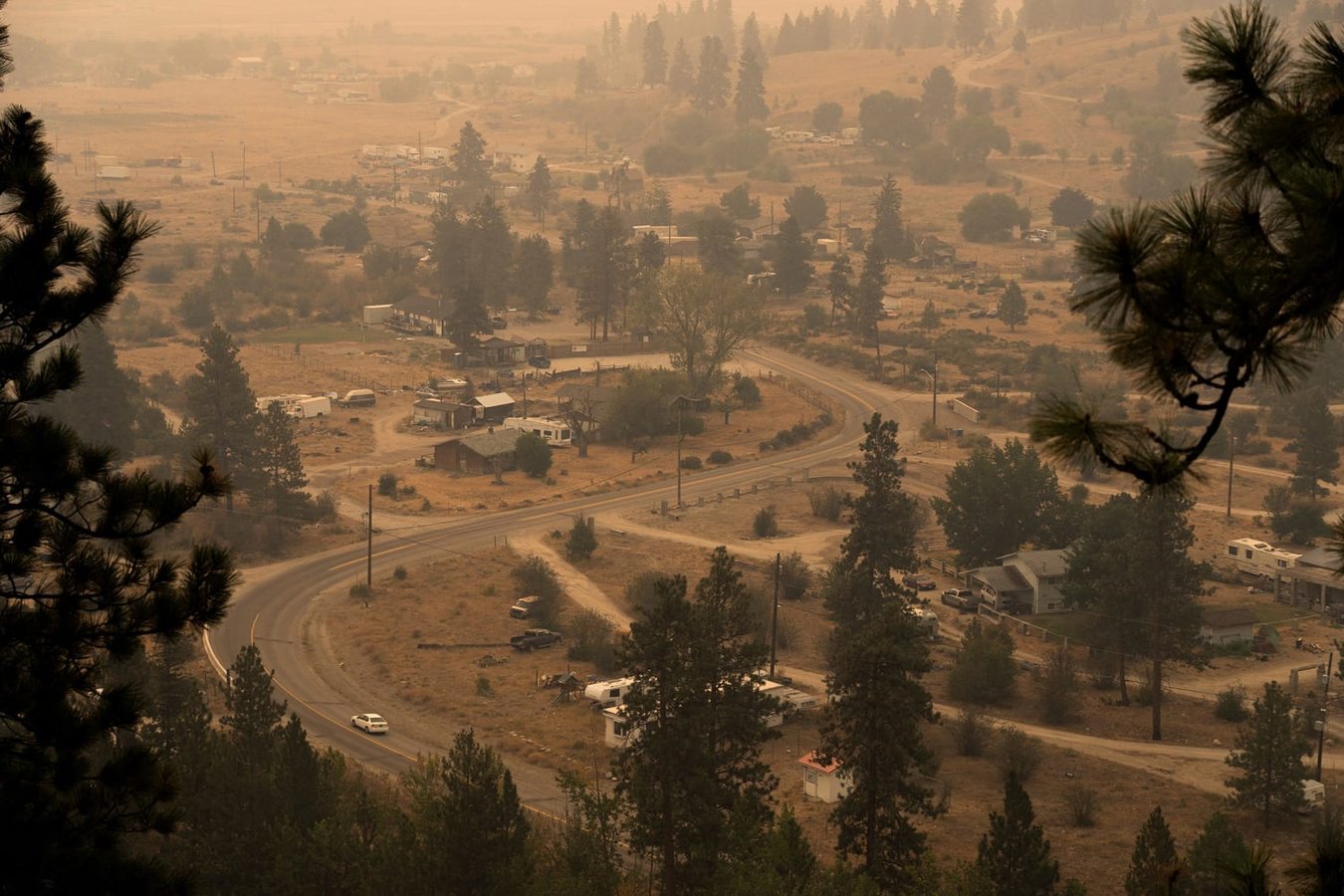

PENTICTON, B.C. — The fire came so fast that some residents of Summerland, British Columbia, had only minutes to gather documents, photographs and medications before leaving homes their families had owned for generations. By the time the Bald Range wildfire crested the hills overlooking town, the road out was already clogged with cars and the air had turned a sickening orange-brown. British Columbia declared a provincial state of emergency on Saturday as the Bald Range fire exploded from a few hundred hectares to roughly 50 square kilometres in a matter of hours, tearing through the Okanagan Valley with a ferocity officials said they had not witnessed before. More than 20,000 residents were ordered to evacuate, roughly 12,000 from Summerland and another 8,000 from the lakeside community of Peachland, as more than 100 fires burned across the province, nearly half of them out of control. “I know many families are facing an unimaginable day today,” Premier David Eby said in a statement. “People have lost their homes.” The Bald Range wildfire traveled approximately 15 kilometres in a single afternoon, driven by hot temperatures, gusting winds and months of exceptional drought in the Okanagan, Reuters reported via PBS NewsHour. Erick Thompson, a senior provincial emergency official, described it as the “quickest-moving, fastest-growing” wildfire in recent memory. Cliff Chapman, the provincial director of wildfire operations, warned of “explosive” conditions that had rendered traditional containment methods nearly futile across portions of the Interior. Royal Canadian Mounted Police blocked Highway 97 northbound near Penticton, directing evacuees away from advancing fire lines. The highway runs along the spine of the Okanagan Valley and serves as the primary evacuation route for communities stretching from Osoyoos to Kelowna. Bottlenecks formed in the afternoon heat as families with trailers and pickup trucks made their way north.
One person died in connection with the Bald Range fire, provincial authorities confirmed on Saturday. The RCMP said it was investigating the circumstances of the death and released no further details. The announcement came as evacuation orders remained in force across multiple communities and the fire continued to spread. The fires burning across British Columbia are part of a broader wildfire emergency that has gripped western North America through the summer. In the United States, roughly 100 fires were burning from Utah to Oregon, with firefighters in the Spokane area reporting modest progress against blazes that destroyed dozens of structures in the past week. Spokane wildfire damage prompted a FEMA federal aid declaration in early August after structures burned in a single event. Weeks earlier, Washington wildfire emergencies tied to a prolonged heat dome had stretched state resources thin. The season’s accumulation of disasters has also raised questions about accountability. An arson arrest connected to a major Washington fire in late July prompted calls for tougher penalties for deliberate ignition in drought conditions, adding a criminal dimension to what is already a climate-driven catastrophe across the region. Ottawa pledged federal assistance to British Columbia, with the federal government saying it would deploy whatever resources the province requested. Military aircraft and additional fire suppression assets are available to the federal government, though coordinating their deployment across an emergency of this scale typically takes several days. For residents who fled Summerland on Saturday, there was no way to know what remained of their properties. Aerial surveys were suspended at times as smoke columns climbed thousands of metres above the hottest burning zones. Ground crews were pulled back in sectors where erratic fire behaviour made it too dangerous to work. Summerland’s agricultural base, its wine tourism industry and its water infrastructure all faced an uncertain recovery. The town, with a population of roughly 13,000, sits at the southern end of Okanagan Lake. It is one of dozens of Okanagan communities that have seen significant population growth over the past decade, as remote work drew residents from larger cities seeking lower housing costs. That growth pushed residential development closer to the wildland-urban interface, the zone where homes abut forest and scrubland, increasing exposure to exactly the kind of fast-moving fire that swept through on Saturday. Provincial forecasters offered little reassurance about the days ahead. A ridge of high pressure was expected to settle over the Interior for much of the coming week, pushing temperatures into the high 30s Celsius and suppressing any chance of meaningful rain. Wind patterns through the weekend were forecast to remain erratic, complicating air tanker operations and making fire progression difficult to predict. At evacuation centres in Penticton and Kelowna, volunteers and emergency workers registered arriving families, distributed food and tried to find accommodation for residents who brought horses and livestock, which cannot easily be sheltered in standard emergency facilities. The provincial government opened additional reception centres in the Lower Mainland to accommodate evacuees willing to travel further west. The full toll of the North American wildfire season will not be counted for months. For the thousands who drove out of Summerland and Peachland on Saturday, the only question that mattered was how much of what they left behind was still standing.