
The poppies and graves in In Flanders Fields have become part of the language of remembrance. Yet the poem’s most uncomfortable demand comes after its best-known images: the dead ask the living to carry on the fight. That tension—between mourning war’s victims and urging others into battle—is central to the poem’s enduring, sometimes contradictory place in November 11 commemorations.
A Washington Post examination published on November 11, 2026, traces how John McCrae’s wartime rallying cry came to be presented as an expression of war’s futility. The words did not change. What changed, in some readings and commemorations, was which words audiences heard.
A battlefield death behind the poem
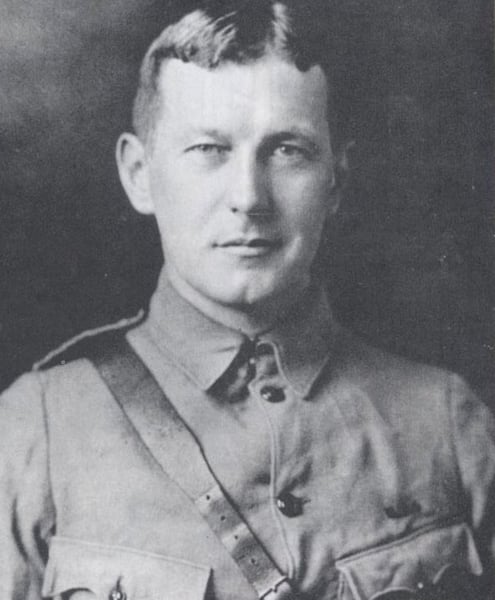
McCrae, a Canadian doctor and soldier, wrote In Flanders Fields on May 3, 1915, during the Second Battle of Ypres in Belgium. The previous day, his friend Lieutenant Alexis Helmer had been killed in action and buried in a makeshift grave. Poppies were beginning to bloom among the crosses marking the dead, according to Veterans Affairs Canada.
Veterans Affairs Canada describes the poem as McCrae’s way of giving a voice to men he could no longer help. Its speakers are not survivors looking back on the battlefield but the soldiers beneath it.
That choice gives the poem its emotional force. The dead recall ordinary experiences—dawn, sunset, love—before confronting readers with the sudden distance between those lives and their graves.
But McCrae does not leave them there.
The final stanza changes the argument
The poem turns from remembrance to instruction with the line:
“Take up our quarrel with the foe.”
The appeal that follows asks the living to accept a torch passed by the fallen. Its warning against breaking faith makes continued struggle part of the obligation owed to the dead. Read in full, the poem is therefore more than a lament: it also calls for resolve in an unfinished war.
Published in Britain’s Punch magazine on December 8, 1915, it quickly found an international audience. Governments used the poem to support recruiting, war-bond sales and public commitment to the conflict, according to the Washington Post’s historical account.
That early use was consistent with its closing message. McCrae was not asking readers simply to contemplate sacrifice; he was asking them to continue the cause for which he believed the soldiers had died.
How an excerpt can sound like a different poem
Remove the final stanza, and the balance shifts.
The opening sections leave listeners among graves, hearing the dead describe the lives they have lost. Without the command to continue fighting, those passages can stand as an indictment of war’s destruction rather than an argument for perseverance.
The Washington Post identifies this selective presentation in commemorative uses of the poem, including a Royal British Legion appeal that reproduced its first two stanzas. Such excerpts preserve McCrae’s grief while leaving out his demand.
Calling In Flanders Fields an anti-war poem, then, requires a distinction. It can carry an anti-war meaning for later audiences without having been written as an anti-war statement. Its history shows how remembrance can reshape a work’s public meaning without altering its text.
How the poppy travelled beyond the battlefield
The poem’s influence also extended beyond recitation.
On November 9, 1918, American educator Moina Michael read In Flanders Fields and was inspired to wear a poppy in memory of the war dead. French campaigner Anna Guérin subsequently promoted the sale of artificial poppies to raise money for people affected by the war.
In 1921, Guérin persuaded Canada’s Great War Veterans Association to adopt the flower for remembrance and fundraising. Her work also helped inspire the British Legion’s Poppy Day Appeal, supporting poor and disabled veterans, according to Veterans Affairs Canada’s history of the poppy.
The flower thus acquired a practical purpose alongside its symbolic one: remembering the dead could help provide for the living. Its association with veterans and bereaved families outlasted the particular wartime appeal McCrae had written.
A legacy McCrae did not live to see
McCrae died of illness on January 28, 1918, before the armistice that ended the fighting later that year. His poem continued into a commemorative life he never witnessed.
Today, In Flanders Fields remains part of Remembrance Day ceremonies in Canada and other countries. Reading all 15 lines preserves the tension at its centre: the dead are mourned, but they also make a demand on the living. Remembering both parts offers a fuller understanding of the poem—and of the distance between the war that produced it and the ceremonies that inherited it.